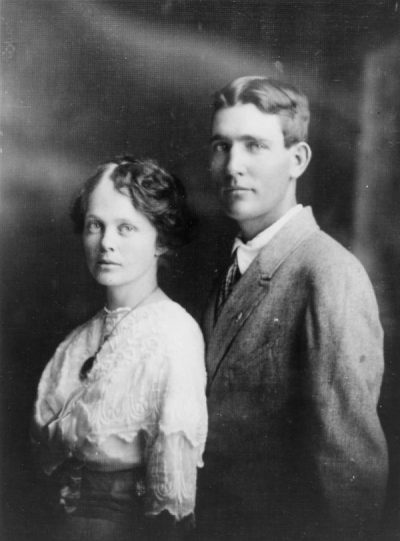
Living in rural Kansas, Grandma Nellie and Grandpa Joe had very few conveniences of modern life. Over the years, they raised a large family.  To do so, the family farmed, gardened, kept house, sewed clothes, cooked, and more without electricity, running water, or many mechanical devices.

Electricity


The family used gas and oil lamps for years, but lighting was one of the first things to be modernized in Nellie and Joe’s home.  They moved from “The Home Place” (a.k.a. Dewey’s house) to the “new” house (a.k.a. Ed’s house) in 1947 primarily so that they could have electricity as electricity became available west of highway 7 before it was available on the east side of the highway.  The house, of course, had no wiring, fuse box, or outlets. Thus, Ed became the resident electrician, installing everything needed to bring light into the home. Over the years this changed very little. 
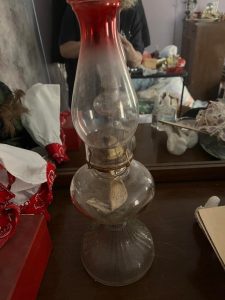
 

Lantern owned by Joe and Nellie McCracken . Chimney is believed to be a replacement.

Heating, & Cooling

The entire two story house had  a single wood-burning stove in the middle of the house, Which means the house wasn’t really heated very well at all.  Nellie and Joe continued to have a single heating source even after they moved to their “new” house. Central heat or a secondary heat source was never added to the homes.  However, their sons did update the homes with a propane heater to eliminate the need for chopping wood or buying coal.


The cooking stove’s goal was not to heat the house.  However, it tended to heat the house at all the wrong times.  It always amazes me that food was even edible after being cooked on those old wood-fired stoves as getting the temperature just right must have been terribly difficult.  It does explain, however, why my dad liked many foods just a bit burnt.


Like heating, cooling came from a single source –  windows.  Electricity, which was the motivator for the move to the “new” house, allowed for the use of fans.  Later, electricity also came to the original home (a.k.a. The Home Place).  So, fans could be used there as well.  It was long after Nellie and Joe lived at Ed’s house that a window air conditioner was finally added.
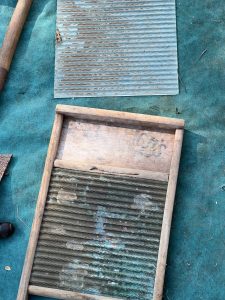
 

Grandma’s Washboard

If you wanted ice to cool off, you better hope it was the middle of winter and the ponds and rivers were frozen over.  Then, you could cut as many blocks as you wanted.  The rest of the time, you had to purchase ice if you wanted to keep something colder than the  temperature of the cellar.


Clothes

Nellie, who preferred sewing to cooking, left much of the cooking to her daughters while she made or patched clothes.  She used whoever was home as a model including using Ed to be her model for his sister’s dresses when he was home from school sick.  Neither her equipment or materials were what most people would use today. The most advanced non-electric sewing machines were treadle-powered and many of the dresses were made out of flour sacks.


The clothes were cleaned with a washboard and steaming hot water.  Later, after Joe and Nellie got electricity, Nellie had a wringer washing machine.  After cleaning the clothes, they were ironed  with old fashioned irons that were heated to do the ironing.  Like the cooking stoves, it is amazing that these irons didn’t do more harm that good.


When Grandma was in her later years, she still had a basket of scrap cloth for patching clothes.  And, she still did it the old fashion way.  However, she washed her clothes at a fully electric laundromat and ironed them with an electric iron.


Running Water

Water for cooking, cleaning, or bathing meant a trip to the well.  Baths were taken in the kitchen and the water was used over and over.  Fortunately great-grandpa William J. Peelle had designed the kitchen in The Home Place so that water would all run to one corner where it could drain out of the house.

Eventually, both houses got water lines from the well to the kitchen.  However, it wasn’t until 1963 that Ed installed an indoor bathroom in his house. Then, about 1976, Ed and Dewey finally installed an indoor bathroom in The Homeplace.  Before that, the only toilet was an outhouse, which could be mighty cold in the winter. And, mighty scary in the middle of the night, especially with the shadows from the trees.

Communication

The family could connect with the outside world through newspapers and radio.  Nellie and Joe had a battery operated radio no later than the late 1930s as Joe listened to all the news and kept up to date on the war brewing in Europe.  However, the radio wasn’t too reliable.  If it was somewhat working, it might pick up stations that were far away.  Yet, at the same time, it didn’t always bring in the local stations.   They also had a telephone on a party line, but the quality was less than desirable, especially if someone was listening in or the call was long-distance. 


The radio and telephone improved over time.  By the late 1950s, Joe and Ed were watching Gunsmoke on the black and white television in the new house.  But, it wasn’t until around 1984 that Ed upgraded to a color television.  Until then he hadn’t seen a reason to get a color television, since the color in TVs wasn’t that good and black and white worked just fine. 


In 2006, a computer was added to the household.  However, internet didn’t come to the home until the end of 2021.  Like the old time radio, it was a bit flaky.  Sometimes it worked and sometimes it didn’t.  The same could be said of cell phones.  Depending on the phone and the provider, it might work, might work sometimes, or might only work on rare occasions.
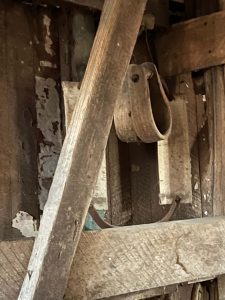
 

Stirrups in horsebarn
Very old stirrups hanging in the corner of the horse barn (2022)

Farm Work

Work on the farm was no easier than work in the home.  Everything was done by hand or with horses and mules.  Plowing fields was done with a walk behind plow pulled by horses.  The same for the harrow.  Haying was a very manual process and milking cows was as well. Some things, such as the brush cutter, did have engines to run them, but they were still plenty of work. 


The family didn’t have a tractor until in the 1950s.  After they got it, Joe very reluctantly sold his horses.  He didn’t want to, but he said that he couldn’t justify keeping them.  He must have thought about it a lot and discussed it with others as his quandary over his horses was mentioned in the newspaper.


Despite the sale of the horses in the 1950s, many pieces of equipment from the horse-drawn days remained at the new farm the rest of Ed’s life, including singletrees, doubletrees, wooden stirrups (likely Nellie’s for her horse Beauty), a horse collar, horse-drawn implements, and more.


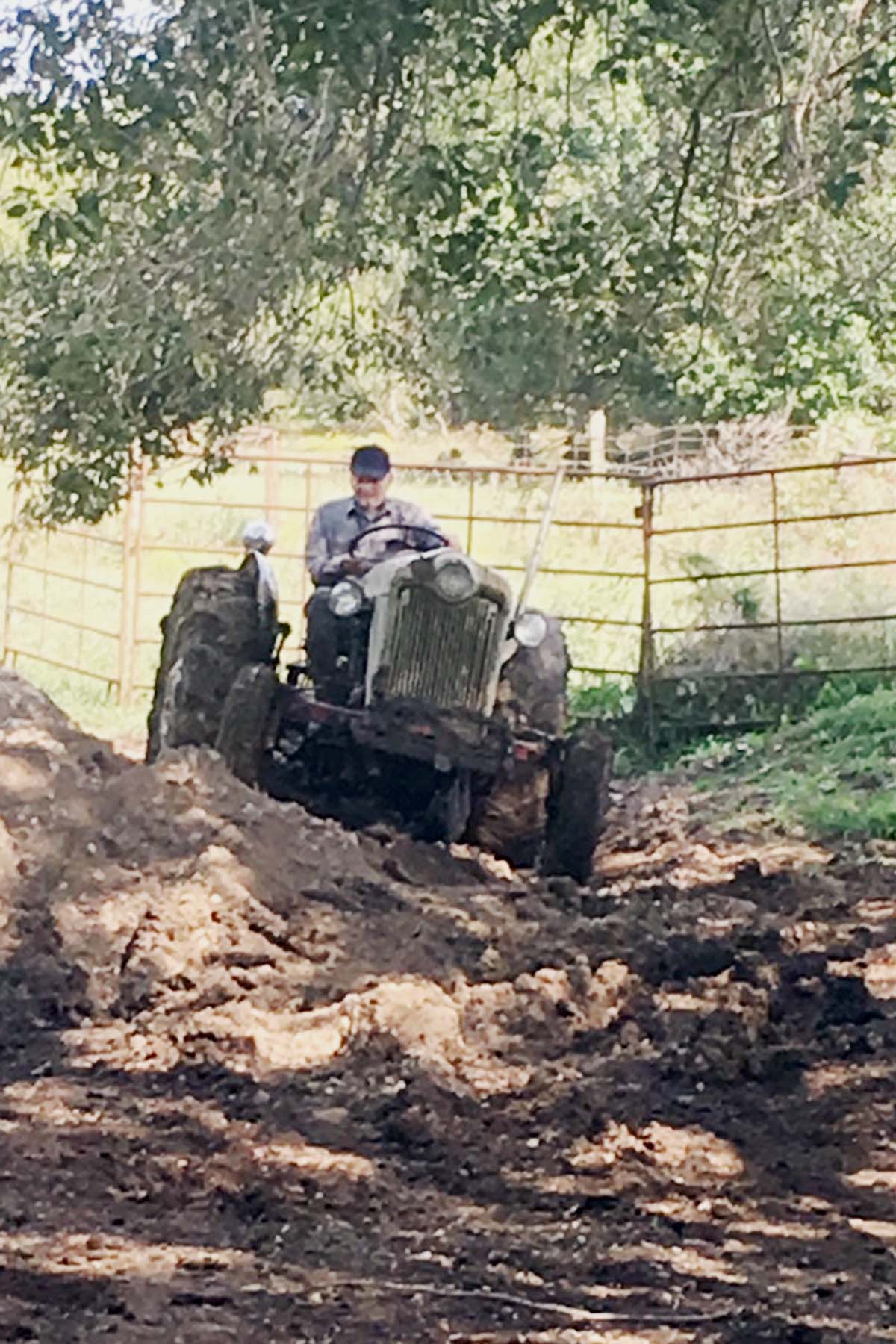
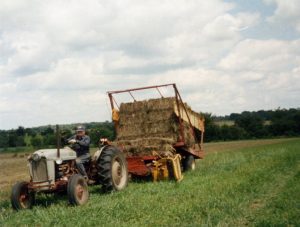
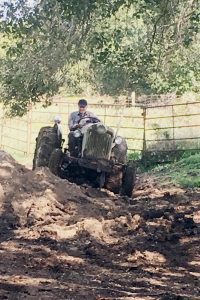
And, Ed’s 1954 Ford tractor was still running nearly 70 years after it was built.  No fancy air conditioning. No power steering.  However, implements for farming did come along throughout the years – a rake, hay baler, an elevator, and more.  Again, nothing fancy and if they worked or could be fixed, they were never replaced.


So change did come to Nellie and Joe’s lives and the properties they owned.  But, it came slowly!


Independence Hall

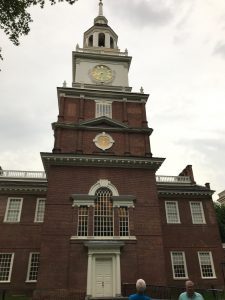
William Hurrie was probably in a “hurry” when he ascended the stairs of the State House in Philadelphia (Independence Hall) on July 8, 1776.  He was going to ring the bell now known as the Liberty Bell to signal that the Declaration of Independence had been finalized and would be read.


He may also have been in a “hurry” to help get the Liberty Bell out of Philadelphia when the townsmen removed the bell and others in the city to keep them out of the hands of the British. The patriots didn’t want the British to melt down the bells and make them into cannonballs.  It is known that the Liberty Bell was snuck out of Philadelphia and hid under the floor of a church in the Allentown area.  However, it isn’t documented as to whether William was part of the effort.  However, it seems very likely given he cared  for the State House.


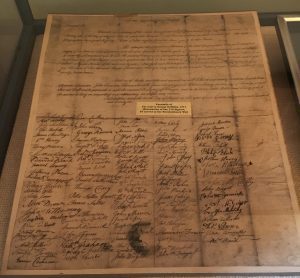
Call to Reverend George Duffield August 5, 1771

William may have also been in a “hurry” when he signed the call for Reverend George Duffield at the Presbyterian Church on Pine Street (now known as Old Pine Presbyterian Church).  Why?  He may have had duties at the church or perhaps it was just coincidence, but he was one of the first men to sign the document.


So, Why Hurrie?


Many names originated from a location, a trade, or another name.  For example, people who lived near a grove of Ash trees might have been given the name Ash.  Similarly, someone who made barrels might have gained the name Cooper.  And, of course, the ever common names that are a representation of “son of” or “daughter of” a specific person.  Thus, it seems reasonable to assume that the name Hurrie is simply a version of the word “hurry” and has the same meaning.


However, despite speculation as to the origin of the name Hurrie, I have found no one that indicated that it might have anything to do with rushing.  Instead, information on the name specifies that it one of the forms of the name Urri, which first appeared in Ayrshire, Scotland around 1260. The name took on several forms including: Urri, Urie, Ure, Urey, Urry, Orry, Ourry, Hurrie, Hurry, Horrey, Orrey, and Hurrey.


The names Hurry, Hurrie, and Hurrey appear to be more popular in England than Scotland, although specific spellings are not used exclusively in any location. And, none of the names are among the most common in the United Kingdom or the United States.


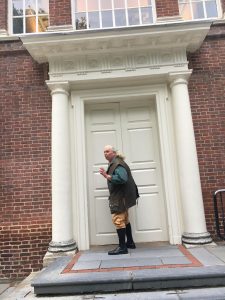
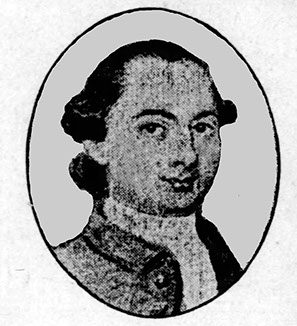
William Hurrie As Portrayed By The Parks Department

Now, Back to William


William is said to have been born in Scotland in 1721, which is consistent with where the name originated.  He personally used the “Hurrie” spelling and some members of the family and his tombstone used the “Hurry” spelling.


He immigrated to America by the 1750s.  However, no records have been found in this regard.  It is unknown exactly when and where he married Mary (surname unknown) or where his children were born. 


The earliest record for William is a  tax record in 1769 in Southwark, which is an area only a short-distance from Independence Hall and Old Pine Church. 


In the early 1770s,  he begins to show up in records at the Presbyterian Church, where he was selected as sexton.  Part of his job was to collect pew rents from church members.  It is said that pew selection was often by social status. However, looking at the records from Old Pine, it appears that it is based on financial status  or willingness to pay, as the pews at the front are more expensive than those further back.  William’s sons-in-law were in pew 70 in 1773 and later moved to pew 83 indicating that they were of less social or financial status.


It was at the Presbyterian Church, now known as Old Pine Church, where William began rubbing shoulders with many Revolutionary patriots. It is likely that his connections at the church led to him ringing the Liberty Bell that day in 1776 and serving as doorkeeper to Congress in the years following.


Read more about William Hurrie’s fame as ringer of the Liberty Bell . . . . here.


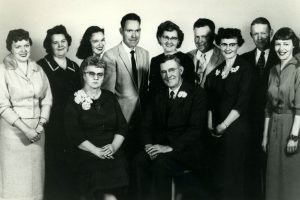
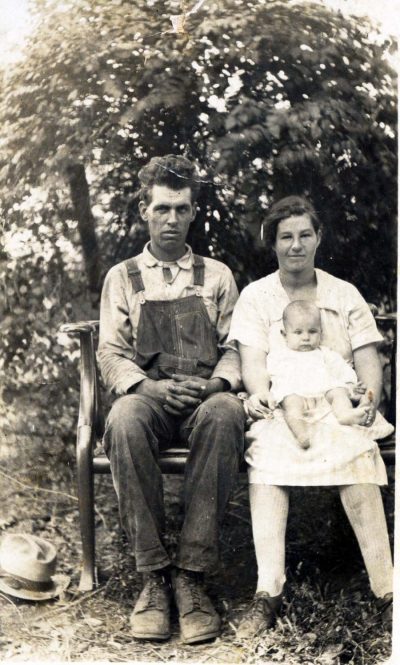
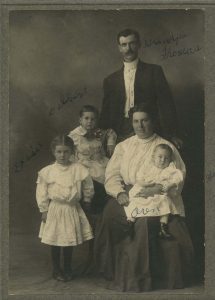
McCracken Family (Photo: Rennett’s Studio; copyright now owned by L. Thomson)

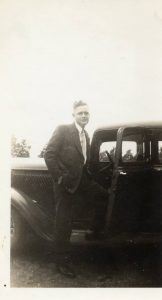
Although others were born after him, my dad was the last of his generation to stand. 


He was one of eleven kids in the McCracken family. He outlived all his siblings and their spouses.  He also outlived mom, her siblings, and her brother’s spouse. 


As a middle aged man,  Dad would have told you that would never happen. It never crossed his mind that he would live longer than Mom – let alone live to be in his nineties and be the last of his generation.. He knew the history of McCracken men dying young.  After all, his dad had died at 67, his grandfather at 53, his Uncle Doc at 58, and two other uncles before they turned 70. Likewise, his great uncles on the McCracken side had all died by the time they were 66.


He also knew that Mom had several ancestors that lived to be close to one hundred.  So, how did it happen that he lived so long?


Build Muscle

When Dad was growing up, he was relatively thin.  However, when WWII broke out and his older brothers went to into the service, he took over running the farm.  Around that time, he made a conscious decision to eat more and gain both weight and muscle.


Hard Work

His technique was simple.  Just do whatever needed to be done.  He used that philosophy throughout his life.  Whatever needed done, he did.  No job was impossible no matter how difficult or how much physical strength, mental strength, or shear determination was required. 


He had learned from his father that “I can’t” was not an option.  So, he took that as he could do anything – no matter what it was. Nothing was outside the scope of what he considered doable.  He helped people with anything and everything. He worked on cars, motorcycles, farm equipment, state highway vehicles, and even a big rig.  He wired the house and did plumbing. He baled hay and could do basically anything around the farm.


Strength

Over the years, he gained amazing strength.  As he aged, he may have lost some of his strength, but he still was far stronger than many in the prime of their life.  One example was a loader attachment for the tractor that he had somehow placed in the barn.   It took several men to remove it.  Everyone was scratching their head as to how he managed to get it in there.


He also walked many miles during his life both when working for the state and around the farm.  After he was age 80, he walked home from the other side of the creek *twice* in one day when the tractor had issues.  And, he didn’t take the easy route of walking to the road and walking over the bridge and down to the house.  Nope.  He went the direct route through the creek, up the bluff and through the pasture with all of its rugged terrain.


Nine Lives

At one point, I started writing a story titled “The man with Nine Lives.”  This is a good description of Dad.  No matter what life threw at him, he stepped up to the challenge.


Polio

The first major scare came when he was in grammar school.  One year he was very sick and missed a lot of school.  He missed so much that his parents wanted to hold him back a year.  However, the teacher informed them that he knew all of the material despite being absent so many days. He said that during this time the adults whispered about him a lot.  He is not sure, but he believes that they thought he had polio.  He did have one leg that was shorter than the other, which could have come from a bout with polio.


Run Over By A Tractor

The second major scare came when he was a teenage.  I am not sure exactly how it happened, but a tractor ran over him right across his back.  His mom was frantic and he proclaimed that he was fine and that the tractor hadn’t actually run over him.  His mother told him to take off his jacket.  She showed him the tire mark that went across it.  He proceeded to go back to work.


Dad Moving Rock At Age 89

In The Eye

Another scary incident happened when a stick hit him in the eye and was stuck there.  Dewey drove him to the doctor.  Don was with them telling Dewey to slow down and Dad was telling him to drive faster.  If you knew Dewey, you would know how funny this is as he was never known to drive fast.  Anyway, Dad came away from the incident with 20-20 vision. 

10 Staples

The last incident I will mention happened when he was about 80 years old. He cleared out brush and tree limbs from the yard.  He took them down to the pasture.  While he was clearing them off the wagon, something happened.  It isn’t clear if he lost his balance, stepped off the wagon, or exactly what occurred.  Anyway, he woke up lying on the ground. He proceeded to go back to work only to find blood dripping off his head. 


Now, he never was good with blood, but he somehow willed himself back onto the tractor and made it back to the house.  He wrapped a towel around his head and waited for my sister to come home.  When she arrived, he told her that she might want to look at his head when she finished putting away the groceries.  Well, that turned into ten staples along the back side of his head and a night in the hospital for observation.


And, More . . .

Many other incidents occurred over the years.  A wagon rolled over his ankle, he caught his foot in a corn picker, he caught his jacket in an auger, and many more.  Yet, each time he seemed to come out of the situation not only without significant harm, but also stronger than ever.


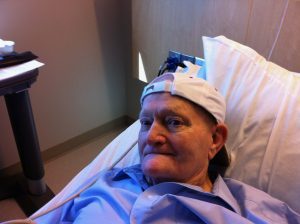
In The Hospital In Street Clothes And A Baseball Cap

Modern Medicine

Modern medicine came into play only a few times in his life.  One year Dewey had pneumonia and Dad was doing chores for both himself and Dewey.  The problem came when he got pneumonia, too.  He ended up in the hospital for a week.


Then 2013 arrived.  That year Dad spent plenty of time in the hospital. He had a septuple bypass, surgery for colon cancer, and a procedure on his carotid artery. The doctors said that they couldn’t do the surgery for the cancer without him having the bypass surgery as he wouldn’t live through it.  They also told him that doing the heart surgery without the colon surgery was a waste of time.  Basically, he needed to do both if he wanted a chance to live and have a reasonable quality of life.


He considered it carefully, and finally decided to do both surgeries.  The heart surgery was lengthy and the recovery was difficult.  Then, after he did rehab, he went back for the colon surgery, which was much easier on him.  The carotid surgery was later in the year and was far more straight forward that the first two. 


After that, he said, “No more surgeries.”  Well, that lasted until cataracts on his eyes got so bad that he couldn’t read, which he loved to do.  So, he had surgery to remove the cataracts.  Doctors were amazed as his vision after the surgery was 20/20 and he was over 90.  He did need reading glasses, but otherwise had perfect vision.


Father’s Day 2022

New Attitude

After his surgeries in 2013, Dad was asked why he was happy.  He responded, “I’m 85 and I’m alive!”   After he lived through those surgeries, he seemed to feel like he was invincible.  Doctors even told him that overall he was healthier than they were and that he just might live to be 100.  I think he set that as a goal.  Although he didn’t make it, modern medicine gave him nine more years.


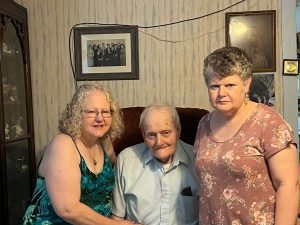
The photograph shows him on Father’s Day in 2022 just over two weeks before he passed.  He was looking great right up until about a week later.  We knew it was time when he suddenly could no longer stand.  Yet, he still tried to get out of bed.  As always, he had things to do. 


The Joke

Dad always joked that Mom was related to everyone east of the Frisco Railroad.  She wasn’t actually related to everyone.  It just seemed that way.   They probably aren’t even my most populous family, but with so many of them concentrated in one area it felt that way.  Back when I started taking photos for for Find-A-Grave, I started by taking photos of relative’s graves.  However, Clarksburg Cemetery (east of the Frisco) changed that.  My sister and I kept discussing each grave and so many of them were related that I gave up figuring out who was related and who wasn’t.  I just started photographing all the graves as it was quicker that way.

Mom’s Paternal Side

Abel John & Eunity (Harrison) Pellett

Pellett

The Pellett family arrived in southeast Kansas before Henry, my great-grandfather was born in 1871.  However, it wasn’t just Seth and his wife Aseneth Crawford that immigrated to the area.  Seth’s parents and six of his siblings lived part or all of their adult lives in the area.  Seth, alone fathered eleven grandchildren for his parents, Abel John and Eunity Harrison.  Combining this with those of his siblings, Abel John and Eunity had many grandchildren (and great-grandchildren) in the area (plus others in Ohio and Illinois). 


It is definitely a good thing that Abel John’s 10 siblings, Eunity’s 14 siblings, and Aseneth’s (Seth’s wife) 9 siblings didn’t also locate in southeast Kansas.  And, it may explain, in part, why the family left Ohio.  After all, who do you marry if everyone is a first cousin?


Conner & Portwood

Henry & Della (Conner) Pellett

Around the same time that the Pellett family arrived in the area east of the Frisco, the Conner and Portwood families also arrived.  Again, multiple generations of the families moved to the area. Several of Thomas and Martha (Whitworth) Conner’s eleven children settled in the area with their parents.  Meanwhile, only Simpson Portwood, his son Woodson, and Woodson’s family moved to the area with the rest of his children remaining primarily in Illinois.


The two families intermarried. Hugh Portwood married Emma Conner.  Then he married Emma’s sister Margaret Conner after Emma died. Willis Conner (brother to Emma and Margaret) married Mary I. Portwood (Hugh’s sister).


Della Conner, one of eight children of Willis and Mary (Portwood) Conner married Henry Pellett, connecting two large families that resided within relatively close proximity to one another.


Mom’s Maternal Side

George Thomas

Thomas


When they moved to the area sometime between 1873 and 1877, George and Louisa (Carson) Thomas didn’t bring their parents and siblings.  Still, George was one of thirteen siblings and their children had well over fifty first cousins just on his side.


George and Louisa had four children and  they all remained in the local area.


Ashby

Will & Ella (Ashby) Thomas Family

George Thomas’ son James WIlliam “Will” married Sadie (Ella) Ashby, daughter of Grant and Lizzie Ashby.  Ella gave birth to 9 children before she died in childbirth.


Ella’s family was both large and complicated.  She was one of twelve children, but her parents were first cousins.


Grant and Lizzie moved to southeast Kansas sometime between 1895 and 1897. Being the oldest, Ella married and stayed behind when the family moved on westward.  However, the connection to this family  remained strong and Ella’s siblings and their descendants remained in the conversation of my Mom’s generation.


The talk

What probably made this family seem so huge was simply the talk.  My grandmother, my mom, her siblings, and others in the family would talk about all these people without explanation. The conversation was so intertwined that no one could de-tangle it no matter how hard we tried. We often speculated that they couldn’t even follow the conversation.  But in good news, they loved every minute of it and were dedicated to keeping every  piece of information on all of these people, including their friends and other connections.  I will be going through all those newspaper clippings and other items for years trying to figure out who east of the Frisco really is related to me!


Revolutionary Soldiers are buried in various cemeteries and graveyards with some near battle grounds and others near lands where they moved after America gained its independence from England.  When traveling in Pennsylvania, we visited two graveyards that, although not dedicated to Revolutionary War soldiers, contained the remains of numerous men who fought for independence.  They are very different graveyards.  Yet, both are intriguing.

Newtown Presbyterian Church Graveyard


The Church

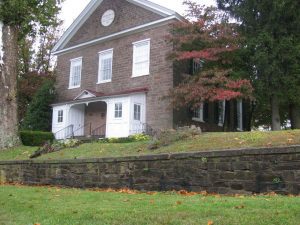
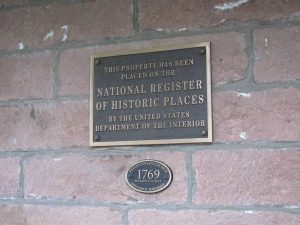
The reason for our visit to the Newtown Presbyterian Church in Newtown, Pennsylvania was that it was the location where Rod’s 6th-great grandparents Stephen Stackhouse and Amy Van Dyke got married in 1784.  It was built in 1769 to replace the original church.  It has been remodeled since and is on the National Register of Historic Places.


The church secured its place in history in 1776, when George Washington decided to use it as military facility during the Revolutionary War.  It was used as a hospital, jail, and POW camp.


To read more about Historic Newtown Presbyterian Church . . . Click here.


The Graveyard


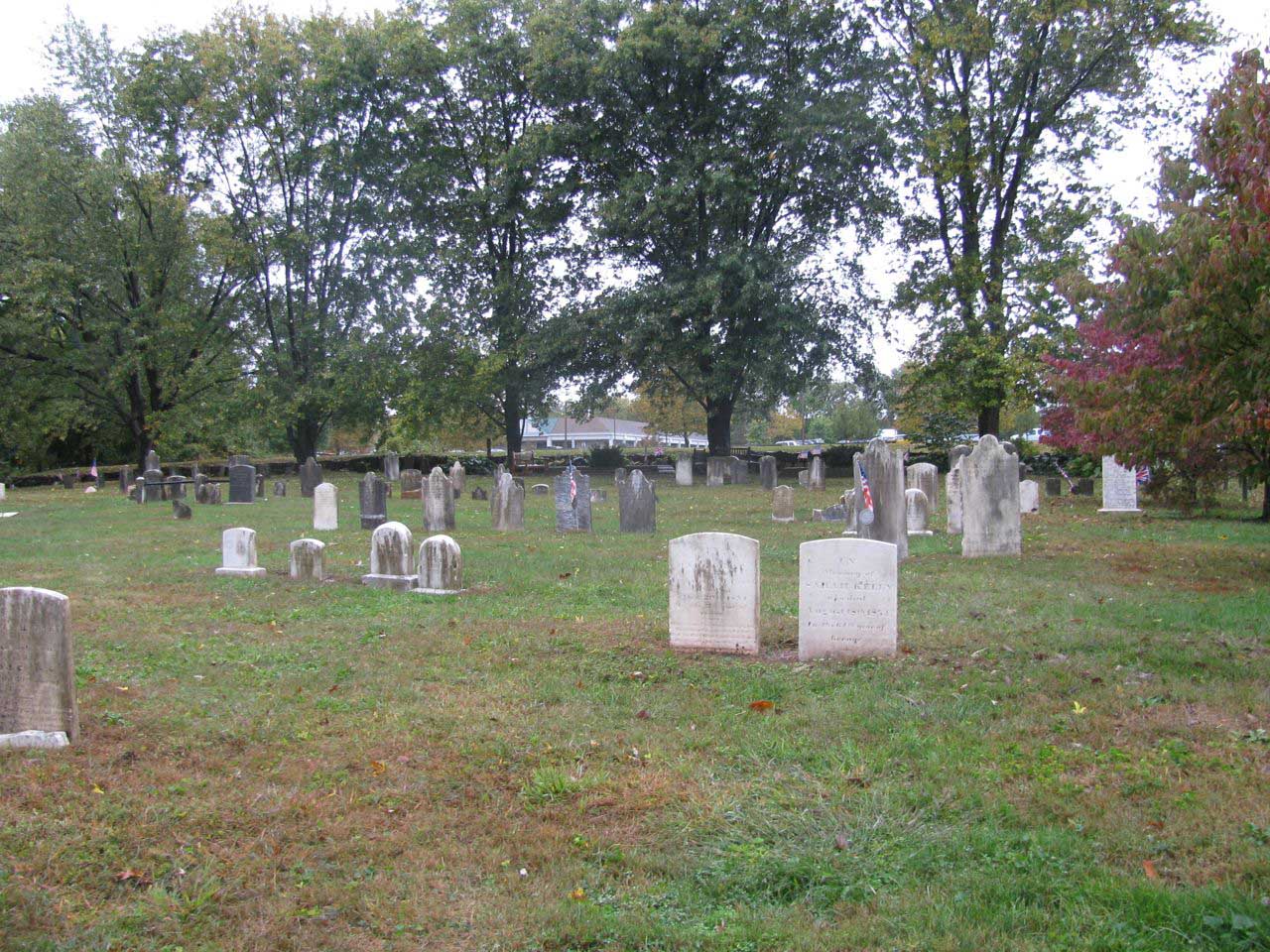
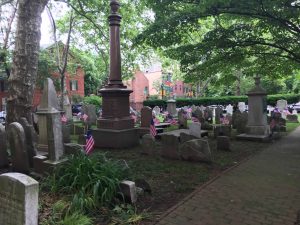
Behind the church lay a graveyard that was worthy of attention.  It was sparse in spots as many of the stones had given away to nature and time.  Fortunately, many had not been destroyed, but simply could not stand where originally place. Instead, many gravestones lined the back of the church and the fence row. 


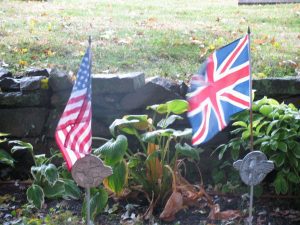
Despite the sparse nature of the graveyard, the American flag could be seen gracing various stones throughout.  What was really intriguing was the British flags, which were scattered throughout.  Sometimes they were very close to graves with American flags.  Research shows that  28 U.S. flags fly over the graves of Revolutionary War soldiers and 8 British flags fly over the graves of soldiers of the French and Indian Wars, which pre-dated America’s independence.
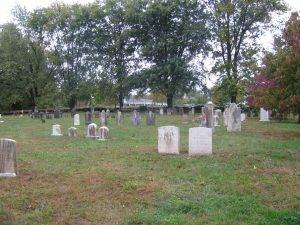
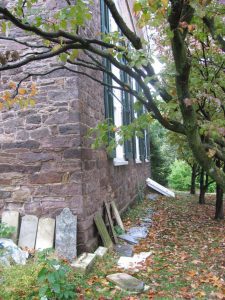
 

To our knowledge, we do not have any relatives buried in the graveyard.  However, I found that a young child with the last name of Buckman was buried there in 1760.  I have ties to this family in Bucks County.  However, my particular line belonged to the Quaker faith and would likely have buried their family members in the Quaker cemetery.


We spent less time in the graveyard that we wanted as light rain was coming down.  We do plan to go back one day as both of us felt at home in Newtown and we both have long ago relatives that lived around that area.  Matter of fact, Rod had relatives that lived right across the street from the church.  But, that is a story for a different day.

Graveyard

American & British Flags

Gravestones Along The Church

Old Pine Presbyterian Church Graveyard


Old Pine Church 2018

The Church

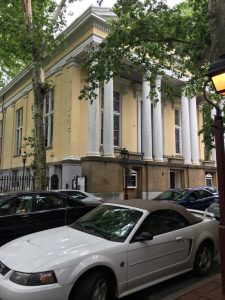
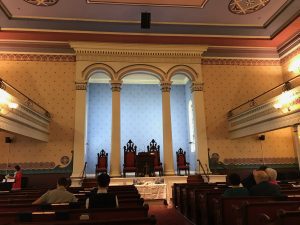
Our first visit to Old Pine was a drive-by visit in 2007 to see the Church of the Patriots and graveyard where several of Rod’s ancestors are buried.  Our second visit was in 2018 for the 250th Anniversary of the church.  We were invited to join the celebration as Rod’s 7th-great grandfather William Hurrie/Hurry, who was the sexton of the church, keeper of the State House, and ringer of the Liberty Bell was an early member of the church and is buried in the graveyard.


Buried along with William and other family members were his two son-in-laws John McGinley, Rod’s 6th-great-grandfather, and Joseph Fry.  Both men served in the war effort and Joseph Fry succeeded William as keeper of the State House.


William and his son-in-laws were among the many men of Old Pine who supported and fought for America.  Approximately 500 men who fought for our country are associated with Old Pine Church and/or Graveyard.


Old Pine was used, not by the American militia, but by the British during the occupation of Philadelphia.  The British gutted it, made it into a hospital, and even bedded their horses in the lower level of the church.

To read more about the history of Old Pine Church . .  . Click here.

The Graveyard


The graveyard at Old Pine is anything, but sparse.  Matter of fact, bodies are buried up to six people deep (and maybe more). They basically buried people head to toe, shoulder to shoulder.  And, some places it doesn’t appear that there is that much space between where the bodies are said to have been buried.
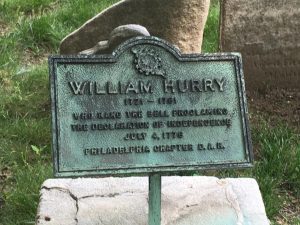
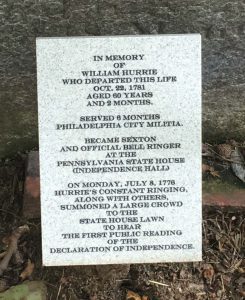
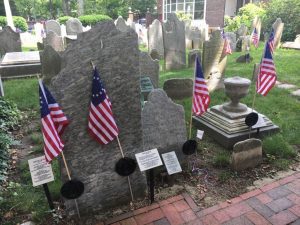
 

In the early 1900s, the sexton of the church was instrumental in finding William Hurrie’s gravestone.  His name was spelled “Hurry” on the stone and at the time only the “ry” was showing as the stone had sunk.  When the sexton investigated, he found that it belonged to William Hurrie and some others in his family.  Prior to that it was believed by historians and the church that William was buried in the graveyard, but the exact location was unknown.

William Hurrie/Hurry Markers

The Family Plot

The family plot lies just to the east of the brick sidewalk just beyond the southeast (back left) corner of the church.

This find was of great historical significance since William Hurrie is believed to have been the person who rang the Liberty Bell  to call people to the State House to hear the reading of the Declaration of Independence after it had been signed. The determination that he was the ringer of the Liberty Bell is told in family tradition as well as by the park rangers when visiting the Liberty Bell and other historical locations. 


Some controversy still  exists because William was not the keeper of the State House until early the following year.  However, it was known that  Andrew McNair, the keeper of the State House, was absent one day in that pay period and historians have determined that he happened to be absent on the historical day (July 8, 1776) that the Declaration of Independence was publicly read.  Thus, they have credited William with ringing the bell that day much to the displeasure of the McNair family.  To read more about what I have discovered about William Hurrie and the Liberty Bell . . . Click here.