Some lives sound just like a movie script or a good book. You can’t wait to find out what is going to happen next. Such is the life of Rebecca. . . .
Death of Her Mother
Rebecca’s parents welcomed her in May of 1887. She was their first child. During Rebecca’s first year of life, however, her mother became ill. Over several months, the local women cared for her mother. As Rebecca approached one year of age, her mother grew worse and gave up her fight, leaving tiny Rebecca to fend in the world without a mother to guide her.
By the time Rebecca turned three, her father had remarried. A half-brother and half-sister would be born in the years that followed. Since her dad was a railroad man, was a member of several local organizations, and was involved in local politics, Rebecca spent quite a bit of time with her step-mother, grandfather, aunts & uncles, and others in the community. Some of these were good influences and others were less so. And, it was known that her half-uncle, who was the apple of her step-grandmother’s eye was spoiled to the core. No one else measured up in her step-grandmother’s eyes. With step-siblings and step-aunts/uncles close to her in age, she had plenty of opportunities to be second fiddle.
At age six, Rebecca broke her collar bone while playing at school. A couple of months later she would lose her half-aunt, who was a young teenager, to pneumonia. Other than that, little else remarkable appeared to have occurred during the remainder of her childhood. However, as Rebecca matured, things began to change.
Marriage & Abandonment
On July 11, 1902, Rebecca returned home from visiting Drywood, where her grandfather and step-grandmother lived. Just over a month later at age 15, Rebecca, with her father’s consent, married Harvey, who was seven years her senior. Apparently, life together wasn’t a bed of roses. A month after their marriage Harvey filed charges against Rebecca’s father for disturbing the peace and making threats against him. Evidently, a month into their marriage Harvey had already abandoned the young bride and her father did not look fondly upon that action. Her dad pleaded guilty to disturbing the peace and paid a small fine.
But, that was just the beginning of the rocky relationship between the newlyweds. The following summer Harvey sent Rebecca to Hiattville, a short distance away, to visit. While she was gone, he proceeded to sell the cow, take all of the money from his paycheck, and skip town without telling anyone where he was going.
With no money and no husband at home, Rebecca went to her father’s house, which was close by. With their daughter-in-law out of the house, Harvey’s parents took it upon themselves to go to the home she had shared with Harvey and take their furnishings and household goods.
Rebecca’s father saw a light at the house and investigated which led him to their home across the alley from Rebecca and Harvey’s home. There, he found some of the furniture, quilts, etc. that they had taken in Harvey’s parents home. Other items had immediately been sold.
One thing led to another and either her father and/or her step-mother convinced Rebecca to press charges against Harvey’s parents for the theft of the items which they estimated to be valued at $19.50. Thus, on July 22, 1903, 16-year-old Rebecca filed charges against her mother-in-law and father-in-law.
Dividing The Town
Now, being 16, being abandoned by your husband, and being in the middle of your parents and your in-laws might seem like a lot to handle. However, when your father-in-law is the town marshall, your father a city councilman, and they are of opposite politics it gets a lot more complicated. This is especially true when your father-in-law has made lots of enemies by strongly enforcing temperance rules while his sons are known to partake of the Devil’s drink. And, rumor has it that they bootleg it, too.
Before long, the entire tiny town of Hepler had taken sides. No one, it seemed, was neutral.
On Trial
That August the trial took place a few miles away in the county seat. There was no question that Harvey’s parents had taken the furnishings. However, they contended that Rebecca said that they could take the furnishing and sell whatever they wanted. It was a sixteen-year-old’s word against that of the town marshall and his wife, as no one had witnessed any conversations between them.
Additionally, her in-laws argued that they had helped the young couple set up housekeeping so they were entitled to the belongings. But, they still planned, according to their testimony, to send the money to Harvey as soon as they knew where he was.
Rebecca’s family argued that wasn’t the case. It got more personal with arguments about Rebecca’s father forcing Harvey to marry her. It wasn’t like their son wasn’t an adult when the marriage took place. And, all reports were that it was a consensual arrangement. However, Harvey did work for Rebecca’s father which may have played a part in the argument.
In the end, the jury was split on who to believe. And, the trial ended in a hung jury – twice! After the second trial, the judge chose to dismiss the case.
The Preacher & His Wife
In January 1904, Rebecca was looking for work in Ft. Scott. A minister and his wife took her in and gave her a job helping the minster’s wife. She claimed that her husband had secured work at a restaurant on the east side of town. Now, whether Rebecca and Harvey were both in town and had come together is unclear. However, it is clear that she was a couple of months pregnant at the time.
The arrangement with the preacher and his wife did not last long. The exact circumstances are murky, but it had something to do with moral behavior. The preacher’s wife soon asked Rebecca to leave and told her to return to Hepler. Rebecca refused. The police became involved in the situation. Initially, they started to look for a home for Rebecca. However, soon Rebecca was given the choice of leaving town or going to jail. Rebecca left town, apparently alone.
The Baby
By the time her baby was born in August, Rebecca was in Kansas City, Missouri. She named the little girl Dorothy. However, Rebecca was unable to care for her child. Thus, she left Dorothy with the Evangelical Lutheran Kindergarten Society. According to Rebecca, the agreement was that they would take care of Dorothy until Rebecca was able to do so.
Meanwhile, Harvey had lived in Ft. Scott and then returned to Iowa where he had gone when he skipped town. It was there that on their third anniversary he finally filed for divorce. He stated that Rebecca was the one who had abandoned him.
The Lawsuit
After Dorothy was born, Rebecca worked as a domestic and possibly in other jobs. Then, in June of 1907, Dorothy married Joseph. The following January she returned to the Evangelical Lutheran Kindergarten Society to get Dorothy, who was now three years old. They told her that Dorothy had been adopted and refused to give her the name of the adopting couple or the location of her daughter. Furious, Rebecca hired an attorney and stated that she intended to sue for the information.
Flash forward to April of 1910, the census listed Dorothy and two other children living with Rebecca and Joseph. This seems more of a fantasy than a reality as the census also indicates all three are her children, but Rebecca and Joseph had no children. However, Joseph had adopted two children in hopes of satisfying Rebecca. She openly pined for both Dorothy and Harvey from early in the marriage. She made no secret of the fact she still loved Harvey and felt no love for Joseph. However, adopting the children had not worked out well. And, by the time of the census, Joseph had returned the children. Additionally, other records indicate Dorothy was with her adoptive family at the time.
The Suicide Attempt
On April 28 of that year, only a couple weeks after the census, Rebecca and Joseph separated. Rebecca returned to Harvey, whose wife had recently died, to proclaim her love for him. Apparently, he did not return her affection.
So, around 4 a.m. Sunday June 5, 1910 Rebecca went to Harvey’s father’s house where in an attempt to poison herself, she ingested two ounces of laudanum. Harvey’s father found her on the porch unconscious and moaning, while clutching Harvey’s photograph. He immediately called for a doctor and Rebecca’s life was spared.
In September, Joseph filed for divorce.
Another Husband
In March 1912, Rebecca married again. This time to Charles, who like her other husbands was several years older than her. They married in the Kansas City area, lived for a time in Topeka, and finally settled in Abilene.
In February 1916, she took $2 of his pay, sold the chickens and took off for Topeka with $20 in hand. Her husband, reportedly, was puzzled and surprised at her disappearance. She proceeded to file for divorce stating that he treated her cruelly and neglected her.
The divorce must have never been finalized as Charles filed for divorce for abandonment of more than one year on November 18, 1920. It was granted January 25, 1921. In 1920, at least for a time, Rebecca was livingin Cheyenne, Wyoming and working as a waitress. She reported at the time that she was divorced.
I wondered why she might have been in Wyoming. We will likely never know, but it seems possible that she was trying to make her way to Washington to where Dorothy lived. Dorothy’s adoptive parents had died before she reached the age of maturity. When some of their grown children had moved west, Dorothy had moved west with them.
Back to Harvey
March 1, 1921, Rebecca finally remarried Harvey in Des Moines, Iowa, but she did so using her middle name. Both claimed it was their second marriage. However, it was at least Rebecca’s fourth and Harvey’s third.
Her Death
February 24, 1923, Rebecca took her last breath. She had undergone an operation at a hospital in Kansas City. Harvey, along with her father, accompanied her body to its final resting place at Hiattville, but it appears that they were once again divorced. He was living in Iowa; she in Kansas City. And, her death certificate stated that she was divorced. Yet, Harvey and Dorothy were both acknowledged as her survivors in her obituary.
Rebecca’s official cause of death was listed as status lymphaticus. But, in reality she died a broken woman with a heart that had been broken far too long. Rebecca was only 35.
Afterward
Although this story is about Rebecca and her troubled life, it seems Harvey possibly played a bigger role in keeping Rebecca infatuated with him than is documented. It just appears that their paths kept crossing and if Dorothy is in fact his child, that would imply that he came back to her in the fall of 1903 around the time of one of the trials. Additionally, some years after Rebecca died, Harvey was sued by another man for having an ongoing relationship with his wife, including taking her on a vacation and finally stealing her away.
Image: pixabay.com Free to use under the Content License .
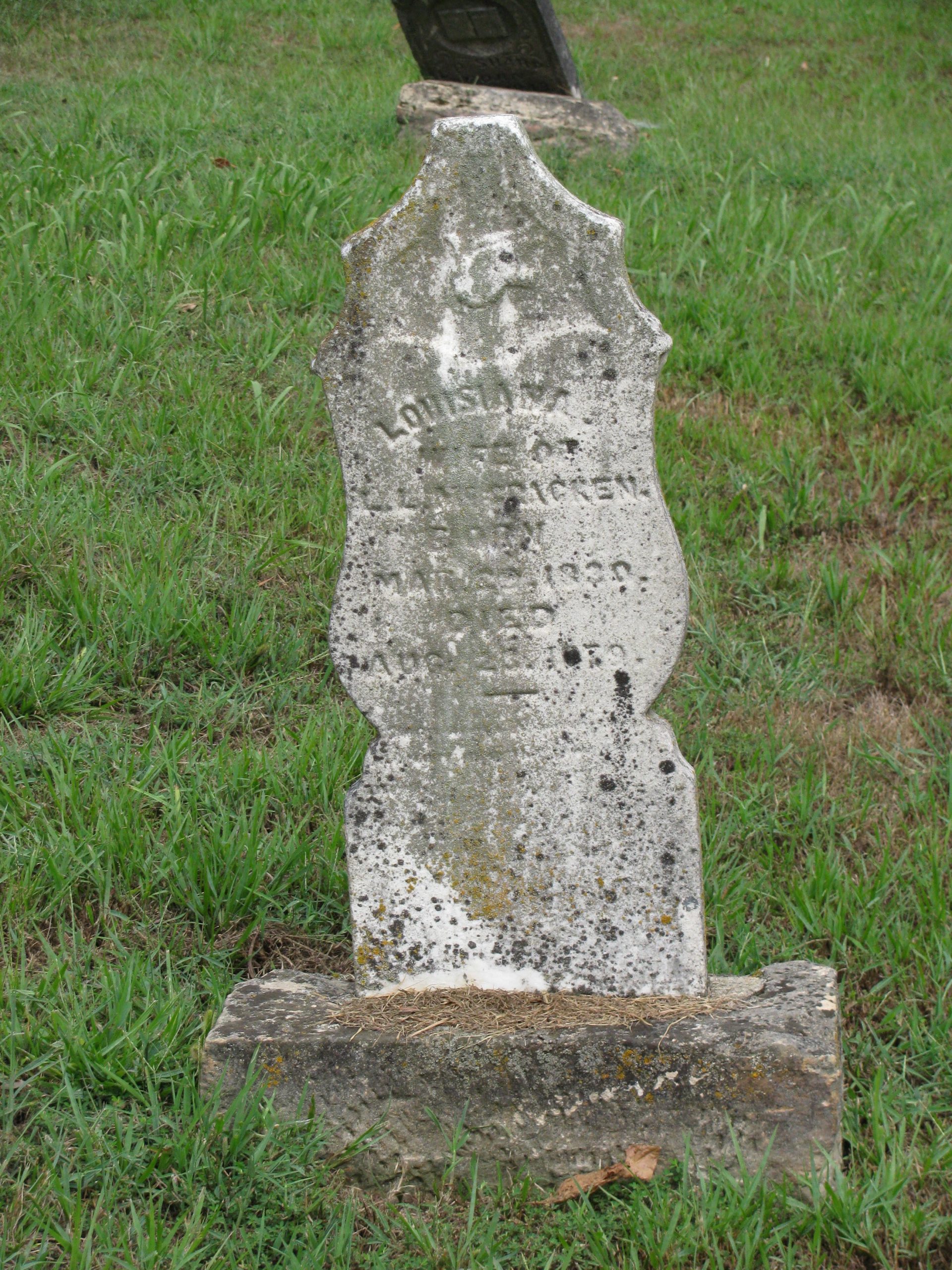
 Louisiana Mateer Badgley McCracken