When I have a family mystery, I like to write down all the knowns, theories, stories, etc. regarding the mystery.  I then revisit and rewrite them as I work to resolve the mystery.  Sometimes I write up stories based on the theories.  This helps me see if they are plausible or not.

This article takes a look at Roger Ellis, my 4th-great-grandfather and presents the story of my current working theory about his life and his parents.

My Theory


Although it is possible that Roger’s parents were born in Pennsylvania, my working theory (and this is a theory with a high chance of change) is that Roger’s parents originally lived in Virginia or possibly Maryland.  They then migrated to Pennsylvania, possibly to Washington County.  This may have been influenced by the Revolutionary War as people were known to move to that area during the war and Roger was born in Pennsylvania on July 29, 1782.

They could have lived in Pennsylvania and then migrated through Virginia to Kentucky as one of the migration patterns went from Pennsylvania to Loudoun County, Virginia, where Roger’s wife Susannah (Lewis) Ellis’ family lived, and then into Kentucky.  However, I do not yet have any evidence that the Ellis and Lewis families knew each other prior to their arrival in Shelby County, Kentucky.

When looking at the name Roger Ellis, one is found in Luzerne County, Pennsylvania in the 1790s.  That Roger was older and had what appeared to be several brothers or cousins that had land near him.  The names of those in that area don’t seem to match Roger’s family and no DNA matches to that Ellis family have been found to date.

In addition, Roger and his siblings appear to live in areas that were highly populated with people from Virginia.  Since people of a given region tended to migrate together or at least to the same places, this implies Virginia is a likely place of origin or that the family at least spent some time in Virginia.  It is also important to note that Kentucky was a part of Virginia prior to gaining statehood on June 1, 1792.


Kentucky

Then, prior to late November 1797 and possibly as early as 1790, the family or a portion of the family was in Kentucky.  David Allis (spelling in the Bible) purchased a Bible in Georgetown, Scott County, Kentucky on November 27, 1797.  Georgetown was originally called Lebanon and was renamed in 1790 in honor of President Washington.  The name was legally “George Town” until 1846 when it was legally changed to Georgetown.


Names In the Family Bible

Note: Various spellings of the name Ellis were used by the family.  The names are listed as recorded from the family Bible (spelling & order)

  • Owner: David Allis
  • Richard Elless b 15 Jan 1779
  • Roger Elless    b 29 July 1782
  • David Elless b 7 Jan 1780
  • Ann Elless    b 23 Dec 179-
  • Richard Elless b 1 Nov 179-
  • James Miller Elless b 19 Dec 1798
  • Elizabeth Elless b 21 July 1801
  • Jeremiah Elless b June 1804
  • Sarah Elless    b 25 Apr 1807
  • John Elless b 10 May 1804
  • Nancy Elless b 1 Jan 1800
  • James Elless b 4 May 1805

James, who was born in 1805,  is Roger’s son James Lewis Elless/Ellis.  The use of the “Elless” spelling implies these births were likely added to the Bible while in Roger or his son James’ possession as most early records and some later ones use Ellis or Elles.  


Settling in Kentucky

By 1801, Roger Ellis moved west a county to Franklin County, Kentucky (tax record).

Tax records show that by the following year, Richard (likely Roger’s brother), John, and William Ellis were in Shelby County, Kentucky.  None of them appeared to own real estate, but between them they owned five horses. 

By 1803, Roger joined his family in  Shelby County, Kentucky.  The Ellis men listed in the tax records for that year were Roger, Stephen, Thomas, William, Daniel, John, and Richard.  Although Ellis wasn’t as common as Smith and some other names, it was common enough to assume that these men may not all be related.

The next year, the list of Ellis men on the tax list for Shelby County included Richard, Roger, John (2), William (2), Daniel , Joseph, and Jesse.  At this point, none of the men own real estate.  However, they own 22 horses between all the men, with Roger owning two.  Daniel, Joseph, and Jesse have African Americans also living in their household.

In 1805, Roger married Susannah Lewis, daughter of Joseph and Rebecca or Esther (Beck) Lewis, who had also settled in Kentucky.

The following year, the Ellis men on the Shelby County tax list included John (2), Thomas, Roger, William, Stephen, Jesse, Daniel, Samuel, and Joseph.  Of these men, only Jesse and Daniel owned real estate, having 210 and 200 acres, respectively on Floyd’s Fork.


Taxation and Land Ownership

Ten years later the number of Ellis families who owned real estate had grown as had the number of Ellis families taxed in general.  Each Ellis listed in the tax records, their land ownership, and a few additional details are listed below.

  • Elizabeth Ellis owned 210 acres of 3rd rate land on _____ Fork.  She owned 4 horses and had 5 African Americans living in her household.
  • William Ellis owned 100 acres of 2nd rate land on B. Bullskin Creek.  He owned 2 horses.
  • Isaac Ellis owned 300 acres of 2nd rate land on B. Bullskin Creek.  He owned 7 horses and had 7 African Americans living in his household.
  • David Ellis owned no land and only had one horse.
  • William Ellis owned 50 acres of 2nd rate land on Floyd’s Fork.  He owned 4 horses and had 2 African Americans living in his household.
  • Mary Ellis owned 178 acres of 2nd rate land on Floyd’s Fork.  She owned 2 horses and had 4 African Americans living in his household.
  • Charles Ellis owned 255 acres of 3rd rate land on Floyd’s Fork.  He owned 8 horses and had 12 African Americans living in his household.
  • Samuel Ellis owned 209 acres of 2nd rate land on Bullskin Creek.  He owned 8 horses and had 11 African Americans living in his household.
  • Joseph Ellis owned 116/4 acres of 3rd rate land.  The location was not provided.  He had 6 horses.
  • Thomas Ellis owned no land.  He only owned one horse.
  • Stephen Ellis owned 100 acres of 2nd rate land on Six Mile Creek.  He owned 9 horses.
  • Roger Ellis owned 55 acres of 3rd rate land on Six Mile Creek.  He owned 3 horses.
  • William Ellis owned 192 acres of 3rd rate land on Six Mile Creek.  He owned 6 horses.
  • Richard Ellis Jr. owned 150 acres of 3rd rate land on Six Mile Creek.  He owned 2 horses.
  • Richard Ellis Sr. owned no land.  He owned 2 horses.
  • John Ellis owned no land.  He owned 6 horses.


Roger Ellis’ Land in Shelby County, Kentucky

Roger’s Land

Roger and John Bell made an agreement for Roger to purchase the land for $1 per acre or $55.50.  However, before the land transferred to Roger, Mr. Bell died.  This complicated things and created confusion and it appears they may have attempted to sell the land.  In any case, with more legal work and an additional $1 Roger became the legal owner of the land.


Formal Descriptions

The formal description of Roger’s land mentioned above is  “lying and being in the County of Shelby on the waters of Six Mile Creek containing by survey fifty five and a half acres and bounded as follows to wit: Beginning at three beeches North west corner of Jesse Lewis land thence South East One hundred poles to two beeches and sugar tree corner to Abraham Cook thence with his line South 88 ½ West to the lick branch thence down said branch to three Sycamores at the mouth of said branch thence a straight course to two beeches and sugar tree South West corner of John Rogers land thence East with his line to the beginning.” 

It was later described as follows: parcel of land lying & being in Shelby County on the waters of Clear Creek Containing fifty five & a half acres be the same more or less bounded as follows to wit Beginning at a stone corner to Michael Cook thence with his line South 88 West 80 poles to a stone corner thence South 3 East 140 poles to a stone corner thence North 88 East 80 poles to a stone corner thence North 3 West 140 poles to the Beginning.” It was a portion of the 5,570 acres originally patented to Moses Kerkendall.


Land Ratings

The land was considered 3rd-rate.  Third-rate land was hilly, rocky, or heavily timbered; whereas, first-rate land was excellent farmland suitable for corn or tobacco and second-rate was somewhere in between. The rating of land was based on state rules for taxation.  It was related to the productivity and fertility of the land.  Each rating had a different tax rate with first-rate paying the highest rate.

The land rating did not imply a valuation of the land, instead it was simply an indicator of its agricultural value.  Land on Six Mile Creek may not have been the best for growing crops.  However, it was sought out for its water supply.  Daniel Boone’s brother owned a large amount of land on the creek at one time.


Roger’s Family

If we assume that families bought property near each other, then we can assume that Stephen, William, and Richard Jr. are likely all related to Roger.  Unfortunately, it is impossible to tell anything about the ones that didn’t own land.  However, the list is in the order that they were recorded with other families amongst them. Thus, Richard Ellis Sr. and John Ellis are likely family members.  The name David is in the family records and it is likely, although he isn’t listed with the rest of the family, that this David is a part of our Ellis family.

Stephen is a question as he isn’t listed in the family Bible.  However, it appears that this same man moved to Jefferson County, Indiana, which was adjacent to Ripley County.  There he founded the Brushy Fork Baptist Church.  An interesting tie to Roger and his wife Susannah was that Stephen’s wife Rebecca was Susannah’s sister.  Stephen had married her in 1795 in Virginia.  Since he also lived on Six Mile Creek, it seems likely that he is related to Roger in some way.

Roger is later identified as being a strong Baptist.  Thus, it is likely that Roger attended Six-Mile Creek Church, which was formed in 1799.  The first church was a log cabin, which burnt in the 1800s and was subsequently replaced with a more modern building.  The church was later renamed Christiansburg Baptist Church and still exists today and celebrated its 225 anniversary in 2024.


Roger Ellis Land Patent. Source: Bureau of Land Management – General Land Office Records.

Indiana

Growing Family

In 1818, Roger sold his land on Six Mile Creek to William J. Johnston Jr. as he had moved his growing family to Indiana.

Roger and Susannah settled in Ripley County, Indiana, where they raised their family. 

Roger and Susannah’s children are as follows (in birth order) with most of them being born in Kentucky.

  • James Lewis Ellis
  • Nancy Ann Ellis
  • David Ellis
  • John Ellis
  • William Ellis
  • Mary Elizabeth Ellis
  • Martha Jane Ellis
  • Rebecca Ellis
  • Wesley W. Ellis
  • Susannah H. Ellis


Personality          

In The Peoples History of Ripley County V.01, Violet E. Toph, a local historian, describes Roger as follows:

“Mr. Roger (?) Ellis, or, as everybody called him then “Old Toddy Ellis,” a shrewd farmer of little education and less culture, but an honest, industrious, upright man, a rigid Baptist, and an unflinching Democrat.”


The one thing that is strikingly odd is that he did not come from culture as his wife Susannah apparently came from money and refinement.


Roads

In addition to farming, Roger, like many others in those early days, was a viewer of roads.  The viewers made recommendations for where roads should or should not be built.  One of those roads just happened to terminate by Roger’s farm.  Although he was not a viewer for that road, one must think that he influenced that decision as he became the road supervisor for his district, which paid him $1.

The viewers also recommended changes to existing roads in the area.  


Roger’s Death

Roger died December 3, 1859.  Susannah followed him six years later.  He and Susannah are buried in Ripley County.  Read more about  the questions surrounding Roger’s burial.


Siblings & Other Relatives

Richard 1779

Roger’s brother Richard lived in Shelby County, Kentucky where he married Lucretia Lee.  Later, he had land in Ripley County, Indiana next to Roger’s land.  Roger’s oldest son James Lewis Ellis later had a patent for the same property.  It appears that the same Richard may have also lived in nearby Switzerland County.


David Ellis

David Ellis appears to have married Martha Epperson and stayed in Shelby County, Kentucky.  His will entered probate in January 1835.


James Miller Ellis

James Miller Ellis married Mary Hill in 1818.  They lived in Switzerland County, Indiana, which is near Ripley County.


Jeremiah Ellis

Jeremiah, who was born in 1804, was likely Roger’s nephew.  (Bible entry ordering)  He was staying with Roger’s family in 1850.  In 1855, Jeremiah wrote his will stating that he lived in Ripley County, Kentucky.  He gave his current wife Luhana(?) (Hatfield) Ellis and his son John a portion of his property while selling the remaining portion.


Other People’s Theories

There are a variety of theories that researchers have regarding Roger Ellis’ parents.  The following are couples/individuals that people on ancestry.com believe are Roger’s parents.

  • Theory 1: Joseph Ellis and Mary Litteral
  • Theory 2: Obediah Ellis and a wife prior to his marriage to Ms. Nicholson
  • Theory 3: Joseph Ellis and Mary Hughes
  • Theory 4: Richard Ellis and unknown
  • Theory 5: Joseph Elllis and Elizabeth Perkins
  • Theory 6: Joseph Ellis and Sarah Hugg (Back to Ellis and Perkins)

The first theory is the one most widely used in trees.  However, none of these have been proven and some can be easily disproven. 


Do any of the theoretical parents match my story?

Whether any of these couples are Roger’s parents is currently unknown.  It is possible that they are a completely different couple than those listed.  I do know that Joseph Ellis and Elizabeth Perkins can be eliminated as Elizabeth was well beyond childbearing years when Roger was born. 

Additionally, we do have DNA matches to people that claim Sarah Hugg as an ancestor.  Ancestry has picked up on this and Thru-lines lists her as a possible ancestor.  However, the families do not appear to match up with Roger and the family Bible.  Also, the  initial review of these families indicates that the connection is likely through a different family line.


AI Theories

I decided to ask grok (AI) what it thought Roger’s story might be. I provided basic information and then added to it in subsequent queries.  I greatly abbreviated the answers I got for readability.

Query #1

I started by asking the AI what the story likely was for someone born in 1782 in Pennsylvania, was a Baptist, and who was in Franklin and Shelby Counties in his early twenties.


Answer

It guessed that he likely lived in a rural area of Pennsylvania and might be of Scotch-Irish or German descent. (Note: I haven’t given it a name yet.) It talked about migration that occurred from Pennsylvania to Kentucky after the Revolutionary War.  Apparently may people made that move looking for land, lower taxes, and other economic opportunities.  

With Kentucky as a new state, it was in high demand from settlers who were traveling down the Ohio River or on the Wilderness Road to reach their destination.  It was also very attractive to Baptists as the religion was widespread in the region.

The AI believed his life probably was focused on working the land, church, and family. “Overall, it’s a tale of resilence, faith-driven community building, and pursuing the American dream on the frontier.”

Query #2

I told the AI that the name was “Ellis” with an unknown country of origin and that the given names were English.

Answer

The AI immediately jumped to Roger Ellis and went on to tell me about Roger’s history as I know it.  (Love it when it uses my own research to answer my questions. I had asked questions related to him before, but not in this particular query stream.) 

It went on to tell me that the name Ellis is primarily English or Welsh and that many people with that name came to America in the 1600s and 1700s.  It mentioned Lancaster among other western counties of Pennsylvania where people went to exercise religious freedom. It added that many people from Virginia, Maryland, and Pennsylvania made the move to Kentucky at the time I indicated and expanded on previous information it provided about being a Baptist in Kentucky during the early 1800s.

It also reiterated pieces of the earlier answer with little update.


Query #3

I ask it to tell me about Six Mile Creek Church as the person of interest may have attended that church.

Answer

It told me about the founding of the church, changes over times, etc.  Most of which I had already researched.  It added that Roger Ellis, who it felt was a good candidate to match my research, had lived on Six Mile Creek and that other records had placed various Ellis families in the area.


Query #4

I ask how the story would change if the person had ties to Virginia..

Answer

The AI said that a connection to Virginia would explain a lot about the location settled as a high number of settlers from Virginia settled in Franklin and Shelby counties in Kentucky.  It stated that many early Ellis family in central Kentucky were from Henrico and Goochland counties in Virginia.  Most were English Protestants, but some were Welsh.  Many of them had been in America for some time.

“By the late 1700s, land pressures, taxes, and the lure of Kentucky’s cheap, fertile grants prompted westward moves.” The AI went on to talk about the Traveling Church migration, which was Led by Captain William Ellis and Reverend Lewis Craig (Baptist) that occurred prior to Roger’s birth.  It also told of how many of the Virginia Ellis families came about the time that Roger arrived.  IT went on to provide additional details about Roger and some of the other Ellis men in Shelby County, Kentucky.

The AI went on to speculate why Roger was born in Pennsylvania.  Some options were visiting in Pennsylvania, safety due to the Revolutionary War activity, or land opportunity. Included was a description of the migration from Virginia in this era and some of the names of families that migrated. (All the names were familiar to me from research.) It mentioned that some speculation exists that Roger’s father is Joseph Ellis/Eyles.  The latter is a new spelling for me to research.

Afterward

Some of the information contained herein will be added to the Ellis Mystery pages and/or Roger Ellis’ biography.  The Ellis Mystery pages provide more information about the research into Roger and his family.

AI: grok.com

Featured Image: Altered design of Dark_Moon Art via pixabay.com

Prompt:  A Theory In Progress

#52ancestors52weeks


The world has changed a lot in the last century and a half.  Today, if a child goes to live with another family, paperwork is involved.  Records are kept.  And, the legal system can follow what happens to a child.  That was not true in my great-great grandfather’s day.  He seemed to just let other families take in his children.  But, why?


The Set Up

My great-great grandfather Lemuel McCracken seemed to have a habit of shedding kids.  In other words, they went to live with other people and often they weren’t, as far as I know, related to him in any way.  The following tells the stories of the kids he “gave away” and the one that came to live with him.  


The Give Aways

Delarma (Lawrence)

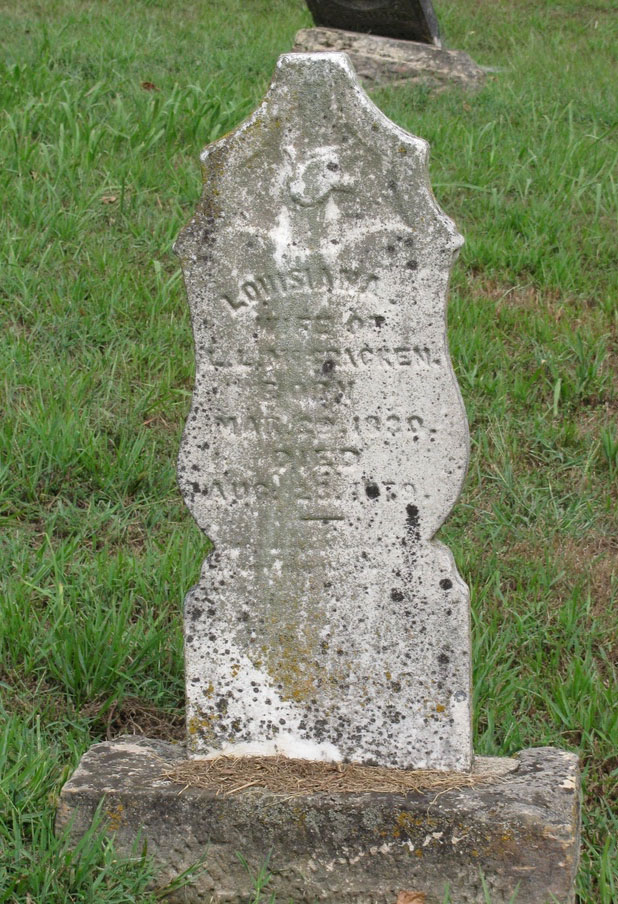
Lawrence was Lemuel McCracken’s son with his first wife, Sarah Dufer.  Lemuel married his second wife Louisiana (Matteer) Badgley McCracken in January 1859, only nine months after Lawrence was born.  Thus, although no record has been found, his mother appears to have died either at the time he was born or within the first few months of his life.  In 1860, he is two years old and living in Lemuel’s household with Lemuel; Louisiana; Lemuel and Louisiana’s son Lemuel Franklin/Francis; and Louisiana’s children, Mary and Louis.


Separation From Family

By 1870, however, Lawrence is living in the household of Robert and Diana Kennedy.  The census indicates that he has no occupation and has not attended school in the last year.  A sixteen-year-old female and a twenty-one-year-old male are also living in the household.  They each had different surnames. 

Zachary Anthony, the twenty-one-year-old, had been living with Robert and Diana at least since he was ten and likely earlier.  At age one, Zachary and a male that I assume was his father were living with another family.  No mother was present and the adult male was marked as “insane.”  Thus, I believe Zachary was effectively an orphan.  The female had not been with them as long.  However, another female had been in the household in the previous census.

Not Moving With Family

In 1873, Lemuel, Louisiana, and their children moved to Crawford County, Kansas.  As far as I know, Lawrence did not travel with them.  He is definitely not with them in 1875 when they were living in Sherman Township in Crawford County.  Lawrence appears to have stayed behind in Iowa and live his entire adult life there. 

He was listed in his half-sister Minnie Alameda’s probate papers.  However, she likely did not know him as she was born after the family moved to Kansas.  However, her half-sister Mary Ann (Badley) Macklin, whom she lived near would have known and remembered Lawrence.  More on Minnie later.


The Questions

Why did Lawrence end up living in another household?  Did Lemuel claim he was an orphan?  Did he actually board with them just for space? How did Lawrence living with the other family come about?  Why didn’t he move with the family?


Joseph (Henry) McCracken

Joseph (Henry)

In 1871, two years before the family moved to Kansas, Louisiana gave birth to  Joseph (Henry) McCracken.  He was Lemuel and Louisiana’s fifth child together. Henry moved with the family to Kansas and then with them to Missouri. 

Louisiana died in 1879 and Henry was with Lemuel in 1880.  However, sometime between 1880 and 1885, he moved in with Thomas and Mary Dudley.  It is likely that he moved in with them after Lemuel remarried to Melissa (Eveline) (Donley) McKown Rhodes.

The family did appear to live close to Lemuel.  However, that didn’t last for long as they moved to Butler County, Kansas, taking Henry with them.  Similar to Lawrence, the 1885 census indicates that Henry was not learning a trade and had not attended school in the last year.

Henry kept in touch with at least part of his siblings.  Both Henry and Lawrence continued to use the last name McCracken.  Thus, it wasn’t like an adoption. 


The Questions

Why did Henry move in with the Dudley family?  Why did he move away with them?  Who lets their child go with another family to live 150-200 miles away? 


Minnie Alameda (a.k.a. Frances E.) (McCracken) Munroe

Francis E. / Minnie Alameda

Minnie Alameda is the youngest of Lemuel and Louisiana’s children.  She was born after the family moved to Kansas.  However, her original name was not Minnie.  It was Frances E. (full middle name unknown).  Like Henry, she was with the family in the 1875 and 1880 census records. 

It is unclear when she left her father’s home, but the story was that when they went to pick up the baby (She wouldn’t have been an infant.  By baby they had to have meant the youngest.), she cried and so they left her.  It is unclear where she lived after Lemuel remarried.  However, it seems likely that she lived with her older half-sister Mary Ann (Badley) Macklin near Quincy, Adams, Illinois.  She lived in that area as an adult.  Lemuel and Louisiana’s oldest son Lemuel Franklin also lived in that area.

The Questions

Did Minnie live with Mary Ann?  Did she live with another related or unrelated family?  Assuming she did live there, was the story about the baby crying true?  If true, did Lemuel actually intend for her to live with him? And, why did her name change?


Melissa Eveline’s Children

Nothing But Questions

The next question on my mind is, “With Lemuel’s kids scattering here and there, did Eveline’s kids live with them?  The two with her first husband would have been around 10 and 12 when Eveline married Lemuel in 1881.  The son with her second husband would have only been a year old.  This begs the question as to if he was the baby that cried so they left him. 

I do know that Eveline’s youngest son was not listed in their household in 1895 when he would have been 15.  However, a year or two earlier, a newspaper article mentioned Lemuel and his son.  Was it Thomas?  Was it someone else?  As an adult, Thomas did come to visit them.  At that time, it indicated that he left Kansas around 1895. I found no evidence that Eveline’s first two children ever visited.

If they didn’t live with them, where did they live?

Source: The Freeman’s Lance, Sedan, Kansas via newspapers.com

On the Receiving End

Although Lemuel seemed to shed his kids, he did pickup another child later in life.  When Allie Moody’s mother died, Allie went to live with Lemuel and Eveline.  The families had been neighbors.  According to a descendant of Eveline, Allie’s father gave Lemuel and Eveline a silver pitcher for caring for his son.

Allie was only a small boy and his father did come to visit.  It seemed to be different than with Lemuel.  What would have happened as Allie grew older is unknown as he became ill and died while in their care.

What does this all mean?

In reality, we will probably never know what all this shuffling of children really meant.  The why, how, and when will not be fully known.  However, I believe it is reasonable to draw some conclusions from these events.

To me, this says that Lemuel likely did not have strong bonds with his children.  A descendant of Eveline told me that Eveline was not easy to get along with and that the same may have been true of Lemuel as well.  This may have also played a part in the children being separated from the family.

I considered that the family could have just been poor and hired out or lent their children to other families.  However, if there were close bonds with these children, the family wouldn’t just move away or allow the other family to take their child a couple of hundred miles away.

Furthermore, I think this may be an indicator that Lemuel, himself, was put in a similar situation when he was young.  I know that his mother’s surname was McCracken.  However, I don’t know who raised Lemuel.  If his mother married a man who wasn’t his father, he may have been “given” away or may have had to find his own way in the world.  This may be why finding him in records, even as a count of a male that age, is so difficult.  It would also explain why Lemuel shows up in records as a young man all alone.

It also may indicate some regret.  Taking in little Allie seems like an odd thing to do for an older couple living on a small property and who are far from well to do.  However, maybe Lemuel felt guilt or felt he had an obligation.

What do you think?


Featured Image:  The original image was improved and colorized using google gemini.

Prompt: What This Story Means to Me

#52ancestors52weeks


Susannah Johnson’s 1819 will is quite lengthy and quite interesting, detailing every dress and providing for several slaves.  Where did she get all of these possessions?  Why didn’t they simple go to her husband?  Well, she had inherited money and possessions from her first husband and from her father.  And, when she re-married, she had a pre-nup!

Who was Susannah Johnson?

Johnson was Susannah’s married name.  Susannah was born in the mid-1700s in Virginia.  She was the daughter of Abraham and Rebecca Marshall (Davis) Lewis, my 6th great grandparents.


Marriage to John Butcher

Susannah married John Butcher, son of Samuel Butcher, in Virginia in 1779.   John died in 1805, leaving her without any offspring. However, he left her his plantation (farm) in Loudon County, Virginia, horses, livestock, wagon, farming utensils, corn for the animals, and fourteen barrels of flour.  She was also to retain all the household furniture and Lishay(?), a slave.  The only caveat was that upon her death the plantation was to go to the church that had been known as Butcher’s Meeting and was now known as Ebenezer’s Meeting.

Susannah was also one of the executors of her husband’s will.

In addition to her inheritance from john Butcher, Susannah had inherited £15 after her father died.  After both parents died, she was entitled to one quarter of the land her father owned after other distributions.


Marriage to Jessie Johnson

Shortly after John died, Susannah married Jesse Johnson.  Unlike many situations where a woman with property married and the husband gained the property, Susannah retained her property, both personal and land, when she married Jesse.  This was done via a legal agreement that today we would called a pre-nup.  It was focused solely on Susannah retaining all of the property that she had.  Matter of fact, the document went on to say that if she should die without a will that her property was to be distributed according to inheritance rules that would have applied if she hadn’t been married.

Some of the items in Susannah’s possession at the time of the pre-nup:

  • One female slave
  • One “negro” boy named Vincent and one girl named Linah.  Both were approximately 16 years of age.
  • One wagon and two horses
  • Household furniture
  • Land in the state of Virginia of approximately 250 acres
  • Land in Madison County, Kentucky
  • 3 Horses
  • $400 in the hands of the man who was helping her manage his estate

Susannah’s Will

Because of the pre-nup agreement, Jesse didn’t automatically get any of Susannah’s estate.  However, she did include him, giving him horse, a bed, first choice of furniture, and all the farming utensils.


Kentucky Bank Shares

Susannah had shares of stock in the Bank of Kentucky.  When issued, these shares had a value of $100 each.  She gave four shares of stock to her husband, and three shares to her brother Isaac.  She gave her niece Susannah (Lewis) Finley six shares and her niece Susannah (Lewis) Ellis, my 4th great grandmother, three shares. 

I don’t know why the two Susannahs were called out to receive significant inheritances.  Perhaps it was simply because they were her namesakes.  However, Susannah’s first husband John Butcher had also named Susannah (Lewis) Finley in his will, giving her a cow.  Thus, she likely was very close to his wife or both of them.  According to AI, by leaving stock to her nieces with her name, she was likely attempting to ensure that her name continued to be associated with status and wealth in the next generation.

Susannah wanted two shares of bank stock be sold with the proceeds shared between her a long list of people.  It would seem that was a way to include them in her will without giving them a significant amount of money. (Names included: her brother Isaac Lewis, Isaac’s daughters Anny Lewis and Betsy Lewis, James Lewis’ daughters Nancy and Tacy,  Kesiah Beverly, Anny Lilley, and her husband’s daughter Polly Johnson.)

She also gave $150 from her stock to Sterling Johnson, who it appears is likely Jesse’s son by a previous marriage.

Land

Susannah stated her desire for the land she personally owned in Madison County to be sold with the proceeds to be given to her sister Martha.  If Martha was not living, the money was to be split evenly between seven of Martha’s children: Moses Beck, Joseph Beck, John Beck, Brister Beck, Patsey (Beck) Brister, Sally (Beck) Lee.

If the land was not able to be sold, it would go to her sister Martha.  If Martha was not living, it would be split between the children listed.

Likewise, anything that remained after distributing her property according to her will, was to be sold with the proceeds to be distributed in the same manner as the proceeds from the land.


Slaves

Susannah also had slaves separate from any that her husband Jesse had.

Susannah declared that her “negro woman” Valitia be freed from servitude upon her death.  She did, however, desire that Valitia stay with her children, who were to remain with her husband Jesse until they became of age. However, she said that despite her desire, Valitia was free to choose whether to stay or not.  

Valitia’s children were to be granted their freedom from servitude upon reaching age 21.  Her daughter Loussey was seven years of age, having reached that milestone on February 24 (born 2/24/1812).  Her son Tilford would be five on July 23 (born 7/23/1814).  And, the youngest was a girl Ellender who would turn four on June 20 (born 6/20/1815).

The children were to remain in Madison County until they received their freedom.  I assume this is because their mother was currently located with her.  Susannah specified that if her husband were to move or die before they received their freedom, her executor was to take the children and “bind them out to such trades as he may think most advisable” until they reached age 21.

Susannah also had a “negro man” Vincent whom she bequeathed to her husband for a term of 15 years after which she also granted him his freedom.  Like the children, Vincent was not to be removed from the county.  She included specific actions the executor of her will should take if her husband was to move.  In this scenario, she did not state what was to occur if her husband died. 

She also had a boy Randol who was eleven years old.  His birthday was January 3.  Initially, she wrote that Randol would be turned over to her executor to bind him out until he turned twenty one at which time she granted him his freedom.  However, before she signed her will she made an adjustment and decided that Randol would stay with her husband until he received his freedom.  He also was not to be removed from the county.

Personal Items & Wearing Apparel 

Items For Valitia, Randol, and Vincent

Susannah provided some items for the three oldest of her slaves.  Vincent and Randol each received a coverlet (bedspread) that were woven in the “bird’s-eye” twill pattern.  Randol also received a linsey blcnet, which was a very warm handmade blanket.  He also received one dress that was to be used as fabric to make clothes for him.

Valitia received numerous items, likely to give her a start in life as a newly free person.  Valitia received all of Susannah’s “coarse” clothing, which would have been her everyday work clothes.  In addition, she was to receive two of the  “coarsest” of Susannah’s homemade dresses.  Susannah also provided her with approximately twenty yards of linen.  For her bed, Valitia received a green hand-woven coverlet  that was woven in the “bird’s-eye” twill pattern and a a linsey blanket.  Lastly, she received a trunk in which to keep her new clothing.


Her Step-daughter Polly Johnson

Susannah’s step-daughter Polly Johnson received several items, which shows that they maintained a close or at the very least very cordial relationship.  To wear, Polly received a flowered black silk shawl and a white-ground dress with green spots.  This was a light-weight everyday dress.  It is likely that Polly received this dress instead of a fancier dress as she was still a teenager at the time the will was written

For her bed, Polly received a counterpane (bedspread, quilt) that featured the nine snow ball design.  She also received a trunk and a whip.


The Changeable Silk Dresses

Susannah owned two changeable silk dresses.  These dresses were made of 100% silk taffeta with fabric woven with one color of thread used horizontally and another vertically.  It was an ultra luxury fabric.  The dress would appear to be one color.  However, the presence of the two colors created  “an iridescent, shimmering effect.”  As the wearer moved or the light changed, the dress would appear to change color.

These dresses were very valuable.  They would have been professionally made as working with this fabric required special skills and the dresses had to be fitted perfectly.  Additionally, the fabric itself was quite expensive.  It would have been imported and the color choice could add significantly to the cost, which is estimated in that time period to be around $75 per dress for evening wear.  However, some changeable silk dresses exceeded $100 in value.  The value varied depending on the specific style and the embellishments on the dress.

Susannah likely wore these dresses to balls, formal dinners, or when calling on on someone of status.  They were clearly designed to make Susannah stand out as the primary colors were yellow for one and red for the other.

Yellow was a color associated with high-fashion.  It took special skills to dye changeable silks yellow making it a bit more rare, but it also was seen as a turning point toward optimism and bringing sunny skies into clothing.  It was also considered a bit daring.  The yellow likely was paired with white with green, or blue.  These would have created a sunny look, a lime shimmer, and a iridescent gold, respectively.

The red dress may have cost more to dye depending on the specific “red” of the dress.  Vibrant red required expensive special dyes and techniques.  Red changeable silks often paired the red with black, blue, or white.  The white created a silvery rose effect while the blue created a purple effect and the black a more of a crimson.  This dress would have turned heads.  Everyone would have noticed this powerful, daring woman.

The dresses were given to two women who I believe were her nieces.  If the dresses didn’t fit or couldn’t be slightly modified, they could have a dressmaker take the dress apart, clean the material, and resew it into an different style that could be made with the quantity of material salvageable. 


Other Fine Clothing

Lustring Silk Dress

Susannah Finley, who received the most shares in the Bank of Kentucky, inherited a black lustring silk dress.  The dress would have had a glossy shine created by stretching the silk during the weaving, which caused it to shimmer in candlelight.  The cloth was surprisingly stiff and would likely have had significant ruffles or other decoration at the hem.  The material would have made a rustling sound when she walked.

Susannah would have worn this dress for sophisticated events, events where she wanted to put on an air of wealth, and for second-mourning.  In the early stages of mourning, a woman would never wear a shiny dress.  However, in the second stage, the dress was perfect as it was shiny, but black.  This showed that she was beginning to transition out of mourning.  Susannah had likely obtained the dress when her first husband died if not before.

Like, red, black was an expensive dye unless you wanted the black to appear as an off-color.  Thus, a black lustering silk dress was no small purchase.  However, it was a good one as it stayed in style for decades.  The younger Susannah could continue to wear the dress for decades.


Slip Jaconet Dress

Susannah Finley’s sister Mary inherited a slip Jaconet dress.  Although made of cotton, this dress was also a sign of luxury.  The bright white garment was made of expensive, high quality, imported cotton.  It could only be worn by a woman of higher-society because maintaining the pure white polished look was very difficult.  However, unlike silk, it could be laundered and it could stand up to bleach.

The slip jaconett dress was simple and usually had minimal sleeves if any.  It was used as a layer underneath a lace or sheer tunics or frock. The pure white accentuated the color and design of the top layer.  It could be paired with many different top layers to create a variety of outfits.  However, they were not necessarily plain as many had extensive embroidery.  It was often also done in white using various techniques to create interesting textures.

The slip jaconet dress with its appropriate outer layer would be worn to daytime parties or when calling on friends.


Dress and Shawl

Another woman inherited a dress that was described as deep blue ground with white stripes.  The deep blue was another color associated with sophistication.  Thin white stripes were added as a popular accent as they were used to show-off the empire waists, high under the breast, that were popular at the time.  The stripes could be achieved via weaving white cloth in with the blue or by using a process that removed the blue dye to create the stripes.

This dress was to be worn in the daytime with different uses based on the type of fabric.  She could have worn it for a walk in the park or to make afternoon social calls.  No matter where Susannah wore the dress, it showed that she was a sensible woman who had authority.

The same woman received a striped red silk shawl.  The shawl would have been lightweight and likely had a bit of a sheen.  The stripes were probably added during the weaving process.  The most popular style during this era was to have horizontal stripes on the ends.  However, it could have had vertical pinstripes throughout the shawl.

It is unlikely that the two were meant to be worn together unless it was to be a patriotic outfit.  However, since both were striped, that may have been the intent.

Miscellaneous Other Clothing 

Susan Finley, who seemed close to Susannah, also received a riding dress saddle and blanket.  Sterling Johnson received a trunk and a blanket.

Susannah gave her two living sisters and sister-in-laws her caps and handkerchiefs.  They were to be divided equally among them.  The remainder of her clothing, including her stockings, were to be divided between ten different women including two that may have been friends as Susannah did not state a relationship to her and I have not found that they were related.


Her Silver Watch

Almost as an after thought, Susannah added that she bequeathed her silver watch to her husband Jesse.  It is likely that he gave it to her and she wanted him to have it as a token of their time together.

Conclusions about Susannah

Gemini made the following observations. 

  • “This woman was a master of “Soft Power.” She used her pre-nup to keep her money, her bank stock to empower her namesakes, and her fine Virginia silks to clothe the next generation of Kentucky’s elite.”
  • “The owner of this will was likely a woman of the “Gentry.” She had her “formal” silks for the night and her “pristine” white jaconets for the day”.
  • “This woman clearly had a full social calendar! “

Based solely on the dresses Susannah owned, Grok said,

“In 1819 America would mark this woman as quite wealthy — comfortably upper-middle class at minimum, and likely solidly affluent or even elite by the standards of the time.”

Furthermore, by the fact that she distributed her fine wearing apparel, it is clear that she was not ultra-wealthy, as women in this class would not have bothered themselves with giving dresses to friends or relatives.  Besides, their heirs would likely be offended by such gesture.  However, the type of dresses she owned, the land, stock, and slaves, all indicate that she was a woman of significant wealth.


Grok.com and gemini.google.com were used extensively for this article.  They created text from handwritten documents and were also used to research items listed in Susannah’s will.

Prompt: A Record That Adds Color

#52ancestors52weeks


The thing that I most admire about my ancestors isn’t if they are wealthy or famous.  It isn’t even if they built a town or a business.  What I admire most is the ones that got through really challenging times in their life.

This article takes a look at some of the challenges ancestors overcame during each century starting with the 1600s.  


The 1600s

Lawrence Peelle

9th Great-Grandfather

Challenge: Staying Alive


Lawrence Peelle, my earliest known ancestor in the Americas, came across the ocean with the London Company in 1621.  He settled in Elizabeth Citti, Virginia.

Prior to 1625, 7,389 people had come to Virginia.  However, by the end of February of that year, only 1,095 were still living.  That was a death rate of 85%.  (Source: The First Pioneer Families of Virginia by A. C. Quisenberry)

Deaths came from diseases, clashes with Native Americans, and overall harsh living conditions.  Lawrence was very lucky to have lived in Elizabeth Citti as it was spared the Powhatan Uprising, which killed approximately 350 settlers.  Still, it is amazing he survived

Read more about Lawrence’s life as an early colonist.

Elizabeth Veepon (Pearson) Stackhouse

Hubby’s 9th Great-Grandmother

Challenge: New Country, No Parents


Elizabeth Veepon (Pearson) Stackhouse endured her father undergoing religious persecution in England.  

Then, the family decided to move to America.  Her father died on the journey and her mother died soon after.  Elizabeth was only a teenager.  She had two sisters, but it isn’t clear that they were able to all stay together as they dealt with life as teenage orphans in a new country where disease was running rampant and the population was very small.

It is amazing that she survived and thrived.

Read more about Elizabeth’s family and their journey to America.

John Tilton

9th Great Grandfather

Challenge: Religious Persecution


John Tilton and his family’s religious beliefs didn’t align with the beliefs of the Puritans.  Living in the 1600s near Salem, MA, that was a problem.

However, John and his family’s problems didn’t end there.  They moved to an area that is now within New York City.  When members of the Society of Friends (Quakers) arrived, they joined with them.  They housed them and held meetings.

This was not to the liking of the locals.  Again, John underwent persecution for his religious beliefs.  He was arrested and banished.  His wife was accused of being a sorceress.

Still, they continued their faith.

Read more about the family’s love-hate relationship with religion.


The 1700s

William Bassett

4th Great Grandfather 

Inside Front Cover of the Bassett Bible. In the possession of Ronald “Smokey” Bassett

Challenge: Possibly deported from his homeland, POW, wounded, living in wilderness, threat of Native Americans


William Bassett was born in England.  He came to America possibly as a deportee.  If so, he was only 12 years of age when he arrived.

William fought in the Revolutionary War.  If he was a deportee, one can imagine he was strongly in favor of independence.  He was both wounded and a prisoner of war.

After the war, William moved to the Kentucky wilderness where he cleared land to live on, and was involved in skirmishes with Native Americans.

William had to fight to get a pension for his service to the country as he lost his papers when fighting with Native Americans.  Thus, he recounted his entire history in the military in order to obtain the small pension.

Read more about William’s time in the military and on the frontier.


The 1800s

Arthur Reid Thomson

Hubby’s Great-Great Grandfather

Arthur Reid and Margaret (Ronald) Thomson

Challenge: Life on his own at a young age


As the story goes, Arthur Reid Thomson was orphaned as a child.  It is said that Arthur and his brother Alexander “Sandy” went to live with their grandfather in Edinburgh, Scotland.  When Arthur was sixteen, his grandfather apparently sent him to America to live with his uncle.

Arthur never arrived at his uncle’s home.  Instead, he went to Canada with some of the others on the ship.  It is unclear how he made a living or what he did over the next few years.  However, he eventually made his way to Wisconsin and then to Nebraska, which was just opening for settlers. 
It is hard to imagine losing your parents and then being shipped to a foreign land with little to no contact with the people you know.  But, Arthur Reid married, had a large family, and was relatively prosperous for a farmer on the frontier.

Louisiana (Matteer) Badgley McCracken

Great-great Grandmother

Challenge: Loss, children to raise, distance to family


Louisiana (or Louisanna) married young and had two children by the time her mother died.  Louisiana was not yet twenty at the time.

Then sometime between 1851 and 1859, Louisiana’s first husband, James Badgley, appears to have died.  They had been living with his father, Isaac Badgley, who sold some land to her husband in early 1851.  Later that year, they sold the land.  Those are the last records that have been found for James or Isaac.

It is unknown if James died in Ohio, whether they were moving west and he died along the way, or if he died in Iowa where she later lived.  If both James and his father died in Ohio, where they were living in 1850, that would have left Louisiana there without her close family.  And, if he died along the trail, she would have had to make the remainder of the trip without a husband.

Anyway, she ended up in Iowa, where her father lived. alone with two young children.  In 1859, she married Lemuel McCracken and they had a blended family with children from each of their earlier marriages, plus their own.

Read more about Louisiana’s life.

D. Lawrence & Joseph (Henry) McCracken

Half-3rd-Great Uncle/ 3rd-Great Uncle

Joseph (Henry) McCracken

Challenge: Living away from parents and siblings at a young age.


Both Lawrence and Henry somehow ended up living with families that were not relatives.  Because of this, they ended up living in totally different states than their parent(s). 

Lawrence was Lemuel’s son with his first wife.  By the time Lawrence was twelve years old, he was living with a family in the area.  When he was about 15, Lemuel and Louisiana moved to Kansas.  Apparently, Lawrence did not go with them.

Henry was Lemuel and Louisiana’s son.  After Louisiana died, he lived with the Dudley family.  The family decided to move from their home in Bates County, Missouri to Kansas.  Henry went with them.

Somehow they managed to keep in touch with at least part of their siblings/half-siblings/step-siblings.  It seems that Mary Ann, Louisiana’s daughter with her first husband, was the one that maintained contact with everyone.  Still, we did not know about Lawrence or Lemuel’s first marriage until I uncovered it while doing research.

Franz Xavier Wittmer

Hubby’s 4th Great Grandfather

Challenge: Losing his wife when their children were still young, struggling to make a living


Franz Xavier Wittmer’s wife, Anna Hilbert, died in 1847 leaving him with six children, five of which were under the age of majority.  The youngest two were four and six.
Franz tried very hard to provide for his children.  He was a farmer. He also worked as a tailor, a miner, and a forest observer.  It isn’t clear who helped care for his children while he worked.  However, it is known that as hard as he tried, he struggled and remained poor.
By 1857, one married daughter had died and three other of his children hadn’t just left the nest, they had left the continent, choosing to venture to the United States.  So, Franz Xavier decided to make the move across the Atlantic as well.  He and his two youngest would make the move relying on their maternal inheritance and the sale of a small property that he owned.
In Pittsburgh, Pennsylvania, things changed for the better as multiple of his sons did well in business.


The 1900s

Dessie May (Thomas) Pellett

Grandmother

Clifford & Dessie (Thomas) Pellett and Their Son Marvin

Challenge: Loss & Raising Children


Grandma dealt with a lot of loss in her life.  Her mother, Sarah Ellen “Sadie Ella” (Ashby) Thomas, died in childbirth (the baby also died) when Grandma was only 15 years old.  She was left to manage the household and care for her five younger siblings.  The youngest was only two and a half.

She married and while her children were still young, her husband, Clifford Claney Pellett, ended up in a VA hospital.  He had injured himself in a fall and got gangrene in his leg.  In addition, he had what we would likely term PTSD.  He spent the rest of his life in a VA hospital in Iowa.  Again, she was left to care for the children.

She stayed on the farm until the children were high school age.  I suppose she got a pension from her husband’s military service, but they were still quite poor.  Marvin, the oldest and the only son, helped out by working for neighbors and helping his mother sell produce.  The neighbors knew the family was struggling and they found ways to help.

As soon as Inez graduated high school, she went to work at The Western.  Between her work and Marvin’s work, the family bought a house.  All four children graduated high school, and three of the four went to community college.


Grinda (Hansen) Van Allen

Hubby’s Great -Grandmother

Challenge: Loss & Raising Children


Grinda (Hansen) Van Allen married a man, John (Warren) Van Allen, who was 25 years her senior.

After 14 years, 7 children, and several moves. Warren was injured in a farming accident.  About the same time, Grinda’s young daughter received serious burns.  Her daughter would recover.  However, although Warren lingered a bit, he would eventually succumb to his injuries.  

Grinda was left with seven children to raise.  She was also the step-mother to seven adults.  Instead of going back to where she grew up and where her family lived, she moved the children to Lincoln, Nebraska where she worked many hours every week doing domestic work in homes.

She also dealt with several accidents involving her kids and herself and more deaths in her family. 

Grinda persevered.  She outlived most of her siblings and most of her step-children.  

McCracken Family

Joe & Nellie (Peelle) McCracken Family; Photo by Rennett’s Studio; Copyright owned by L. Thomson

Challenge: Disruption, Loss, Not Knowing


Almost everyone alive during the 1940s experienced a world war in one way or another.  Some more than others.  The McCracken family first experienced rationing and the children scattering to various places to work.  

Rationing lasted throughout the war.  They managed the entire war with bad tires, exchanged ration coupons with others for shoes so that they could put shoes on growing children’s feet, and learned to like unsweetened tea.

When their two oldest sons, Dewey and Howard, were drafted, Dad quit school to manage the farm.   

Life went on, but it was different and full of worry.  Like most people, they knew people who had lost their sons to the war and that only managed to increase their worry. 

And, then Howard went missing never to be seen again.  The family struggled with that for the remainder of their days.


Read more about  Howard going missingand his last letter home.

Matilda (jury) Peelle

Great-Grandmother

Matilda Jury

Challenge: Loss


Matilda lost her mother before her third birthday.  She was raised by her father, John Jury Sr.,  with help from his mother, sister, and possibly his brother’s wife.

Over the next several years, her family would leave their home in Canada, move to Kansas, Missouri, back to Kansas, to Michigan, and finally back to Kansas.  Thus, Matilda never got to put down roots anywhere for very long.

She married  William Johnson Peelle and had three children.  Again, they moved several times, but at least they stayed within a few miles of Hiattville, Kansas.

Then in 1911, she lost her father and her husband in the span of two days.  Her father’s death was likely somewhat expected as he had cancer.  However, her husband’s death was completely unexpected.

Matilda was left with three children, William J.’s elderly mother, a farm to manage, and a load of lumber that William J. had just picked up for a new building.

Matilda eventually left the farm and became a city lady.  She never remarried.


The 2000s

Joseph Edward McCracken

Father

Challenge: Medical and life altering decision

Dad had the constitution of a horse.  He didn’t get sick often and he generally rebounded quickly.  However, in 2012, he started having pain and feeling generally unwell.

A stress test in February 2013 led to an immediate CT-Scan and hospitalization.  During testing, they determined that he needed open heart surgery and they saw what they suspected was cancer in his colon.

He asked the doctor if he could just do the colon surgery.  They said, “No.” The doctors told him that he would not live through colon surgery without the heart surgery.  And, they said, that it would be a waste to do the heart surgery and not the colon surgery.

He really wanted us to make the decision about what to do.  He finally decided to do both surgeries.  The heart surgery turned into a septuple bypass.  Several weeks later he had colon surgery.  That decision gave him 9 more years.

Featured Image: By olenchic via pixabay.com

Prompt: An Ancestor I Admire

#52ancestors52weeks

This article explores the current status of research for the three family lines that I most actively researched in  2025 and a look back at the articles I wrote during the year.


The Family Tree Evolves

Currently, my tree on Ancestry contains 45,344 people and my off-line, official tree contains 42,547 people.  That is an increase of 833 on ancestry.com and an increase of 64 in my official tree.  The reason for the discrepancy is that I am adding people to the McCracken and Peppard lines that I know are related.  However, I haven’t added them to my official tree as the exact connection (e.g. Lemuel’s parents) is not known.

Rod’s family trees are much smaller mostly due to the fact that his family immigrated to the United States much later than most of my family.  His trees contain 3,744 people and 5,263 people on Ancestry and in our official database, respectively.  That is an increase of 54 on ancestry.com and 43 in the official tree.

People in both trees are proven in to varying degrees.  In recent years, I have gone back and double-checked people in my direct line and noted in my official tree if they are verified.  So, for instance, information seems to point to Lucy Ann Storms’ father being Conrad Storms and we are definitely related to many Sturm/Storm/Storm(s)(es).  However, no record has been found that I can use to confirm that relationship.  Thus, in the official tree, Lucy Ann is marked verified and Conrad is included in the tree, but is not marked verified.  This capability now exists in ancestry.com.  However, I have used it only on a limited basis, mostly to identify someone who is definitely in question.


Projects

Although I am always working toward generally growing and improving the family tree, I usually have at least one special project in the works for our families.  Those are projects that typically involve using DNA, doing local research, and traditional research online, to try to find information on a person who has been difficult to track down.

Three special projects are currently most active.  Let’s take a look.


Lemuel McCracken

Lemuel McCracken’s Parents

Nothing has been found to disprove or alter the assumptions about Lemuel’s parents.  Y-DNA showed that his father was a Peppard.  Thus, his mother is a McCracken.  I still believe that his mother was most likely a daughter or granddaughter of James and Rachel (Kelly) McCracken.  Likewise, I still believe that his father was likely one of Jonathan and Elizabeth (Gilmore) Peppard’s sons.  

These families lived close to each other in Wayne County, Ohio in the early 1800s.


DNA Research

Matches Identified

Below is an update on the number of McCracken and Peppard DNA matches that have been identified as fitting into each of the categories listed.


DNA Matches that are  Begin 2025 End 2025 Comment
Descendants of Lemuel and his first wife 23 30  
Descendants of Lemuel and Louisiana 62 67 Includes those that tested for me
Descendants of Louisiana and her first husband 11 13  
Total 96 110  
       
Descendants of James and Rachel (Kelly) McCracken 83 131 Includes some  branches that have strong evidence that they belong to this family, but have not been 100% proven.
Descendants of Jonathan and Elizabeth (Gilmore) Peppard 121 188  
Bonus Peppard matches through the Bailey family 18 26 This family did not believe they had any ties to the Peppard family.  However, both autosomal DNA and Y-DNA say that they do.


DNA Analysis

In addition to looking at new DNA matches as seeing how they align with the families involved, I also spent quite a bit of time looking at the strongest matches to see if any pattern appeared.  I started by looking at the older generation.  I have 4 samples for that generation.

 
McCracken

Among my samples. there are only 4 matches to descendants of James and Rachel (Kelly) McCracken at over 100 centimorgans.  Two of these are descendants of Nathaniel McCracken, and two are descendants of Thomas McCracken.  Nathaniel had one daughter who would have been old enough to be Lemuel’s mother.  It is important to note that Nathaniel’s descendants may be doubly connected to us.  This isn’t clear.  However, DNA matches to both us and Nathaniel’s descendants seem to match in a different way.  

Thomas’ family has been more difficult to connect as Thomas died young and his wife died only a few years later.  However, I have DNA matches that appear to possibly be descendants of his daughters.  Unfortunately, he only mentioned his two young sons in his will.  Thus, I haven’t been able to prove the relationship. 

When I look at total number of DNA matches in the range I am considering (>30 centimorgans), Thomas and Nathaniel show up with the largest numbers.  That is not, however, meaningful since it relies on the number of descendants that have tested.  


Peppard

Among the same samples, there are only two matches to descendants of Jonathan and Elizabeth (Gilmore) Peppard.  They both descend from his son John.  When looking at total number of DNA matches, John also leads his siblings. In addition, it seems most likely based primarily on circumstances that the Bailey matches are descendants of John.  This would increase the number of DNA matches to John significantly.

Rebecca also has a number of descendants.  However,  being female, she is out of contention as a parent.  She has no known children old enough to be Lemuel’s father.  It is,, however, possible that she had a child when she was young who would be old enough to be Lemuel’s father.  Still, it seems more likely that Rebecca’s descendants have a double connection that increase the strength of the match.

I have now expanded this analysis to include  people in my generation as part of the sample.  I am now working with a much larger data set and it will take some time to see if patterns emerge.  In addition, I am also looking  for connections to various women.  For instance, if one of Thomas McCracken’s assumed daughters is Lemuel’s mother, descendants of his wife’s family should show up in DNA matches.  Unfortunately, it is a common name and we have multiple possible connections to that name.


Read about Lemuel and Louisiana: A Journey of Discoveries.

Read research notes.  Follow the links on the pages to different pieces of data regarding this research. Not all research has been added to this series of webpages. 


Arthur Reid Thomson’s Parents

According to Arthur Reid Thomson, he was an orphan.  He had lived with his grandfather in Scotland before making his way across the ocean.  It is unknown if his grandfather was his mother’s father or his father’s father.

He was supposedly sent to live with an uncle in New York, but went to Canada with “friends” instead.  He later came to the United States.  It is believed his father was also named Arthur and that he had a brother Alexander and sister, Gennia, who remained in Scotland.  Supposedly, he lost contact with his family for many years, but did make contact later in life. 

Read about Arthur’s Long Road to a Homestead.


DNA Research

Y-DNA

Rod did a Y-DNA test.  The results included four men – all with different last names.  One of the men did have the name “Thompson.”  That could be a variation of Thomson or it could be a totally unrelated surname.  I am currently searching ancestry data (autosomal DNA) for the surnames.  I have found a good-sized group that have ties to Scotland and North Ireland.  However, they are very distantly related to Rod’s branch and most are distantly related to each other.  Only a very small number show the name Thomson in their tree.  However, it isn’t clear that Rod connects to them on that specific branch.

In Addition, I have found a group with strong Canada ties.  However, it isn’t clear how they are related to Rod.  I found a couple of pieces of data that indicate they might be distant relatives in the Van Allen family line, but there is more work to do.


Autosomal DNA

We have not been able to identify any matches that are definitely Thomson matches beyond direct descendants of Arthur.  It would seem that if his uncle was in New York, that matches to some descendants would be found.  However, it is possible that the uncle was a maternal uncle.  

We recently tested three additional members of the family – two in Rod’s generation and one in his dad’s generation.  Since everyone in a family inherits different pieces of DNA, we are hoping that the additional testing will result in new matches that help determine the names of Arthur Reid Thomson’s parents.

Roger Ellis’ Parents

This year I started systematically researching Roger Ellis’ parents.  He is my 4th great-grandfather and our earliest known Ellis ancestor.  There are theories about his parents, but it doesn’t appear that any of them are based on anything other than other Ellis families in the general area.  It may, or may not, be important that this family often spelled their name Elless or Elles.  Additionally, the family Bible spells the name of the original owner as David Alles.  Although, the entries apparently are with the name Elless.  


Read research notes.  Follow the links on the pages to different pieces of data regarding this research.  Not all research has been added to this series of webpages. 


DNA Research

DNA Matches that are  Begin 2025 End 2025 Comment
Descendants of Roger Ellis and his wife Susannah Lewis   176 Includes people that tested for me.


All the DNA matches that I have been able to definitively tie to our Ellis family line are descendants of Roger and Susannah (Lewis) Ellis.  I do have a couple of groups of interest that I have identified. 

One group contains descendants of Enos Ellis, who was born in 1786, which would make him a contemporary of Roger.  However, the name Enos Ellis does not appear in the family Bible, which lists Roger and what appear to likely be some or all of his siblings. The name Ellis is super common and it is possible that this group connects to us in a different way.

The second group is clearly associated with the Ellis family or one of the allied families.  People cluster under several different names and some of the clusters are in West Virginia.  Since George Nicholson, another ancestor, was from West Virginia, it is possible that this group ties into his family line instead of the Ellis family.  However, I am in the middle researching them, so I have no definitive answer yet.  If they are related to George Nicholson instead of Roger Ellis that could help solve the mystery of George’s parents.  Some people have identified who they believe are George’s parents.  However, I have not found enough evidence to date to add those people as his parents.


2025 Articles

This year I didn’t keep up with an article each week.  However, some of the articles were quite in-depth.  They required extensive research.  I have one that I started about my 3rd great-grandfather Henry Thomas in the Seminole Indian Wars.  It was one of those that required a lot of research.  I hope to finish it in 2026.

Below are the articles I wrote this year.


Anderson (Van Allen)

The Wall Tumbles Down


Ashby

A War Years Letter


Brooks (Klinefelter)

Life at the Home for Aged Protestant Women


Ellis

Buried in the cemetery or not?

Joe Ellis: Frontiersman

South Dakota’s Grand Old Man of Aviation


Hanson (Van Allen)

Accidents, Deaths, and Other Challenges


Hurrie

Near Kin


Matteer

The Search For Louisiana


McCracken

An Amazing Lady!

Four Brothers and One War

In My Dreams

Shhhh! Don’t Tell

Suddenly Getting Older

The Artistic Obituary

The Last Letter

The Old Sawmill

When You Open A Can of Worms


McGinley (Klinefelter)

Astonished!


Peelle

Did a Family Name Start as a Nickname?

It Started With A Pulley

The Mystery Music Man


Pellett

A Pellett Journey

Chicken And Noodles

Sleigh Accident

The Children’s Librarian

What A Name!


Peppard

The 1762 Princeton Graduate


Stackhouse (Klinefelter)

I Take Thee . . .

The Deadly Voyage


Thomas

Grandma’s Rocker


Thomson

The Freedom Train


Multiple

All Roads Lead to Bourbon County

A Thousand Memories

DNA Ethnicity Meets Traditional Genealogy

Fire After Fire

Hiattville: A Rural Town

My Ancestral Religious History

The Beginning of 2025

The Signature


2026 Research

It is very likely that George Nicholson’s parents will end up getting worked with the Ellis research since possible DNA matches to that line are popping up when looking at distant Ellis matches.


Future Projects

Future projects under consideration:

  • Was Elizabeth Brown Donaldson really kin to Chief Justice John Marshall?  I have worked on this one quite a bit with traditional research.  Additionally, I contributed to a project looking at this with DNA.  Read about the John Marshall research.
  • Was Tabitha Dunigan really a daughter of President John Adams who was born out of wedlock?  To date, I have not found anything that proves or disproves her parentage.  Read Creative Genealogy – The Story of John Adams and our Family.
  • Am I related to women who were persecuted during the Salem Witch Trials?  It is thought that my Thomas family might be related, but that we are not a direct descendant.  At least one other family needs to be researched as they had ties to the area.
  • Who were George Nicholson’s parents?
  • Who were Martha (Johnson) Peelle’s 5 missing siblings and what happened to them?  I have worked on this question on and off, but have never undertaken a special project to find them.
  • The German ancestry of Helm, Kutzner, Schmidt, Ackermann, Stetler etc.
  • Identifying descendants of William Hurrie, who rang the Liberty Bell.
  • A woman who was buried at the same cemetery as William Hurrie’s granddaughter claimed to be related to William Hurrie.  Basic research shows she was German and he was said to be from Scotland.  Not sure if she was related to his granddaughter’s husband, William’s wife or if there was really no connection despite her claim.
  • Is Matthias Matteer’s ancestors who they appear to be?
  • Who was Mary Rogers/Rodgers’ parents?


Featured Image: Source: Pixabay.com

AI Generated

Family Tree Family Life Cycle royalty-free stock illustration. Free for use & download.

Prompt: Memorable

#52ancestors52weeks