Today, many people think nothing of a family member moving across the country for a new job or other opportunity.  But, family members moving off on their own is nothing new to this country.  This article discusses some of the moves made by members of my Ellis family line.


Roger Ellis


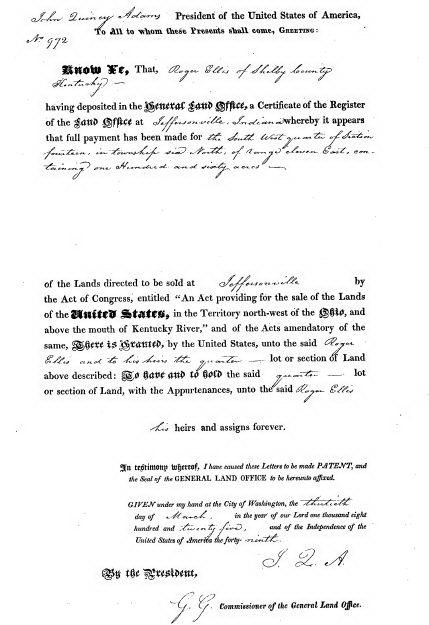
Roger is my 4th great grandfather.  He first shows up in the tax records in Franklin County, Kentucky in 1801.  He would not yet have been 21 years of age.  Then he married in 1805 in nearby Shelby County.  Various Ellis families lived in the area, but none have been connected to Roger.  The census and other records state that Roger was born in Pennsylvania.  So, what brought him to Kentucky and who traveled with him is unknown.  However, we do know that he didn’t stay long as a few years later he secured land in Ripley County, Indiana, which had just opened up for settlement.


His Children


Part of Roger’s children were born in Shelby County, Kentucky and the remainder in Ripley County, Indiana.  His oldest son James and his family also got the adventurous spirit.  Sometime between 1850 and 1857, they moved to Fillmore County, Minnesota. According to his son’s biographical sketch, they stopped for a couple of years in Iowa prior to making the move to Minnesota. 


It is assumed that they moved to be able to acquire more or better land as Minnesota started opening up for settlement in the early 1850s.  With that perspective, it was a very good move.  James’ land in 1850 in Indiana was valued at $400.  By 1870, his land in Minnesota was valued at $3500.


Roger’s youngest son also set his sights on Minnesota.  He headed northwest sometime between 1864 and 1867.  He initially settled in the same county as James.  However, sometime between 1870 and 1880, he moved further northwest to Otter Tail County.


Rebecca is the only daughter to move away from Ripley County, Indiana and the surrounding counties.  It wasn’t until 1875 that she married Ruel O’Neel.  Ruel’s wife had died the year prior.  It is unclear how Rebecca came to move to Iowa and be married to Ruel, but they likely knew each other from their younger days as he lived in Ripley County until the mid-1850s.


The other 7 of Roger’s children either lived in Ripley County or an adjacent county.


David’s Children


My direct line is through David Ellis.  As far as we know, he lived all his adult life in Ripley County.  What is unknown is what happened to him.  All that is known is that he was with the family in 1860, but not with them in 1870.  Some people say that he died in the Civil War as there was a David Ellis that died during while serving.  It is unclear, however, if that is the same David Ellis. 


In any case, David’s wife (Lucy Ann Storms Ellis) and his children all left Indiana during the 1860s.  This very well may be due to the Civil War.  All of them, with the exception of Henry, ended up in Kansas after a brief period in Illinois. 


In this generation, Henry was the one that moved away from the rest of the family.  He stayed in the Illinois/Indiana area for a period of time and then he moved to South Dakota, many miles away from the rest of the family.  Again, it is assumed that he moved there for the land as the 1880s were brought significant movement to South Dakota.
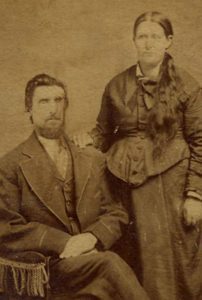
 

Joseph and Cynthia (Nicholson) Ellis

The Next Generation


David and Lucy’s son Joseph Lewis Ellis is my 2nd great grandfather.  His kids spread out across the state of Kansas mostly in the southern half, but spanning a large portion of the state from east to west.  Again, there was an exception. 


The youngest, Samuel, moved to Oklahoma.  He made his move within a decade of Oklahoma becoming a state, but long after the Oklahoma Land Rush. The reason for his move does not seem to be motivated by the acquisition of land as he was a mechanic.  Perhaps southeast Kansas had too many mechanics or his marriage to a much older woman was an issue.  No evidence likely exists to create a good working theory for this move.


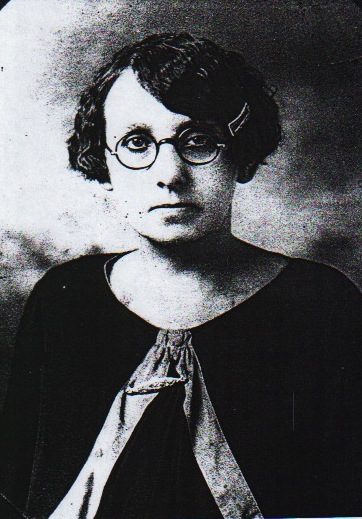
Rosa Ellis

Great Grandma Rosa


The Ellis line ends with my great grandma Rosa.  She moved with the family to Kansas and then from Neosho County to Crawford County.  Her children continued the pattern of at least one family member moving away from where their parents lived.  And, the pattern continues today.


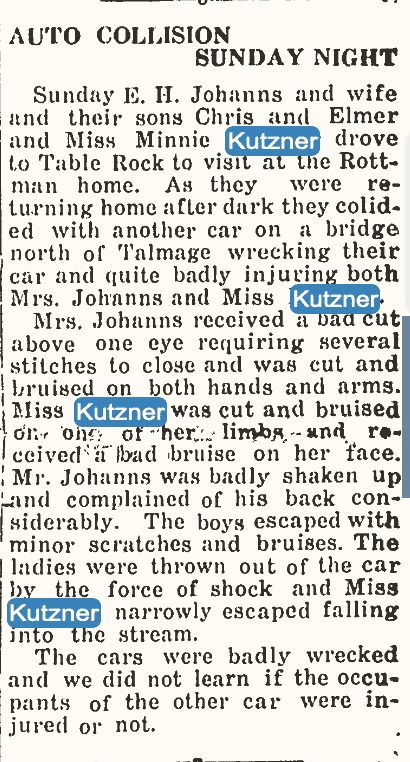
Often newspaper articles, small mentions, and even advertisements have given me a lead to research, given some details in someone’s life, or helped bring a person to life.  However, in the case of Minnie (Kutzner) Helm, my mother-in-law’s mother, the newspaper not only led me to find new relatives that I didn’t even have on my radar, but it came to the rescue to tie very fragmented records together.


The Syracuse Journal Democrat, August 13, 1926

The Article

I was searching for articles in Nebraska sbout Minnie Kutzner when I came across the article shown.  I immediately wondered why Minnie had been traveling out of state with E. H. Johanns and his family.  This was not a name that had ever come to my attention.


Confusion #1

I was following the records and newspaper articles, but then I had second thoughts.  E. H. Johanns appeared to show up with the given name of Elbie, Eaven H., Ivan, Iva, and Elben Henry. I began to wonder if these records and newspaper articles were all of the same person. But, he was consistently with a wife Minnie and in many records with sons Elmer and Chris.  Thus, the pursuit was on.


Confusion #2

E. H. Johanns and his family lived just outside Syracuse, Nebraska.  However, the marriage record for Elbie Johanns showed that he married at the German Lutheran Church in Thayer County, Nebraska, about 100 miles southwest of Syracuse.  Again, I was wondering if it was the same man.  However, newspaper articles mentioned his wife visiting relatives in Dreshler, Nebraska, which is in Thayer County.


When I saw the name of his wife – “Wilhelmine Kutzner,”  I knew this had to be the same couple.  The name was spelled incorrectly and used a more formal version of “Minnie,” but it clearly must be another “Minnie Kutzner.” 


E.H.’s obituary, which was found well into the research, resolved the question as it said that he had lived in Syracuse where he married Minnie Reuter. Yes, another Minnie!  However, she died within a few years of their marriage.  Then, it said that he moved to Thayer County, where he married Wilhelmine “Minnie” Kutzner.


A Clue

But, what was the relationship between the two Minnies? Upon reviewing additional details of their marriage, I saw that Minnie Johanns’ father was “Herman Kutzner” and her mother was “Ernestine Stahlert.”  Herman Kutzner was the name of Minnie (Kutzner) Helm’s father, but I had never heard he had a wife besides Minnie (Kutzner) Helm’s mother, Minnie (Schmidt) Kutzner. Yes, far too many Minnies!


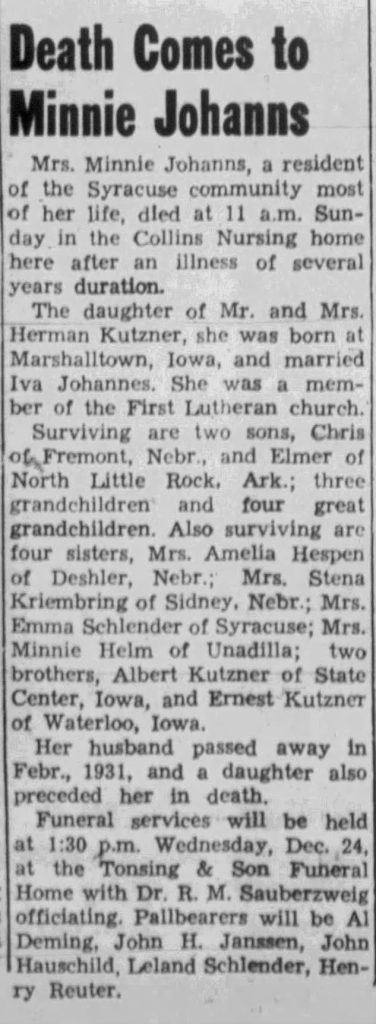
The Syracuse Journal-Democrat, December 25, 1958

More Digging

So, it was back to the records to determine exactly how this Herman Kutzner was related to Minnie (Kutzner) Helm.  No census records existed with Herman and Ernestine living in the same household. However, in 1880, both were living in Minerva, Iowa near where Minnie (Kutzner) Helm’s family lived. Herman, who was listed as married, was boarding with a family.  At the same time, Ernestine was listed in the same town with her parents and her daughter Wilhelmina.  Interestingly, Ernestine was listed as single and both her and her daughter were listed with Ernestine’s maiden name.


Additionally, the transcription of a marriage record was found, but it lists the wife as Annie, not Ernestine.  It seems given the timing of the marriage and the location that it must be the record of the marriage of Herman and Ernestine. 


Separate Ways

Another daughter, Caroline Mary “Maria,” was born to Herman and Ernestine in September of 1880.  Yet, by the beginning of 1883, Herman and Ernestine must have parted ways as Ernestine married August Meyer in Thayer County that January.  Two years later Minnie (Kutzner) Helm’s father Herman Kutzner married her mother Minnie (Schmidt) Kutzner. However, no divorce record has been found to date.


No Conclusions

It would seem that given

  • Multiple records of Ernestine and Herman being married
  • Ernestine and Herman being in the same small town close to where Minnie (Kutzner) Helm’s father later lived
  • The timing of additional marriages

that Minnie (Kutzner) Helm’s father was the same man that married Ernestine.  Yet, no records were found to conclusively prove that her father had married twice.


Newspaper To The Rescue


Despite the newspaper not being a primary source of information, it came to the rescue to pull these facts together.  One might think that Herman’s obituary would be useful.  However, despite Minnie (Kutzner) Johanns and her husband visiting him during his last illness, she was not mentioned in his obituary.  It only contained references to his family with his second wife.


Instead, it was the obituary for Minnie (Kutzner) Johanns that brought this story full circle.  The key was the mention of Minnie (Kutzner) Helm and her siblings as survivors of Minnie Johanns. Minnie (Kutzner) Helm’s brother Otto’s obituary also mentioned Minnie (Kutzner) Johanns and her sister.


As a result of a newspaper article about a car accident, I found that my mother-in-law had two half-aunts: Minnie (Kutzner) Johanns and Caroline Mary “Maria” (Kutzner) Aden. Additionally, she had eight “new” half-cousins and many more “new” distant cousins.


Questions Remain


The questions that remains are:

  • Why did Herman name a daughter Minnie when he already had a  wife and daughter that went by Minnie?
  • Why wasn’t Minnie (Kutzner) Johanns mentioned in her father’s obituary despite her visit with him during his battle with cancer?
  • Why didn’t my mother-in-law know about her half-aunts and their families?  After all, they lived in the same general area and it was clear that each branch of the family knew about the other.


Afterward

This story is a greatly abbreviated version of the research into this family.  It was complicated by the German names, which never seemed to be spelled the same way twice and the list of given names which seemed to be used interchangeably. 


Lots of patterns exist in the birthdays in our families. Certain months have lots of birthdays. Situations where birthdays fall multiple days in a row exist.  And, many births, deaths, and marriages of distant relatives fall on the same month/day combination of those in my immediate family.  However, one of the most interesting are the parallels between my family and my dad’s cousin’s family.


Birthdays Abound

Dad was one of 11 kids. He and his siblings had 26 cousins in the McCracken family.  If the birthdays for the entire group were evenly distributed over the year, that would be about 3 per month.  Thus, it wouldn’t be unusual for two people to celebrate their birthday close together.   Matter of fact, 4 of his siblings had birthdays within 3 weeks of Dad’s birthday.  And, 3 of his cousins celebrated birthdays within that same 6 week time frame.


Dad and Neil

My dad and his cousin Neil celebrated their birthdays 7 days apart.  What was unusual is that they were actually born 7 days apart. Still, that wasn’t that unusual in a large growing family. 


Over time, the closeness of their birthdays became more meaningful.  Neil married first.  He and his wife had a daughter, but she only lived a few days.   Dad married a couple of months later.


The following year, Neil and his wife had a son 17 days after I was born.  Then, three years later both families welcomed baby girls.  They were born only two days apart.


None of it was planned, but it did cause some confusion with multiple McCracken babies being  born about the same time.


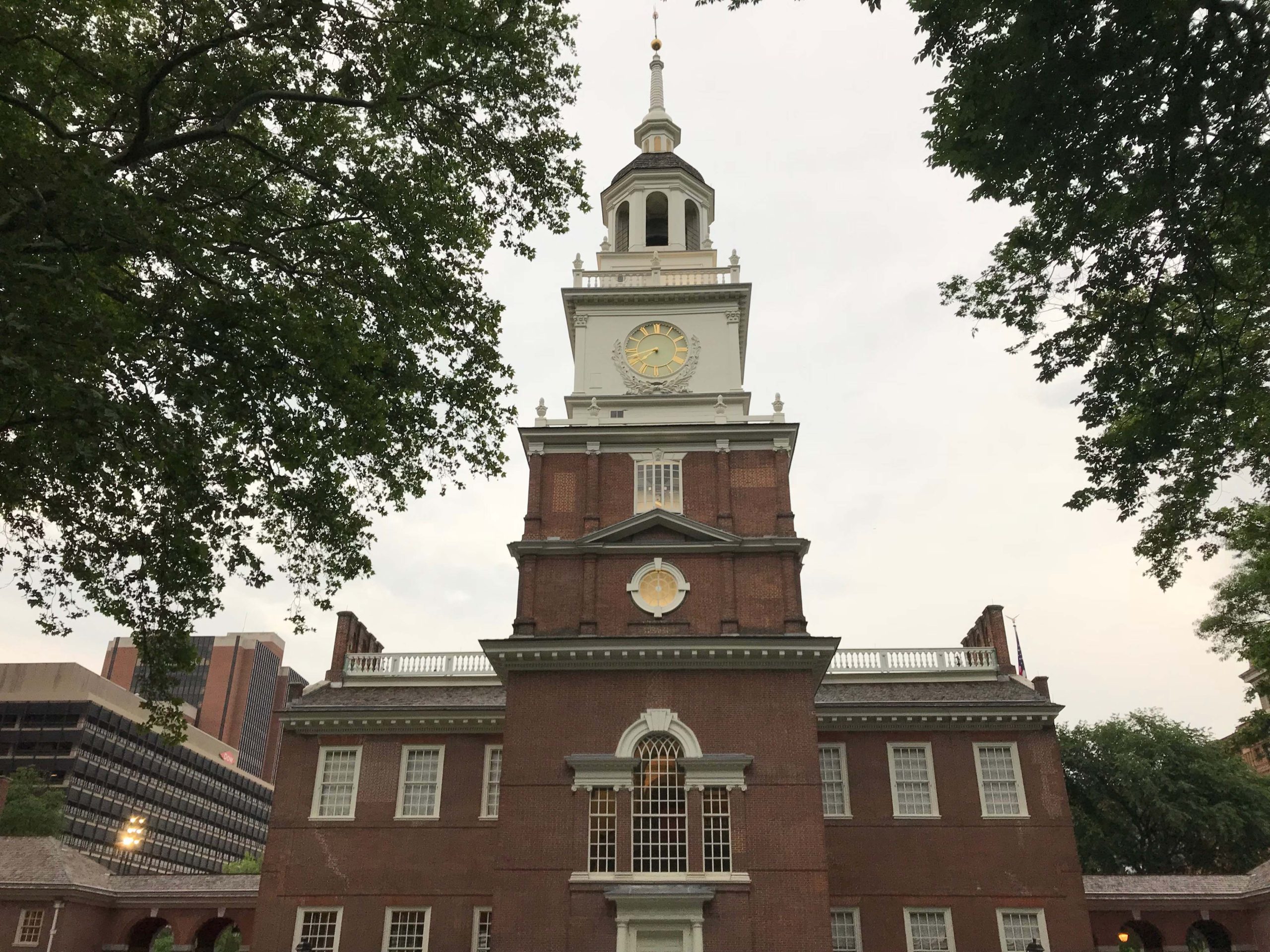
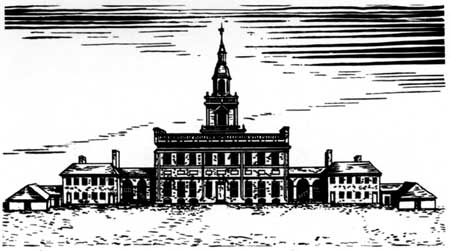
Independence Hall in Philadelphia, also known as the Pennsylvania State House, is famous as the location of the formation of our country.  The Declaration of Independence was signed there and the Liberty Bell was rung to alert the people of Philadelphia that the delegation had reached agreement on the declaration. Many people from across the world have visited Independence Hall..  However, only a few were ever allowed to let their cattle graze on the lawn.


The Pennsylvania State House (Independence Hall) about 1776 . Image from the National Park Service. https://www.nps.gov

Living In The State House

When visiting Philadelphia, we were talking with park rangers and mentioned that some of Rod’s relatives had lived in the State House.  Before we could even tell them about the cattle that had grazed on the lawn, they assured us that no one had ever lived on the grounds.  However, we informed them that state congressional records indicated that not only did people live in the West Wing of the State House, but cattle had also once grazed on the south lawn.


The Act

I learned about this piece of history when I found  a record that stated that on March 29, 1788 the  Act to Exonerate Joseph Fry was passed by the state legislature.  Joseph was married to Martha Hurrie, who was a sister to Margaret (Hurrie) McGinley, Rod’s 6th great-grandmother.  Joseph had replaced his father-in-law William Hurrie, of Liberty Bell fame, as doorkeeper of the State House after William passed away.


All had been well until 1788 when the comptroller-general decided that Joseph should pay the government rent for his family living in the West Wing of the State House.  The comptroller-general had also requested Joseph pay fees for the “herbage of the [S]tate [H]ouse yard heretofore consumed by cattle for his use.”  Passage of the act freed him of any charges and stated that no rent or charges could be placed upon him for living in the apartment.


The Rationale

One of the arguments against charging Joseph Fry rent was that doorkeepers in the past had not been charged.  This implies that William Hurrie and Andrew McNair before him, likely both lived in the State House and may have had cattle on the south lawn as well.


Additionally, the act stated that maintaining a residence in the State House rent-free was “a reasonable allowance for extra services and the care of the [S]tate [H]ouse.”  This included caring for the facility during recess of the house.


Moving Out?

By the fall of 1790, it was determined that the United States’ House of Representatives, which shared Independence Hall with the Pennsylvania Legislature,  required more space in the West Wing.  This meant that various offices and Joseph Fry’s family would need to be relocated.


The committee researching the options for the impacted offices recommended moving offices to Carpenter Hall and other locations.  They found a house on Fifth Street between Market and Chestnut that they felt could be used by Joseph and his family.  No statement was made about rent or expenses to be charged to the family.


Staying At The State House

After reviewing the plan, John Beckley of the U.S. House of Representatives reported that after surveying the “apartments,” that he felt it was not necessary for Joseph Fry’s family to move out of the State House.  Instead, the family was to move into the space where the Land Office had been residing.


Afterward

Today, the National Park Service includes a statement on the website about Independence Hall indicating that early doorkeepers lived in the building.


Contact me if you would like access to the detailed records for Joseph Fry, William Hurrie, or John McGinley.


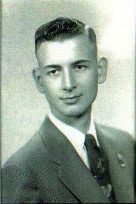
I never met my father-in-law James Thomson, as he died when my husband was only six years old. However, I know that he was a very talented man. He sang in the church choir, performed in the play “Dinner Date,” and read an entire set of encyclopedias. If you knew that about him, you might not think of an outdoorsman who was a farmer at heart. But, that is exactly who he was.


A Farm Boy


James grew up on a 160-acre farm just southeast of Palmyra, Nebraska. The farm was complete with all the features needed for a farm family. It had a house, garage, barn, outhouse, corn cribs, a chicken coop, pig pen, fields for crops, a garden, and creek running through the property.


At the corner of the property was the long ago abandoned Pioneer Cemetery (a.k.a. Old Palmyra Cemetery), which was said to have been built upon two acres of land “on a hilltop surrounded by prairie with grass so tall it was claimed that a man could ride through it on horseback and not be seen.” ¹ It made for a great place for a young boy to explore. The old stones amongst the trees, weeds, and tall grasses made for eerie fun.


Grease was also a fun substance for a young James. At a family gathering one day, while dressed in their Sunday best, James and his cousin disappeared. No one noticed they were missing until it was too late. They had managed to grease every inch of the tractor. But, to the amazement of the older generation, their clothes remained clean with no grease spots to be found. How? No one knows.


It wasn’t, however, all fun and games. James and his brother helped his father grow corn, milo, and winter wheat along with raising cattle, pigs, and chickens. His chores included baling and storing hay, cutting wood for the stoves, and ridding the barn of pigeons by using them for target practice. Additionally, James hunted various animals, fished, and trapped muskrats. It was partially sport, but mostly to provide food for the family and protect the family’s livelihood.


In the garden, the family grew potatoes and asparagus among other things. The family ate the food from the garden, apples from their trees, rabbits, squirrels, and pheasants. In addition, during cold weather, the family butchered cattle and hung the carcass in the garage until it could be eaten as they had no other means of refrigeration.


Hunting

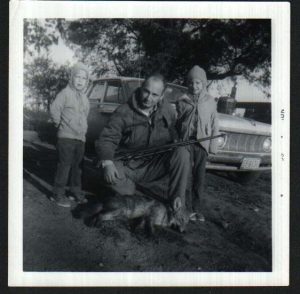
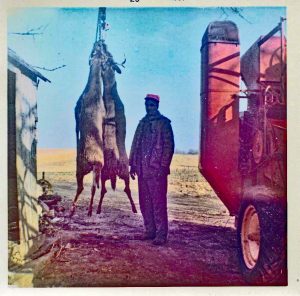
James usually hunted coyotes, pheasants, rabbits, squirrel and deer. However, on one occasion when he was out hunting with his boys, a snake ended up his target when it crossed his path. 


One coyote’s face became well known to the family when it was turned into a coyote mask. My husband remembers the mask, but it is his brother that  remembers wearing it for Halloween. His brother also remembers cleaning deer hides and making the hides into shammies to be used by the family.


The year before he died, James was very happy when he was able to purchase a new rifle for his hunting pursuits. He now hunted, not only on the family farm, but also made trips to Albion, Nebraska for hunting.


After James died, my husband learned that his dad apparently wanted to take him Kodiak bear hunting in Alaska. Was this a mom’s way to create a special memory for her son or had he really talked about taking his six-year-old bear hunting? In any case, some time after his father’s death, my husband discovered that he was quite good at target shooting. Perhaps a skill he inherited from his father. And, which he has now passed on to the next generation.


Fishing


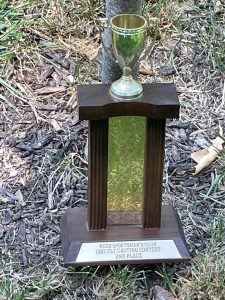
Silver Creek coming off the Little Nemaha River made for good fishing for James and his family. His experience came in handy when as an adult he entered the Western Electric Sportsman’s Club’s fly casting competition. The year before he died, he took home the second place trophy in the competition.


At the time, he was the vice-president of the club, which sponsored various outdoor sporting events. Being the outdoorsman he was, James likely participated in as many club activities as he could. Although James’ activities with the club went undocumented, Western Electric’s Sportsman’s Clubs were known to have fishing tournaments, trap shooting events, archery competitions, canoe trips, and hold hunting safety courses. 


Farming


James lived and worked on the farm until he got married. However, he never farmed full time after he got married.  Instead, he worked as a messenger (1956) and later a supply clerk (1959) for the Department of Roads and Irrigation/State Department of Roads. By 1959, he was driving a Yellow Cab in Lincoln, Nebraska.


After his first son was born, he moved the family to Omaha, where he worked at Western Electric. After his father died in 1964 (and maybe before), James worked at his regular job during the week and farmed the family farm near Palmyra, Nebraska on the weekends. One memory my husband has from those farm days was him and his siblings riding in the back of a truck with corn pouring in as it was being harvested.

James talked about going back to farming full-time, but he never got the opportunity.


¹ Otoe County Genealogical Society, https://ocgsne.org/index.php/16-cemeteries/97-old-palmyra-cemetery