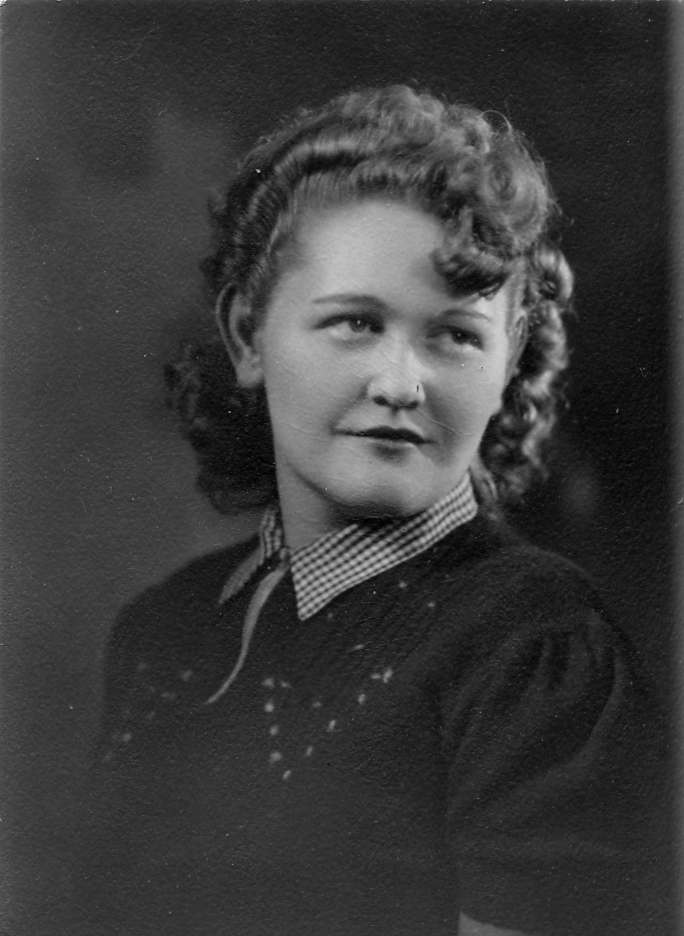
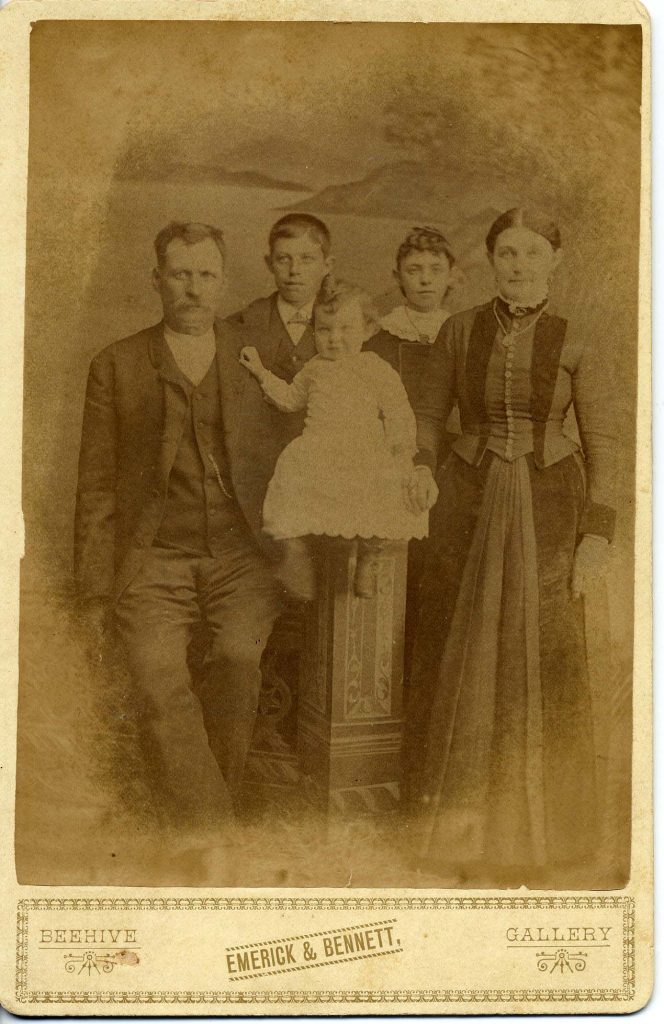
Not a lot is known about my great-great grandfather Joseph Lewis Ellis’ brother Stephen. However, his life and the life of those around him must have been very challenging.
Stephen’s Illness
Stephen E. Ellis (Elless) was born August 5, 1841 in Ripley County, Indiana. He was the fourth child and third son of David and Lucy Ann (Storms) Ellis. David and Lucy Ann would go on to have 4 more children after Stephen was born.
Apparently, Stephen was a normal little boy until around age two or three when he had spinal fever (spinal meningitis). It affected his limbs and left them useless. At the same time, he became totally blind although his hearing remained intact. The fever also resulted in him being epileptic and what was described at the time as “idiotic.” The latter term appears to have been used to described a variety of mental issues. It was used for everything from depression to someone who was mentally disabled. Thus, it is unclear as to Stephen’s exact mental state. However, his obituary states,
“[H]is life was mingled with deep sorrow on account of the loss of his eyes and the use of his limbs. For fifty-two years in total darkness. The days, weeks, months and years went wearly by. The clouds, the deep blue sky, the sun, the verdant plains, rolling hills, the murmuring brooks and the beautiful and romantic scenes of this fairy world had no charm for him.”
It is hard to imagine a playful young boy whose ability to run and play was so quickly snatched away from him.
Life Afterward
The census stated that when he was eight that he was attending school alongside his older brothers and sisters. However, this appears to have been an error as it seems he never had that opportunity. His days it appears where spent at home with his mother and younger siblings that were not in school. Without use of his arms and legs, he couldn’t play with his siblings, help around the house, or even do basic care of himself.
Move to Illinois
By 1870, Stephen’s father David had died. Lucy Ann, Stephen, his younger brother Henry, and his younger sister Susan had moved to Rutland, La Salle, Illinois, which was about 100 miles southwest of Chicago. I can’t imagine making that move in that era with a grown man who was both blind and physically disabled. It is unclear if he even fully understood what was happening. Making a move like that must have been a bit unnerving for him with the change in routine, his bed, and all the movement.
Moving Again
A few years later, Lucy Ann would make another big move. This time moving from Illinois to Galesburg in Neosho County, Kansas. Lucy Ann’s son James had previously relocated to Neosho County, arriving there prior to 1870. Galesburg had been created the following year with the Missouri, Kansas, & Texas (MK&T) Railroad extending to the small village.
By the mid-1870s, some of Lucy Ann’s other children came up to La Salle County. My great-grandmother Rosa Isabella (Ellis) McCracken Apt was a young child and she had her photograph taken by J. A. Wilson, whose studio was above the 1st National Bank on the corner of Maine and La Salle streets in nearby Ottawa, Illinois.
In September 1876, the La Salle Board of Supervisors recognized Lucy and Stephen as paupers. Thus, they allocated money to the town of Rutland to provide them railroad fare to Neosho County if the leaders of Rutland felt so inclined. It seems that it would have been very difficult for Lucy to travel alone with Stephen. Perhaps Susan or some other member of the family traveled with them.
All of Lucy and David’s living children ended up relocating to Neosho County except Henry, who spent time back in Indiana before moving to South Dakota. However, it is unknown how the others traveled and if they traveled together. In any case, all of Lucy’s children that moved to Neosho County ended up arriving there by 1880 with her daughter Ellen and her husband William H. Nicholson making the trip sometime between May 1876 and May 1877. So, they traveled close to the time Lucy did, but it is unknown if they traveled from La Salle County, Illinois or elsewhere.
Kansas
In Galesburg, Lucy Ann, Stephen and Susan lived with her daughter Amanda and Amanda’s husband John Kirkpatrick. Their household made up 8% of the village, which had only 63 inhabitants in 1880. The women were Stephen’s primary caretakers, as John worked for the railroad.
Lucy received money from the county to help with expenses. The county would continue to assist the family from time to time throughout the remainder of Stephen’s life.
In December 1880, Susan married Ormas Doolittle. By 1885 Susan and her husband, who was a Civil War veteran turned plasterer, were living in a separate home. Similarly, Amanda and her husband, who had quit the railroad to become a hotel keeper, had a separate property. Lucy and Stephen are not listed in the 1885 state census, but it is clear that they are not living with either Lucy or Susan. Thus, it is most likely that they were living in a separate residence in Galesburg since Lucy was not known to live anywhere else.
It would seem that the care-taking of Stephen fell squarely on Lucy’s shoulders. Likely, Susan and possibly Amanda continued to help care for Stephen part-time. However, having a hotel, Amanda would likely not have been able to get away often. By this time, Lucy’s son Joseph and her daughter Ellen had moved to other nearby counties. Leaving James, who lived in Osage Mission, as the only other of her children nearby.
In The End
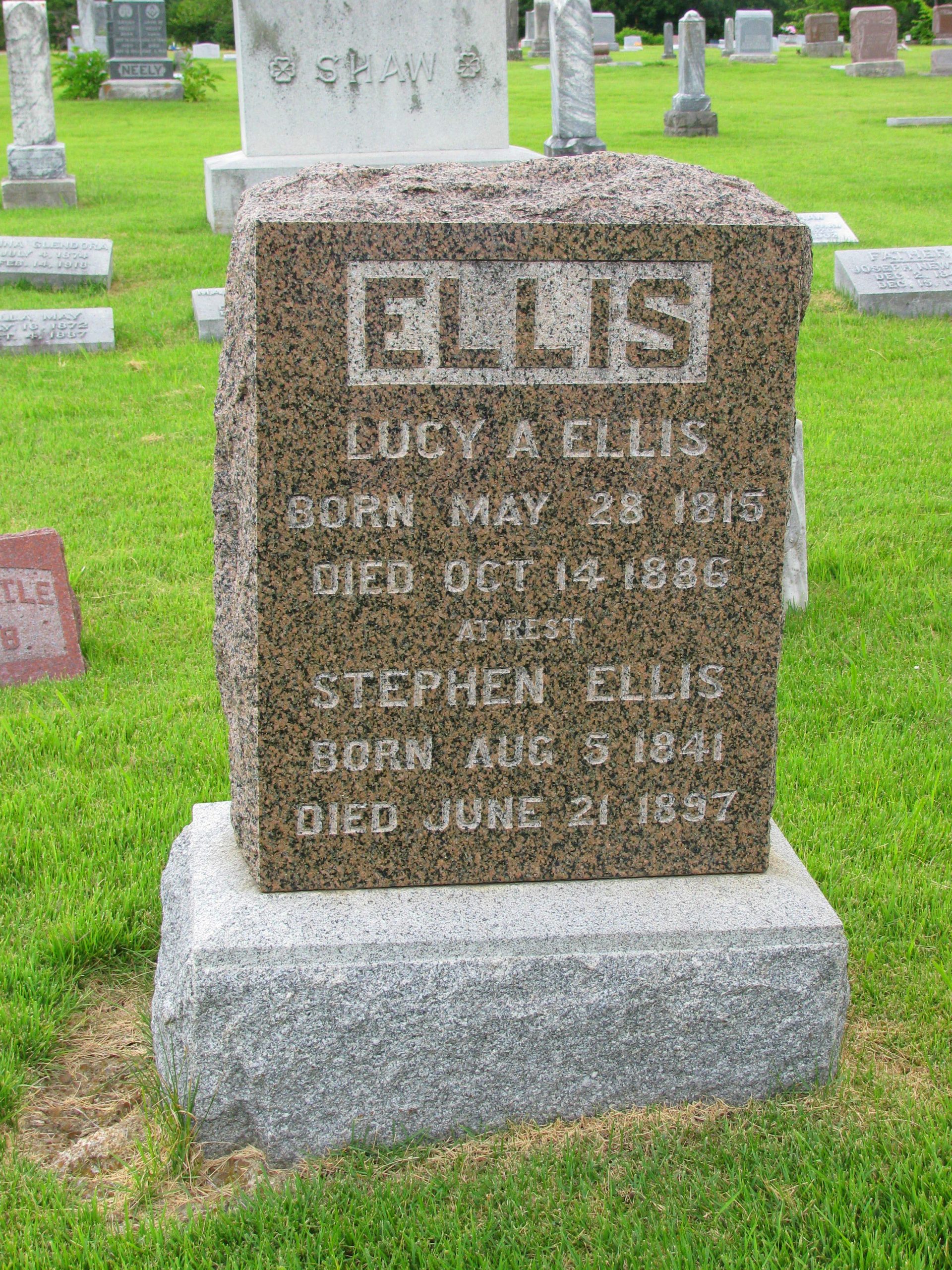
After Lucy died at age 71 in October 1886, Stephen lived with Susan and her husband until his death on June 26, 1897. He was only 55, but death must have come as a relief to him. Finally, Stephen could once again run, play, and see the world. He was buried next to his mother at Mt. Hope Cemetery and he shares a gravestone with her.
My Grandma Nellie (Peelle) McCracken’s cousin Charley D. Farmer disappeared in the late 1890s. Where did he go? And, what kept him from coming home? It is a story with a twist that begs even more questions.
Who is Charley Farmer?
Charles D. “Charley” Farmer was born in Winchester, Indiana about 1877 to John A. and Evaline (Peelle) Farmer. He joined sister Indianola “Nola,” who had been born two years prior.
Trego County
In February 1879, the family had moved to Wa-Keeney (how it was written at that time) in Trego County, Kansas. This was around the same time that Evaline’s parents/my great-great grandparents (Passco and Martha (Johnson) Peelle) and part of her siblings moved to Bourbon County, Kansas. However, Trego County is in western Kansas and is a long way from Bourbon County making it unlikely that their move was related to Evaline’s parents’ move.
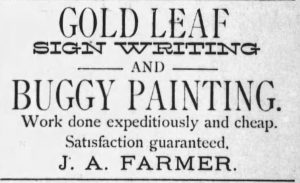
It wasn’t the lure of a ranch that took them west, as John was a painter and didn’t appear to show any interest in cattle or ranching. No relatives of either of them have been identified in that area at that time. It makes one wonder if perhaps they were going to venture further west and simply had enough by the time they got to Trego County and decided to stop. In any case, John hung out his shingle and went to work as a painter.
People in the area were really struggling. At the beginning of May 1880, he wrote a letter to the editor of The Western Kansas World talking about the struggles of people in the area and the need of some families for assistance. He went on to say that if things did not improve soon, that a lot more people would be in need assistance or would move away.
On May 29, 1800, John advertised that he had timber land that he would exchange for a wagon, team, and harness.
Olathe
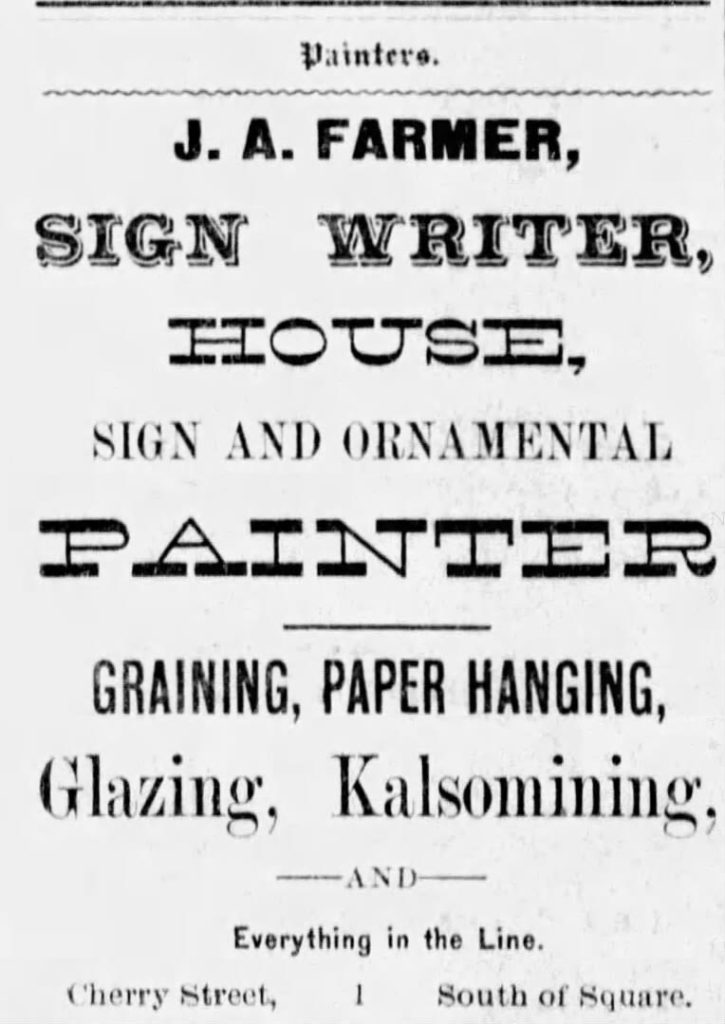
By early 1881, John, Evaline, and family were living in Olathe, Johnson County, Kansas. That fall, John stated that he still owned property in Trego County and that he hoped to return one day. However, he was busy as a painter in Olathe.
In 1884, Charley began attending school in the Olathe School system, which had over 500 students across ten grades. The following year, Charley’s younger brother Clayton “Clate” was born. Evaline gave birth to another child, likely between Charley and Clate. However, that child died and nothing more is known about the child.
Over the next few years, Charley attended school while his father worked in a seemingly booming business. John had a staff of workers who worked on projects ranging from painting wagons and vehicles to signs to the interior and exterior of businesses and homes. Among his contracts were one to paint and stain the interior of the Presbyterian Church, one to update the court rooms, and one to paint oboth the interior and exterior of a school house.
However, despite what appears to be a good amount of work, John got in financially over his head. This led to foreclosure and sale of property in Olathe and property he owned in Fort Scott, Bourbon, Kansas.
Fort Scott
As a result, around 1890, John, Evaline and their children moved to Fort Scott. John, again, started up his paint business, adding paper hanging to the services offered. As in the past, he located his business near the core business area of the town with his store located at 208 First Street.
The biggest known event in Charley’s life in the early 1890s occurred in 1892 when Charley cut the tip off the end of his forefinger (index finger) on his right hand when oiling his bicycle.
By 1895, Charley joined John in his business. The store was moved to the Strothers Building at 203 Market Street and renamed J. A. Farmer & Son. At that time, Clate was still in school and Nola was employed as a bookkeeper while Evaline managed the household.
Charley and Nola Farmer
The Wandering Son
Charley apparently liked to travel and see the country. Thus, in 1896, he took a break from working with his father to do just that. In July 1896, he returned to Fort Scott from a 4-month journey that had taken him to Indian Territory, St. Louis, Chicago, Bloomington and more points of interest. Although he worked as a painter as his primary occupation, it is possible that Charley may have joined a railroad construction crew in Arkansas and traveled with the crew.
The Disappearance
Then in 1897, Charley traveled north. He visited Wisconsin and Minnesota, among other states. On September 20, 1897, (or September 22, accounts vary) he sent a letter to his father from Stevens, Minnesota stating that he would be coming home. He never arrived!
John contacted the man who had recently employed Charley. He told the same story that the letter did. He believed Charley was going to take his $75 and head back home.
The Search
Over the next two years the family did not hear a peep from Charley. John searched to learn what had happened to his son. Since Charley was adventuresome, John considered if he might have headed to the gold fields in Alaska or joined the military. He also wrote to the leaders of military groups in the area to see if Charley might have joined up with one of them. All of them responded saying that they had no one by that name on their rolls.
John concluded that something must have happened to Charley. He learned of a fire at a barn 40 miles from where Charley had been staying that claimed the lives of multiple men. John wondered if Charley might be among them as the men had been sleeping in the barn. He thought it was just like his son to ride the rails and then get off and find a place to sleep.
Located?
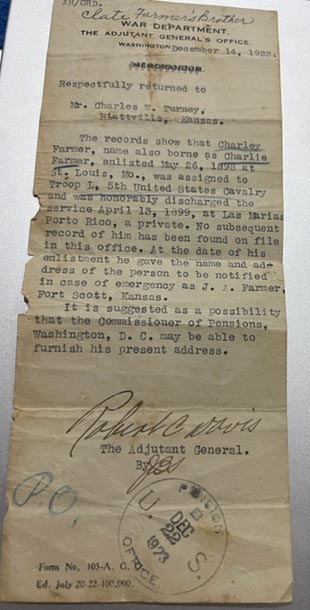
Finally, on September 2, 1899, the Adjunct General’s Office of the War Department responded to his inquiry stating that Charley had joined the cavalry May 27, 1898 and had been discharged April 13, 1899 at San Marias, Porto Rico (this was the Anglicized spelling, the original spelling of Puerto Rico was later restored). He had served in the 5th United States Cavalry, Troop L. The War Department had no additional information regarding his whereabouts.
It was met with some relief. John believed it must be his son because the location of birth (Winchester, Indiana) matched that of his son. He didn’t see the actual record, but if he had, he would have known for sure as it also stated a physical description and gave his occupation as painter. the question is, “Was Charley 5’6″ with light blue eyes, light brown hair, and a fair complexion?”
John and Evaline still didn’t know where Charley was, but they knew that a few months earlier he had been alive and well.
1923 Message from Adjunct General’s Office
More Information
The family soon received a letter from L. T. Bybee of Slater, Missouri. Mr. Bybee had seen an article in the St. Louis Globe-Democrat regarding Charley. He said that he had served in the same unit with Charley and knew him well. He went on to say that Charley had gotten a job working for the government in Puerto Rico. Charley was driving a team and making $40 per month.
Most importantly, Mr. Bybee provided Charley’s address in Puerto Rico. John immediately wrote to Charley. According to the Fort Scott Weekly Tribune on October 26, 1899, Evaline had received a letter from Charley. The first they had heard from him in over two years. The only additional piece of information they provided was that he was headquartered at Mayaguez.
In the years to come
Less than two months later, John died suddenly of painter’s colic (constipation caused by lead poisoning) in Galena, Kansas, where he had a painting business. Why he had moved his business there is not known, but he had been in some conflicts with the pastor of the Brethren Church in Fort Scott. It had become very public and perhaps that drove him to move his business.
Leading up to his death, John appeared to be well until the last day. He had written Evaline telling her that he would be home for Christmas, but he didn’t live that long.
After his death, Evaline used John’s $3,000 life insurance to purchase an 80-acre farm near Hiattville, likely to be close to her brother and parents. After her move, no indication of communication with or about Charley has been found until 24 years later. In December, 1923, the Adjutant General’s Office sent a memorandum to Charles W. Turney of Hiattville, Kansas. Charles must have been a kind neighbor and helped Evaline by writing a letter to the government, as he had no other known connection to the family. Apparently, she sought additional information about Charley. The letter, however, provided basically the same information that had been sent to the family in 1899.
The Twist
Military Records
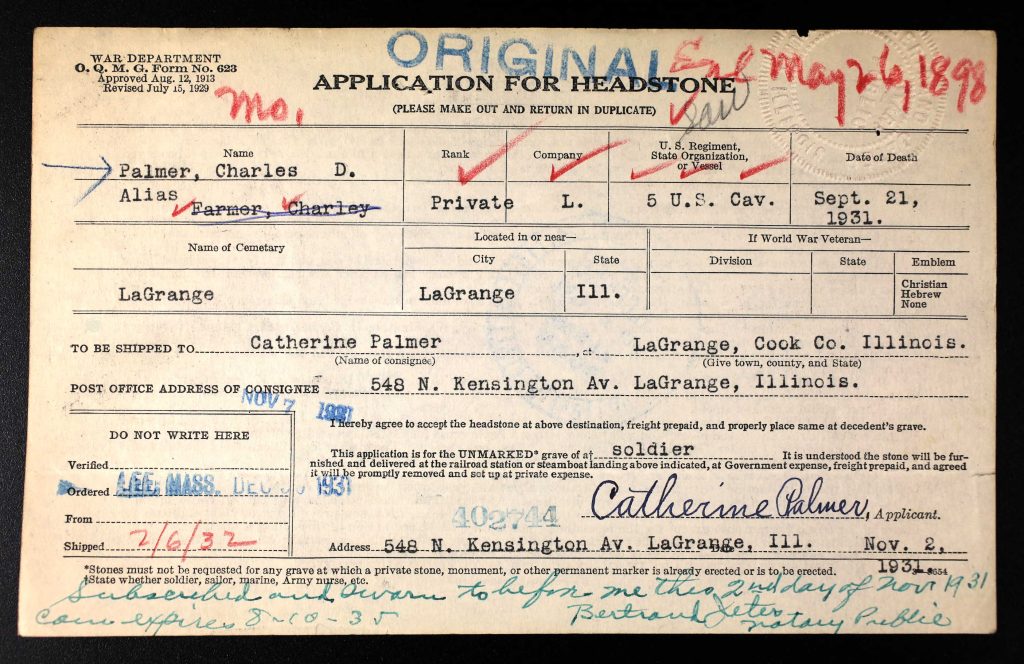
As I reviewed Charley’s military records, I found something unexpected. I found a military headstone application that showed the name Charles D. Palmer alias Charley Farmer. It stated the service had been in the unit the government had identified in their message to Charley’s father and had dates coinciding with the information the government had sent the family. Then, I found a pension record that showed Charles D. Farmer (alias) Charles D. Palmer. This record again gave the same unit.
The records showed that Charles or Charley had died September 21, 1931, almost 34 years to the day that Charley had gone missing. The records showed that Charles D. Palmer had a wife Catherine who lived at 548 Kensington Ave, La Grange, Illinois (a suburb of Chicago). In 1930, that home was valued at $6,000 and today Zillow values the 2500+ square foot house at over $700,000.
The Palmer Family
Charles Palmer married Catherine September 20, 1911 in La Grange, Illinois. In 1920, they had three children Vera K. Palmer, Ralph D. Palmer, and Charles A. Palmer. The family lived at 218 Forest Avenue (That home no longer exists.). However, the most interesting thing in the 1920 census was that Charles Palmer’s occupation was a painter!
The information for the family remained consistent in the 1930 census. Charles sounds a lot like Charley. The only difference is that he claimed to be born in New York and claimed his parents were from England; whereas, Charley was born in Indiana with his mother also born in Indiana and his father born in Ohio.
Mix & Match
One Charles Day Palmer was found in New York with a birth year around 1875. His parents are James and Ellen. However, he appears to have lived his entire life in New York, dying many years after Charles of Illinois.
In comparison, Charles D. Palmer of La Grange’s records with the Veteran’s Administration give a birth date of June 20, 1877. Meanwhile, his WWI draft registration card and his death record show June 20, 1878 as his birth date. In a possibly odd coincidence, his WWI draft registration shows a middle name of Dayton. It is so very similar to the middle name Day of the man of New York.
His death record, however, provides some information that seems to tie Charles D. Palmer back to Charley D. Farmer. His father is listed as John Albert and his mother is listed as Cornelia E. Peel. Some researchers have John’s the middle as Albert. There are Quaker records that show a John Albert Farmer. However, I have yet to prove those records are for this specific John A. Farmer. The name Peel, on the other hand, seems so unlikely if the man wasn’t Charley. As far as I know, Evaline was not really Cornelia. However, it is possible that was her name and she never used it or the name is a mistake. It does show an initial of E, which could stand for Evaline.
The Questions
Charley Farmer Changed His Name
Was Charles Dayton Palmer really Charley D. Farmer? If so, why did Charley change his name? Was he in Puerto Rico the entire time from when he was discharged from the military until just prior to his marriage to Catherine?
It seems very possible that they are the same man. No records of Charley Dayton Palmer have been found before his marriage to Catherine. Likewise, no records of Charley D. Farmer have been found after 1899. If he was in Puerto Rico in 1900, he wouldn’t have been in the census. However, he should have been in the 1910 census in Illinois, Puerto Rico, or some other location, although it is possible that he was missed for one reason or another.
If it was Charley that joined the military, where was Charley between September 20, 1897 when he said he was coming home and May 26, 1897 when he joined the army? And, why didn’t he contact his family during this time? Who says, “I am coming home” and then never contacts the family again?
These questions seem to have no answer. To speculate, it is possible that he did go off to Alaska, where communication might have been limited. Still, it seems like he would have contacted his parents before joining the cavalry. It is also possible that he got in trouble and ended up in jail somewhere. But, again, you would think he would have contacted his parents before joining the military. This just doesn’t match the behavior of a person who contacted their parents to say that they are coming home.
Charles Dayton Palmer Isn’t Charley D. Farmer
If Charles Dayton Palmer isn’t Charley D. Farmer, where did he come from? Why did he claim Charley D. Farmer’s military service? Did he learn about Charley in the newspaper? How did he know anything about Charley’s parents’ names, especially his mom’s maiden name? Could Charley have died and another man have stolen Charley’s identity before joining the military? If so, who was he before that?
This seems less likely because of the information that he would have to have known. However, it would definitely explain the lack of contact. Someone who stole someone’s identity likely would not want contact with the person’s family.
Years In Puerto Rico
What was it that the man who served in the military did in Puerto Rico? If he is the same as Charles Dayton Palmer, what was he doing for those 12 years? Was he in Puerto Rico the entire time? If that was Charley D. Farmer, what happened to him? Why is there no record of him in Puerto Rico?
He was working for the government in a time of great change in Puerto Rico. It is possible that he continued with the government, possibly coming back to the states in a role with them. However, it is possible that something happened to him in Puerto Rico, but that doesn’t explain someone else claiming his military service.
No Contact?
Did Charley really respond to John’s letter in 1899?
The reason to question this is that Evaline had a letter written to the War Department years later to try to get information on Charley. In addition, Evaline (Peelle) Farmer’s obituary states that her son Charles “has been missing in action ever since the Spanish-American war. He enlisted in the army and was last heard of in the Philippines. Great efforts were made to find him but his fate was never known.” Her obituary was likely written by Nola and Clate. It is inconsistent with him being released in Puerto Rico, but years had passed and perhaps they didn’t remember the details. However, they definitely didn’t seem to think contact had been made. It seems that they would have definitely known if their mom got a letter from him – even if it was only one.
In Conclusion
When it comes to Charley D. Farmer, there are simply more questions than answers!
In 1906, three generations of the Peelle family moved to the Fish farm southeast of Hiatville, Kansas. The two-story house was nestled amongst elm, pear, maple, and catalpa trees atop a hill a mile north of the Bourbon-Crawford county line. The 190-acre property included a garden, an orchard, fields, a root cellar, an outhouse, and some out buildings.
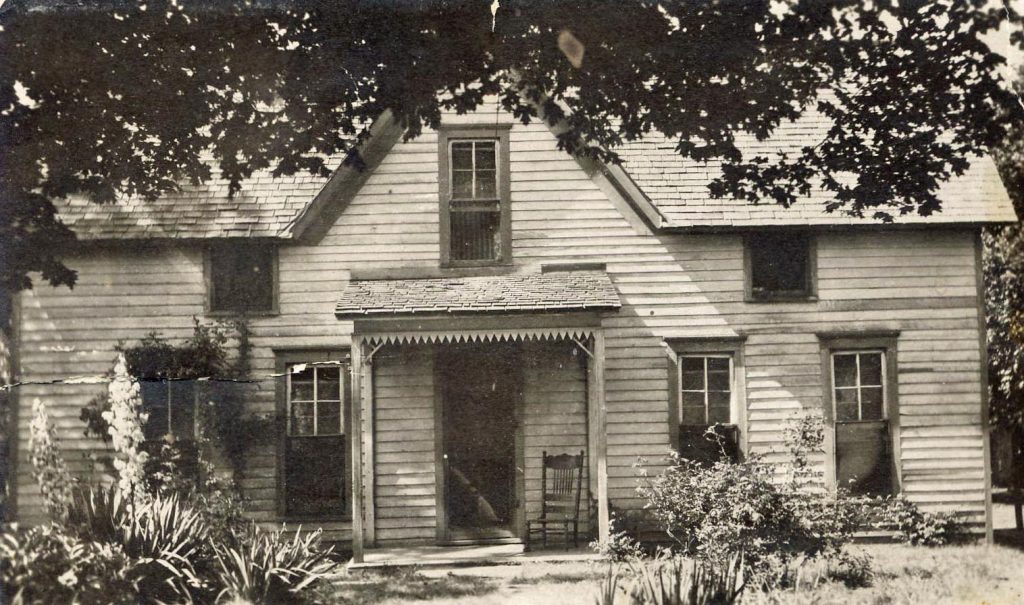
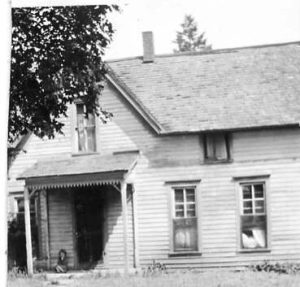
Early Photo of the home place. It is clear that one of the early families had a green thumb given so many plants were growing in the yard. The Peelle family added a cutting from a rose bush that they had brought from Indiana.
The House
Initially, the house consisted of a living area, kitchen, three bedrooms and a small loft space. The kitchen was a nook area between the living area and the bedroom on the main floor. The space was heated by two fireplaces or stoves. One chimney was between the living space and the kitchen and another was in the main floor bedroom. Heat going up the chimneys would have helped warm, even if ever so slightly, the upstairs.
It is assumed that Passco, who was in his eighties and his wife Martha (Johnson) Peelle, who turned 80 that year, slept in the main floor bedroom, which contained the only closet in the entire house. It would have been difficult, if not impossible, for them to sleep upstairs, as the upstairs could only be reached via a ladder to the loft from the kitchen area.
The upstairs bedrooms were likely occupied by William Johnson Peelle and his wife Matilda (Jury) Peelle in one and their daughters Lydia and Nellie in the other. It is likely that their son Passco “Pat,” who was 7, slept in the loft.
It was tight, but everyone had a place to lay their head.
Windows & Doors
A door existed on the front of the house between the two primary rooms. A door must have also existed on the back of the house to allow access to the well, which initially was east of the house before a different one was dug out west of the house. Additionally, the wood or coal used to heat the house and the cook stove would likely have also been stored out back.
As can be seen in the photograph, only the top portion of some of the windows had glass. It was not uncommon in those days to put in openings for windows before the windows could be purchased and that appears to be what was done on this house. It is likely that they couldn’t afford glass for all the windows at once or could not get enough glass for all the windows.
Expansion
It wasn’t long; however, before William J., who was a carpenter by trade, began building a proper kitchen onto the back of the house. It was the length of the living room and the old kitchen. An additional chimney was added at the northeast corner of the kitchen for the cook stove and the wall between the kitchen and the living room was opened up. Opening the space helped with heating and made the space more usable.
The kitchen also doubled as a room for bathing. The water was brought into the house and heated on the stove. When the bathing was complete, they could simply pour out the tub of water and use it to scrub the floor as William J. had sloped the floor and built a drain in the northwest corner of the kitchen.
A new stairway was built in the space vacated by moving the kitchen. The new stairway was extremely steep, but it was better than climbing a ladder.
Even after the expansion, the house was less than 1300 square feet.
Changes Over Time
In the fall of 1911, William J. died. His father Passco had already died in 1908 and his mother Martha died in 1912. Since William j. was the primary breadwinner for the family, it is amazing that Matilda was able to keep the farm. Lydia started working at the local grocery and other businesses to help out with expenses. And, Matilda’s brother Walter, who lived nearby, likely helped out. In the spring of 1914, Nellie married Joseph Andrew “Joe” McCracken. It wasn’t long before, The Home Place, as it came to be known, would take on a new life.
A Growing Family
After they first married, Joe and Nellie rented property. However, with a growing family and a house that was empty except for Matilda, a move to The Home Place seemed like an obvious choice. Thus, about 1920, Joe, Nellie, and their four oldest children moved to The Home Place.
The family grew and grew. Eventually, Joe, Nellie, and ten children were all living in the three-bedroom home. Joe and Nellie shared the downstairs bedroom, with the youngest one or two usually sleeping in the same room. The remaining girls shared the upstairs bedroom over the living area, and the boys shared the other bedroom.
Guests
The house, however, was never too full for one more. It was not uncommon for one, two, or more to join the family for Sunday dinner. Dad remembered one time that for some reason Fred and Florence (McCracken) Barton were gone and their kids, his second cousins, stayed with his family. Assuming all the kids stayed, that would have been 3 extra boys and 3 extra girls. Dad said that they slept crosswise in the bed to fit in more kids.
More Changes
The family almost lost part of the house in the late 1930s or early 1940s when a tornado came barrelling through. Fortunately, the family made it to the root cellar and the damage was limited. Trees were all down along the road, but the house escaped with only some damage to the roof.
It was about the time that the oldest kids started going away to work or study that the house started to feel empty. It was still quite full, but Dad said that every time one of the kids left home, it felt more empty. Eventually, the house had only a few inhabitants.
The Next Generation
When electricity came through west of what is now Highway 7, Joe, Nellie, and the kids that remained at home moved to the property that Joe and Nellie had purchased during the war. Ed, probably with some help with his dad, wired up the new property and the family had electric lights for the first time.
Within the year, Dewey married and moved with his bride to The Home Place. Eventually, the Home Place had running water and electricity. Wood would heat the home for years, but eventually it would be converted to propane.
Additions
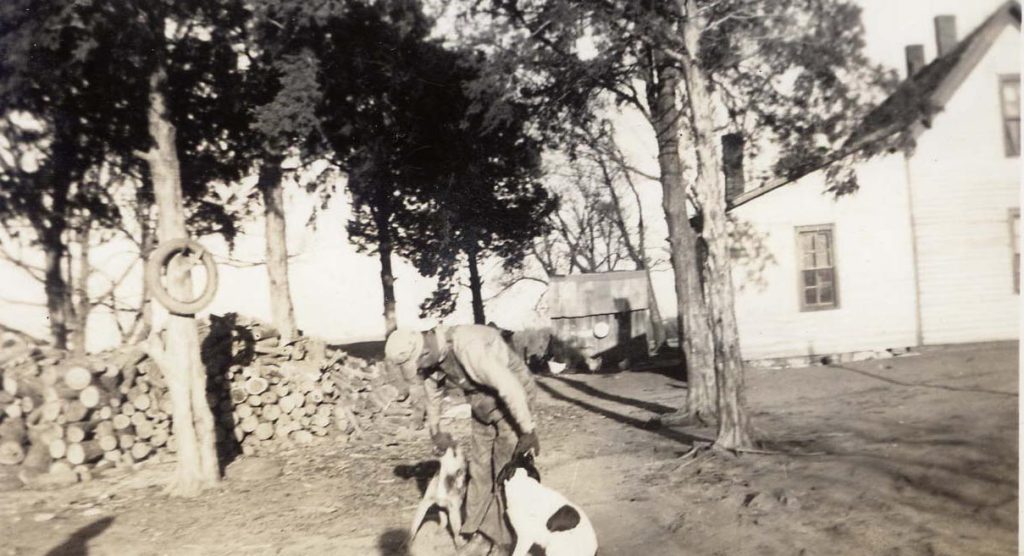
Joe, Dewey, and Dad added out buildings to the property while Joe and Nellie lived there. Dewey continued to update the property after he moved to The Home Place.
The only major addition to the house prior to the 1970s was enclosing the area behind the first-floor bedroom into a “back porch.” A shower was added to this area just off the bedroom, however, it would have been mighty cold in the winter as the area was not heated.
An Indoor Bathroom
It wasn’t until the mid-1970s that the house got indoor bathroom facilities. At that time, improvements were made to a portion of the back porch and a proper bathroom was added into the space just off the kitchen. The bathroom was small, but was far better than going to the outhouse on a cold winter night. And, you didn’t have to worry about what was lurking in the shadows. I can only remember one time that I went to the outhouse in the middle of the night. It was plenty creepy!
The Home Place 1997
Cabinets
About the same time that the bathroom was added, Ed added custom built-in cabinets in the kitchen. They had to be custom built because nothing in the kitchen was straight. The floor and ceiling were both sloped by design and the walls and windows just weren’t quite straight.
The Fire
In March 1993, the family came close to losing the house. Dewey, Jackie, and Ruthe were living in the house when they realized that there was fire in the chimney. Their first reaction was to call Dad – even before the fire department.
Dad grabbed the fire extinguishers. Then he jumped in the old white pickup and took off for The Home Place not knowing anything other than that they had a fire. Reports have it that he was driving so fast that the took the corner south of our house on two wheels. Let’s just say that his driving alerted the neighbors that something was wrong.
When Dad arrived they directed him to the chimney on the main floor where they were fighting fire. He responded that they needed to fight the fire from up above, as he could see smoke coming out under the eaves as he drove in. So, he grabbed a water sprayer and raced up those steep stairs and got up into the attic.
He had the fire out and was moving into control mode of watching for hot spots before the fire department arrived. No structural damage resulted. However, smoke and water cleanup was required. Had they not called Dad first or if he missed seeing the smoke under the eaves, the damage likely would have been much greater.
Family Gatherings
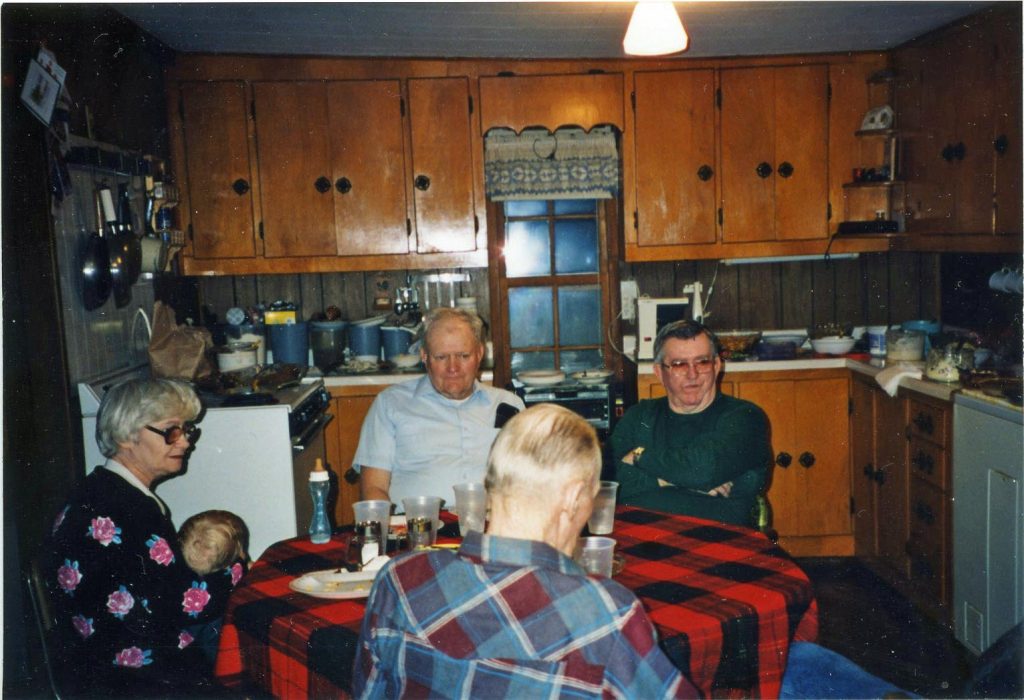
Many family gatherings occurred at this house over the years. Some were just a couple of families and others had lots of attendees. Summer gatherings worked well as people could spread out under the many shade trees in the yard.
However, in the winter it could be mighty cozy if the weather drove everyone inside. Fortunately, the family usually found a way to get out for a football game or just to wander around even when it was cold and snowy. No matter what, there always was room for one more!
Afterward
The property remained in the family for 90 years. The house has now been torn down as have some of the out buildings. However, a new house has been added to the property and someone else is now making new memories. One can only hope they look upon the property as fondly as our family looked upon The Home Place.
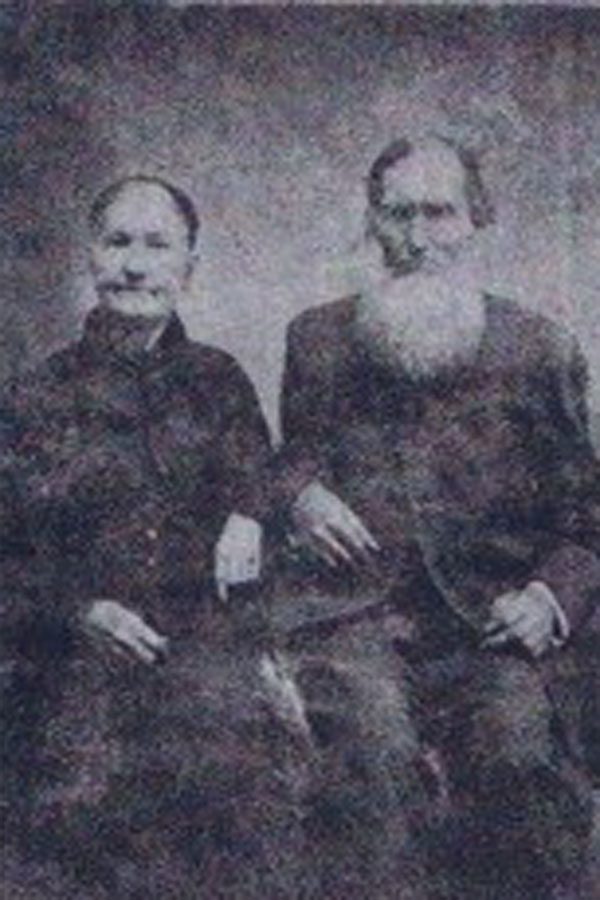
I don’t know if my Thomas ancestors lived near the most relatives of any of my family lines or not. However, according to reports my 3g-grandfather Henry Thomas (shown above) claimed the family left North Carolina because they were related to too many people there!
History
It is believed that our Thomas family line descended from Josiah and Ruth (Mitchell) Thomas, although this is not 100% proven. Henry identified some of his siblings in his Bible. Dr. Iva Noel Gibbons published a copy of the Bible pages in her book “Cousins by the Dozens.” Unfortunately, the image is small and difficult to read. Yet, she had gleaned information from it
From data about the family and their movement to Missouri during the 1830s, it is determined that the following are likely siblings of Henry.
George
Andrew
William
James
Joseph
Frances
Dr. Gibbons believed Thomas Thomas, who arrived in the area around 1829, might be a brother. It is unclear what happened to Thomas Thomas. By 1850, the first year with more detailed census records, he is nowhere to be found in the area when the Thomas families initially settled. Thus, I have not been able to tie him to the family.
In addition, Dr. Gibbons believed there was a younger sister Nancy. However, I have not identified Nancy’s family.
Missouri
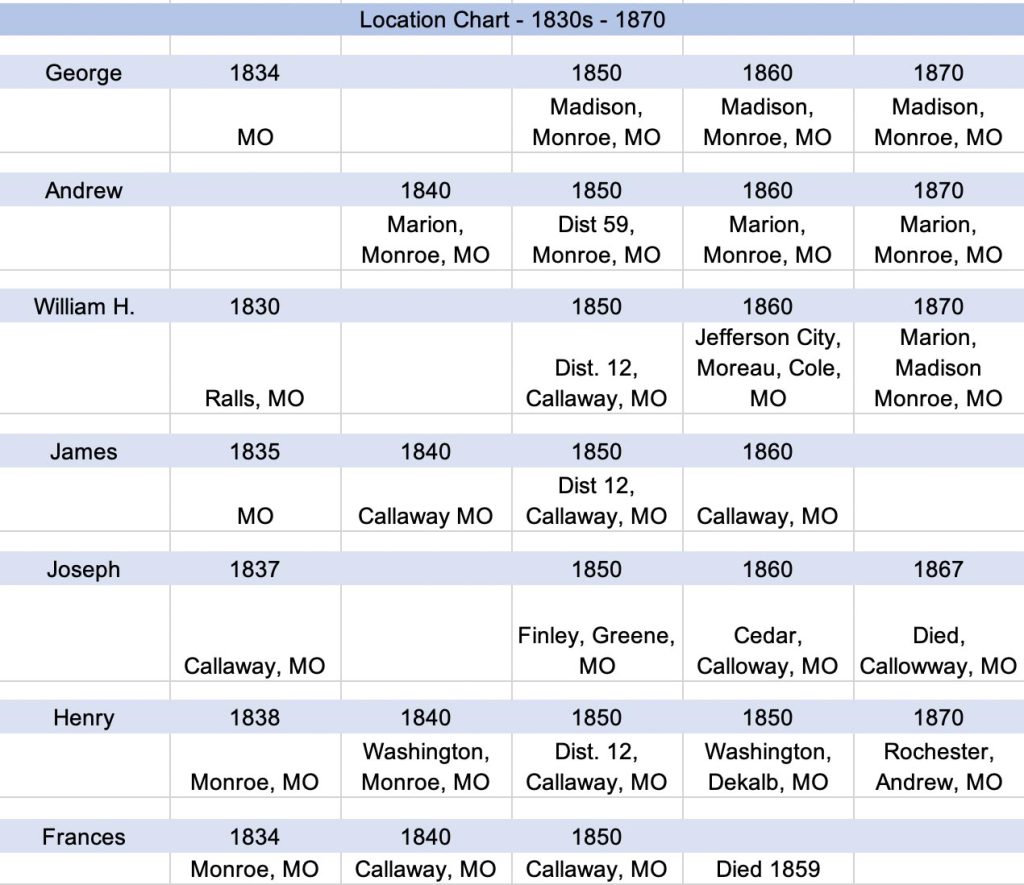
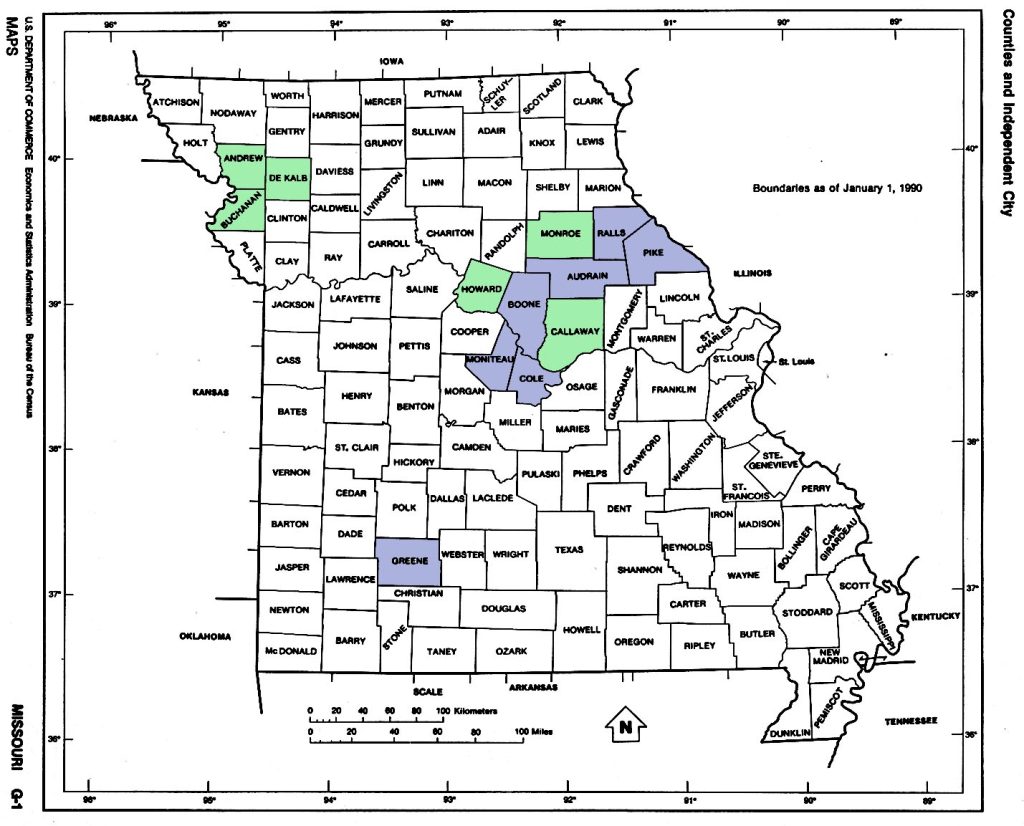
Records for potential family members begin showing up in a cluster of counties in eastern Missouri in the 1830s. The chart shows where each of the families are found up through 1870. The question remains, “Are they the right Thomases?”
The question is answered in part by looking at the trees of DNA matches. I have matches to people who claim to descend from each of these people except George. Although it is possible that I have identified the wrong George, it seems unlikely as this George lived in the general area as most of the others in the family. It is possible with addition work with DNA matches, a match to George’s family may be found.
Problem Solved?
Moving to Missouri may have temporarily solved the problem of being related to everyone. In the community. However, the problem quickly recreated itself. The siblings had 54 children between them.
The following generation consisted of over 200 new Thomas relatives (not including those that married into the family). As you can see, they were quickly creating a new colony of Thomas relatives. Now, some of them spread out beyond Missouri’s borders. However, many of them remained in Missouri. And, a few of them started marrying cousins.
Henry’s solution . . . Move again. This time to the western side of the state. His children primarily stayed in Missouri. However, three of them ventured out of state with George (my gg-grandfather) going to southeastern Kansas and two of his siblings also venturing beyond Missouri’s borders.
My look at this family was relatively quick and I learned that I have a lot more work to do on this family line. I am sure there are lots of unknown facts to uncover.
Some recipes call for one egg, some for two, sometimes one instead of two will do. But, sometimes, one will not do if it calls for one or two. And, trouble can arise when one person thinks one will do instead of two.
Helping Out
When she was a teenager, my Aunt Ester Lucille (McCracken) Fisher helped out at the Harnett household while Nora Hartnett, my Grandma Nellie (Peelle) McCracken’s cousin, was ill. Nora was actually my grandma’s mother’s first cousin. Thus, she was grandma’s first cousin once removed. However, she was simply referred to as her cousin.
Anyway, part of the chores around the house was cooking meals for Nora and her brothers John and Raymond “Ray,” who were all single adults sharing the home. Ester didn’t mind cooking and it was an area where she excelled.
Lemon Pie
One day, Ester was making lemon pie while Nora rested in the other room. That is when the trouble began. Although resting, Nora heard one egg break and then a second egg break. Suddenly, Ester heard herself being chastised for using two eggs in the pie. Nora informed her that one egg would be perfectly sufficient.
You would have thought that eggs were rare or that the Harnett family was dirt poor. Depending on the exact year, it is likely it was during the Great Depression. However, eggs were still abundant and the Hartnett brothers were prosperous farmers. The Harnett children, who were now middle-aged, had inherited their parents’ several-hundred-acre farm in 1918.
It was likely Nora’s mother Ellen (Jury) Hartnett was the person who influenced Nora’s views on using one egg. In Ellen’s obituary, she was described as “thrifty and conservative.” Of course, that information likely came from Nora.
Back To The Pie
Well, Ester, being the good cook that she was, knew that one egg did not make for good lemon pie. And, she was not going to make a bad pie. But, how? It was on this day that she became determined to learn how to break two eggs at once.
She was successful and the “two at once” technique solved everything. Ester was happy because she could make a good lemon pie. Meanwhile, hearing only one “crack,” Nora was happy that “eggs weren’t being wasted.”
Baking
This skill served Ester well as she bakes pies, cakes, and other things throughout her life. She even worked for a bakery in Fort Scott for a period of time.
To my knowledge, after her time helping out at the Hartnett’s she only used it for speed and never needed to hide how many eggs she was using again.
Bonus Story
History of the Harnett Family
Thomas & Ellen Hartnett Family
Thomas Harnett, a native of Ireland, settled in Hiattville, Kansas. In 1873, he married Ellen Jury, who had immigrated from Canada with her mother, bothers, and their families. Their son John was the first child born in Hiattville. He was followed by Nora and then Raymond. Thomas made money to purchase a farm by working as a section foreman for the railroad. Additionally, the family appeared to run a boarding house or at least rent out rooms in their home during the time they lived in town.
Thomas purchased a farm about a mile and a half north of Hiattville and became a farmer. The family did well despite the hardships of farm life. They raised their children in the Catholic faith and taught them to be hard working.
Thomas and Ellen died only eleven days apart. It was during the flu epidemic, but neither died from the flu. Thomas had a lengthy illness that included at least one stroke. Ellen had a tumor that had made her an invalid for two or three years.
John, Nora, and Ray lived together the rest of their lives. None of them ever married. They are buried together at Evergreen Cemetery just outside Fort Scott.
 Trego County
 Olathe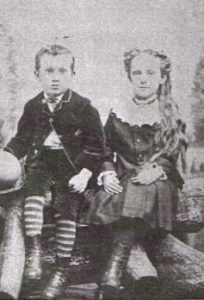
 Military Records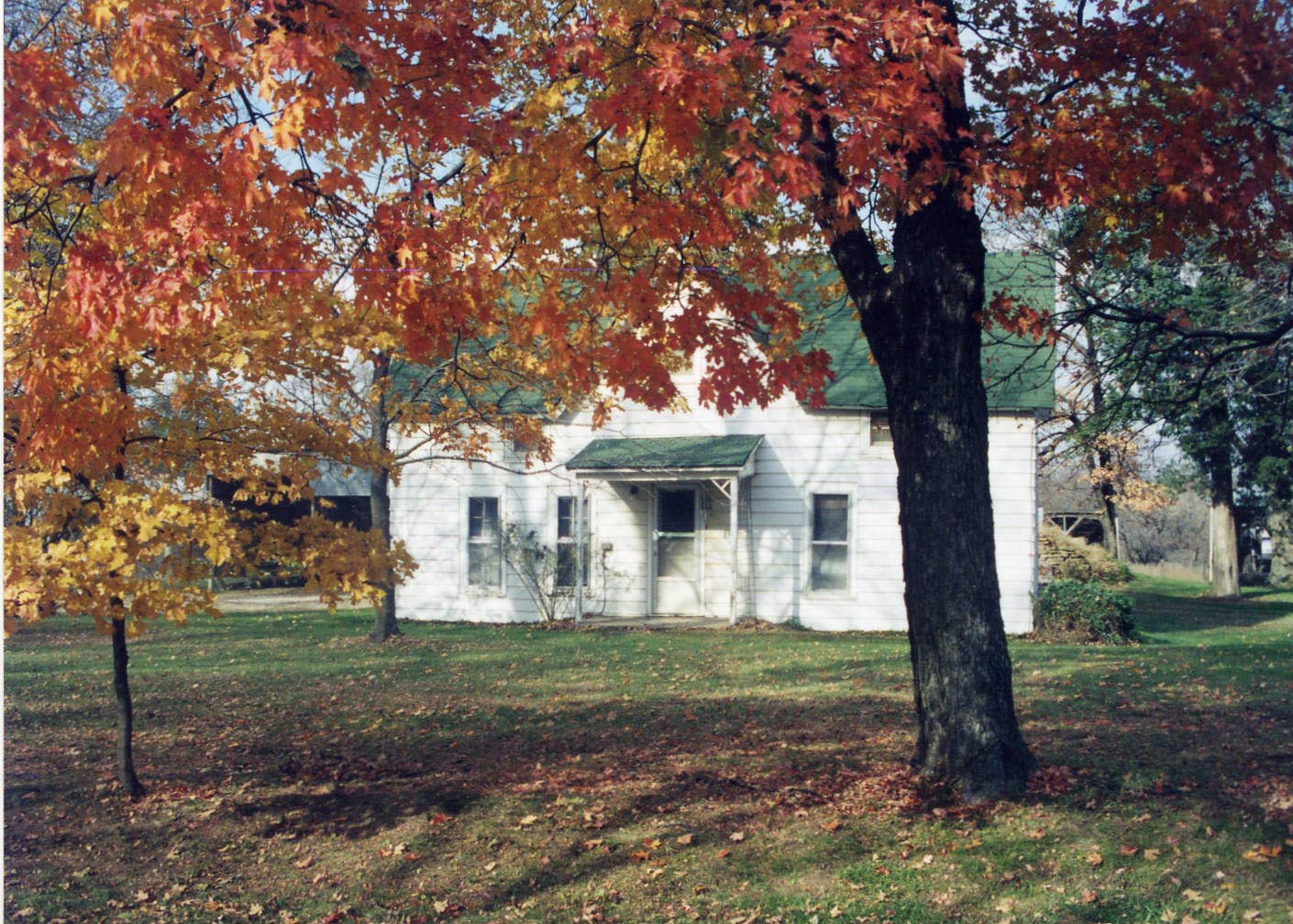
 Expansion
 A Growing Family
 Additions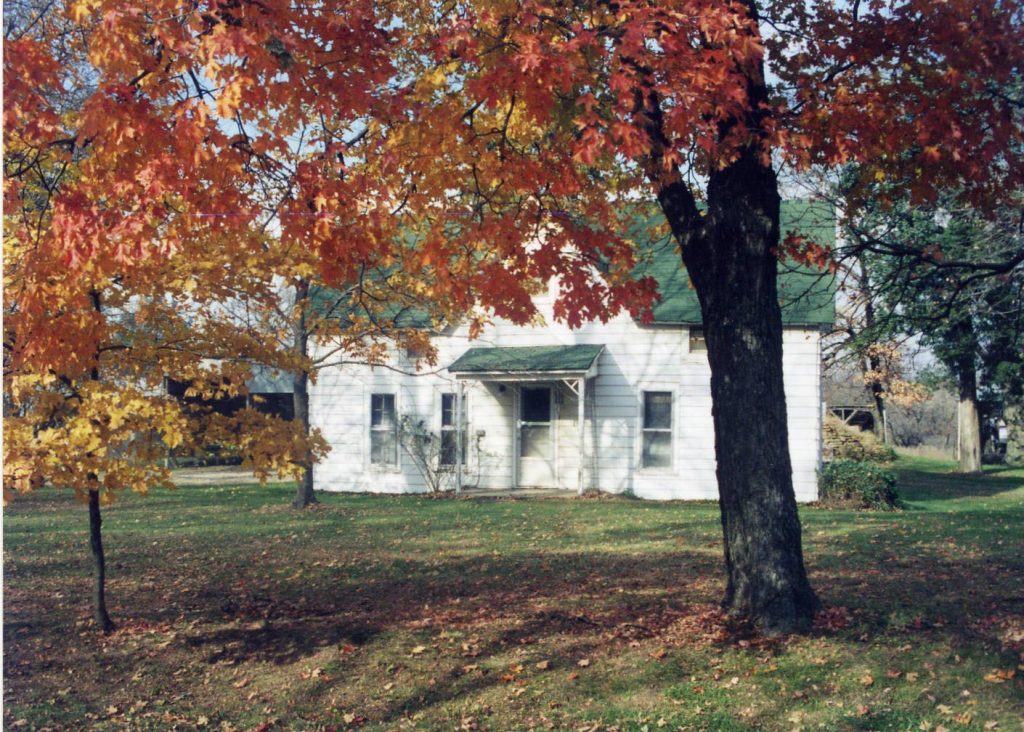
 Records for potential family members begin showing up in a cluster of counties in eastern Missouri in the 1830s. The chart shows where each of the families are found up through 1870. The question remains, “Are they the right Thomases?”
 Problem Solved?