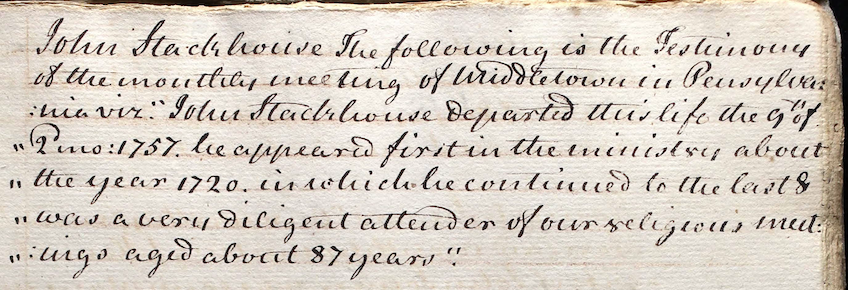
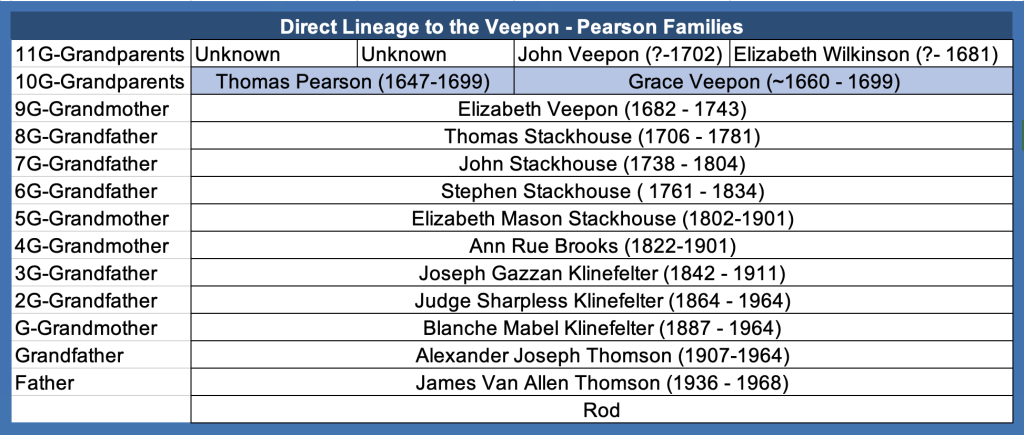
What does a signature have to say about you? I started saving signatures of relatives several years ago. This article explores the signatures of some direct ancestors of my husband and myself.
Just Initials
In bygone days, it was common for men’s signatures to include only the initials of their given names and their surname. Many documents and news articles were written also without the man’s first name, which can make researching families with similar initials difficult.
Both of the following men used their initials at times. Occasionally, Andrew is found with is name as Andy. The way he wrote McCracken is sometimes misunderstood by transcribers. Thus, the name sometimes becomes Cracken in indexes.
William was known as William, W J, and Will. His signature is also interesting because it contains both cursive and fancy print.
Andrew Johnson “Andy” McCracken
William Johnson Peelle
The following signatures of women show how they often defined themselves by their marriage or lack there of. Both Blanche and Donna signed with their husband’s name while Minnie indicated that she was not married.
Blanche (Klinefelter) Thomson
Donna (Van Allen) Thomson
Minnie (Kutzner) Helm
Not all women identified their marital status in their signature. Interestingly, however, in the examples below, Matilda signed with her maiden name as a middle name.
Nellie signed with the name she was always called. However, it wasn’t her birth name. Her name at birth was Eleanor. It was the name of her great-grandmother and her great-aunt. Both of those women had been major influences in her mother’s life and she likely wanted to honor them. However, Nellie did not like the name Eleanor. And, since she was called Nellie when she was young, the name stuck. To my knowledge no documentation exists that uses her birth name.
Martha was born in 1826 and I believe she signed the source document after 1900.
Matilda (Jury) Peelle
Nellie (Peelle) McCracken
Martha (Johnson) Peelle
The following signatures show three different styles of signature. One with a first name only, one with a first name and middle initial, and one with the full name. Those with a full name are typically found on draft registrations, although not all draft registrations are signed with the full name.
Passco Peelle
Willis Alexander Conner
Clifford Claney Pellett
The following are additional signatures where the men signed their full name on draft registrations. It is likely that this was not their standard signature.
Alexander Joseph Thomson
James William “Will” Thomas
Herbert James Thomson
The following examples show how different a given person’s signatures can be. In both cases, the first signature had an abbreviated form of their the first name. The second signature is a full signature with all three names.
The odd thing in the case of Jake Helm is that when he signed his full name, he still used Jake instead of Jacob. In addition, he wrote his name as “Jake Phillip Helm.” However, his name as recorded on his baptism record was “Phillip Jacob Helm.”
It was tradition in Germany, the Helm family’s homeland, to call people by their middle name. In many cases, the boys all had the same first name and all the girls had the same first name. Each being named after their father or mother according to gender. This family did not go so far as to name all the children that way. However, they did have multiple sons named Johann. And, Jake couldn’t be Phillip because he had an older brother Johann Phillip, who later went by Phillip John. And, yes, German traditions are confusing, but they are much more so when intermixed with American traditions.
With regards to Joe McCracken, he generally signed his name as “Joe McCracken.” Thus, signing with the full name would not have been natural for him. That is likely the case for most people.
Phillip Jacob “Jake” Helm
Joseph Andrew McCracken
And, last, but not least, the oldest signature of a direct ancestor that I have collected. It is the signature from William Hurrie, the ringer of the Liberty Bell. It is on a document acknowledging receipt of a payment authorized by John Bayard, speaker of the Pennsylvania Assembly.
Another interesting thing about William’s signature is that unlike the others, he most likely learned to write in Scotland or England before immigrating to the United States. He spells his name “Hurrie.” Meanwhile, others that appear to be related or associated with him spelled their name “Hurry.” Records intermix the spellings and his gravestone spells it as “Hurry.” However, this shows the spelling that he used.
William Hurrie
Featured Image: Credit to StockSnap via pixabay.com
My Grandma Dessie May (Thomas) Pellett had rules around which of her daughters, even as adults, could cook which items. One of the items that was “assigned” to my Aunt Inez Linda Pellett (yes, I was named after her), was Chicken and Noodles. Well, actually, just the noodles part.
My Memories
Growing up, my sister and I spent most Saturday nights with my Grandma Dessie May (Thomas) Pellett and my two unmarried aunts Inez Linda Pellett and Ruby Arlene Pellett. After church on Sunday was generally the most special meal of the week. Occasionally, that included a big pot of chicken and noodles.
Making the Stock
As I recall, grandma would boil bone-in chicken in water and would add carrot and celery to the water to create a stock. Of course, it also included salt and pepper. However, I am not sure that she included onion, which is often a part of stock. When the stock was ready and the chicken well cooked. The carrot, celery, skin, and bones were removed. The chicken was shredded and it was time for the noodles.
Making the Noodles
Inez made noodles using a relatively simple recipe. For a single batch, I use one egg, 2 tablespoons of milk, a teaspoon of salt, and a cup of flour. Inez used the same ingredients. I am not sure if she just doubled it or if she had a slightly different recipe. But she either made more dough or magically created more noodles out of the same dough.
After the ingredients are mixed, let the dough sit for at least 10 minutes. Then comes the UNIQUE part of the recipe. Unlike most recipes where they make thick or broad noodles, these noodles were cut super, super thin. To do that roll the dough in batches such that it is paper thin. Then fold the dough over several times and cut it with a sharp knife in narrow strips no wider than 1/8 of an inch. A 1/16 of an inch is even better.
Let the noodles dry completely. To do that spread them on baking sheets. I usually let them dry about 2 hours turning them every 30 minutes.
Bring the stock to a boil and add the noodles. Cook till tender, which generally requires about 15 to 20 minutes of cooking. Yum!
Why is this a special recipe?
I think what makes it special and different is having so much surface area on the noodles. Everyone loves it. I have never known anyone from the time I was young to the present to turn down a bowl of these noodles. They even love them when I am lazy and substitute store bought stock and use boneless chicken.
The biggest dilemma is how much to make. I remember once when I made chicken and noodles for Dad, my sister, and my family. I made four times this recipe and I got complaints because we ran out before everyone got as much as they wanted!
Today, if the family is all together, I make two large pots of the chicken and noodles with extra chicken on the side.
Featured Image: AI generated by Krimker via Pixabay.com
Today, we think of urban centers as cities and sometimes refer specifically to downtown or most heavily populated portions of the city as urban areas. Life, however, in the last half of the 1800s and early 1900s was a little different than it is today, especially for areas in newly opened territory. What we think of today as a very small town that we speed right past was everything to people in wide open spaces.
What did Hiattville have to offer?
One creative writer wrote to the Fort Scott newspaper in 1877, describing Hiattville as “located about half way between the sandy banks of the classic Pawnee and the amorous vales of the romantic ‘Happy Hallow’.” Now, one of the men in town took issue with that description, particularly the part about the amorous vales. He thought the reference was inappropriate and added no value to defining Hiattville’s location.
The author of the letter to the newspaper, which was unsigned, went on to say, “The inhabitants are . . . noted for their enterprise, virtue, and refinement.” The gentleman that objected to the description of the location did not disagree with this statement. Likely, he agreed.
In addition to fine people in a good location, Hiattville had all the basic elements required for the development of a city that was located in newly opened territory that was primarily rural.
By 1875, Hiattville had 35 inhabitants, including three blacksmiths, a miller, a painter, a coal dealer, a carpenter, and three merchants. Ten years later, the town included 2 blacksmiths, a plasterer, a shoemaker, a druggist, a hotel proprietor, a minister, a doctor, a teacher, a tailor, three carpenters, seven merchants, and a railroad agent. The town was growing!
Connection To The Outside World
The first key to growing a town in the late 1800s was having connections to the outside world.
Post Office
A post office was the first step in establishing a town and connecting to the outside world. Hiattville, or actually the Pawnee Post Office was relocated a mile or so to the north when the Missouri, Kansas and Texas Railroad (MKT or Katy) determined where they were going to place their tracks. The name was changed to Hiattville in honor of James M. Hiatt, who gave land for the town.
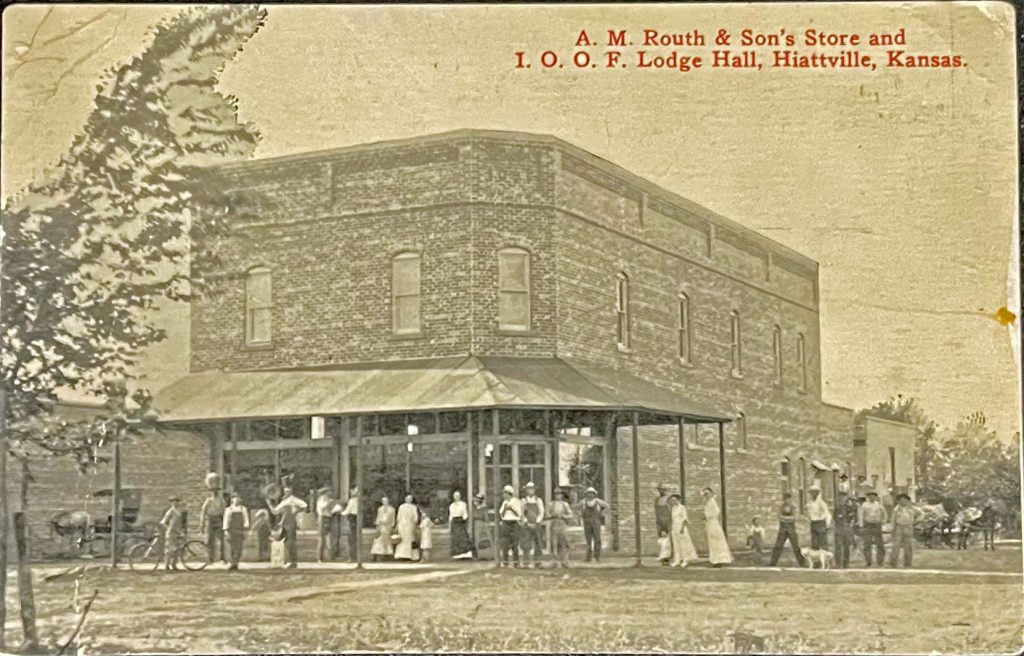
The post office wasn’t initially a separate building. Instead, it was located inside one of the stores. Despite being co-located with goods for sale, by 1902, not only did Hiattville’s post office serve the growing town, but it also provided rural mail delivery. In 1905 it was inside A.M. Routh’s store. In 1910 the post office was in Strode Brothers’ Store. After the 1910 fire, it moved to Yager’s. However, at times, the post office was in a separate facility.
Many people served as postmaster or postal carriers over the years. When it was called Pawnee, Hezekiah Harryman was the postmaster. In 1873, Robert A. Cunningham was appointed postmaster. Prior to his appointment E.B. Rall was the postmaster. It is unclear if Mr. Harryman continued to serve in that capacity between the time the post office moved and E. B. Rall was appointed. R. M. Wallace also served as postmaster for several years, followed by L. C. Ward. Other postmasters in the early days included: Mr. Strode (1911), J. D. Warren (1914), and George Chilcote (1921).
Many years later, Grandmother Dessie Mae (Thomas) Pellett’s brother Theo “Bud” Thomas was postmaster of Hiattville for over 20 years. Read about the post office and Bud’s time as postmaster in A Thousand Memories.
Railroad
1876 Missouri, Kansas, and Texas Railroad Schedule
Every town required at least one rail line with a depot located close by. Without a railroad most towns died out before they got started as they needed a way to efficiently move goods being purchased and sold. Also, train travel at the time was the most efficient way to go any distance, even to Ft. Scott.
Hiattville had a small depot, which for a time was painted yellow. Besides managing railroad passengers and shipments, the agent, one of whom was F. J. Showalte, was also responsible for the telegraph office. In 1878-1879, C. R. Teas was the telegraph operator while the night operator in 1888-1889 was R.F. Gale. Other agents included: M. L. Harris, Mr. Rhodes, and Mr. Long.
At one time six passenger trains a day stopped in Hiattville with freight trains running hourly. Freight was very important as farmers in the area would ship cattle, sheep, hogs, hay and more to Kansas City or other locations for sale. In 1908. Strode and Williams, a local store, shipped out 19,905 pounds of poultry, 1,326 cases of eggs, 3,189 pounds of butter, 1,956 pounds of hides, 12,152 rabbits, 1,093 cans of cream and 25,972 pounds of butter fat.
Artlington House 1892
Boarding Houses & Hotels
Once people arrived in town, they needed a place to stay.
In 1875, the Hartnett household included Thomas’ brother and two people who do not appear to be related to the family. Then in 1880, Hiattiville only had 35 inhabitants. Nearly a third of them lived in the Hartnett household, which included a total of eleven people. Besides the family, there were three railroad workers, a doctor, two brothers who were telegraph operators, and a servant. It is yet unknown if this was considered a hotel or a boarding house.
Then in 1884, the Arlington Hotel, which had been built sometime prior, sold to J. L. Thomas. The following year, the state census listed Jesse Stine as hotel keeper. Interestingly, No guests were listed in the household. However, the Harnett household is listed next to the Stine household. Again, it had extras in the household.
Around 1890, the Hartnett family moved to a farm. About this time, T. M. Arthur became the manager of the hotel. This seems to support the idea that Thomas and Ellen Hartnett had previously been managing the hotel. Note: several sources, erroneously report the name Hartnett as Hartwell.
W.S. Wallace owned or ran the Arlington House in the early 1890s. Then, the hotel closed for a time and reopened in April 1893 with Ide Routh as owner. Mr. Routh also had a livery and stable associated with the hotel. In 1896 as a gentleman planned to spend the night, but found the hotel closed and had to ride to Ft. Scott to find accommodations. I am not sure why he didn’t just go to Pawnee as it also had a hotel. Alternately, the man could have asked a local to accommodate him for the night. It is unclear if it was a temporary closure or if it changed hands again.
The Arlington Hotel continued to serve travelers until 1905 when it burnt. At that time, it was owned by George Howell. Later, Charles Yager ran a hotel in addition to his other businesses.
1909 Ad
Livery
People visiting also needed a way to get around if they were traveling very far. Also, if they arrived with a horse, they needed a place to bed the horse. Thus, before cars became commonplace, a livery was a necessity.
Over the years, various men owned a livery, which often included a stable or feed store. R.M. Wallace, Mr. Hall, John Fox, George Howell, J. T. Hays, Pat Gibbons, S. C. Potter, and C. Beal all ran a livery at one time or another. However, they didn’t all use the same facility for the livery.
When cars started getting popular, a livery was still a necessity. However, people also needed mechanics. Thus, C. C. Sawyer opened the Sawyer Garage. Among other services, Mr. Sawyer sold United States Tires made by the United States Rubber Company.
1892 Ad
Restaurant
In 1884, Jesse Stein opened a restaurant just north of the Katy depot. Meals cost 25 cents. In 1891, Mr. Stine’s restaurant included an ice cream parlor.
In 1889, Dr. Boyd of Walnut added a confectionary and ice cream parlor to Hiattville’s offerings.
Later, Mr. Wallace had a restaurant and also sold pop and fruit. Mr. Yager’s drugstore also expanded to include a soda fountain. Eventually, he added a lunch counter and a restaurant.
Phone Company
Around 1905, the Hiattville Mutual Telephone Company was formed. It was a party line phone system, but did provide a few single-party lines which were used by businesses. By the late 1940s, Hiattville Mutual Telephone Company had $1,827 in revenues and $1,142 in expenses. They operated 89 telephones and had different rates for rural and city dwellers.
Investors & Merchants
Some of the people that moved to Hiattville and the surrounding area left after a brief time. For some, it was more of a stopping point before they decided to move further west. For others, they arrived and found the living conditions weren’t for them. They sold out and moved back to their previous location. However, there were the ones that stayed. More importantly, some of them provided the second key to a city; they wanted to invest in the town. These men were also very active in organizations, schools, and politics. Big investors in Hiattville were: E. B. Rall, R. T. Williams, R. M. Wallace, A. M. Routh, Charles Yager, and John Landers.
E. B. Rall
E. B. Rall got the town off the ground by starting the first store in Hiattville. The store opened around the time the town was formed. He sold dry goods, groceries, hardware, medicine, boots, and shoes. In addition, he both bought and sold produce, grain, and game. He also took over running the post office, which was likely located in his store.
In Dec 1876, he built an addition to his storehouse, including a granary and wareroom with part of the space to be used by Mr. Cooonradt, a railroad agent. Then, in February 1877, E. B. Rall shipped 400 dozen eggs to Kansas City. He also had 8,000 bushels of corn on hand. Around the same time he apparently bought up various available lots in town. By 1879, he was also dealing in cattle and hogs.
Mr. Rall was very involved in local politics and was widely known in the county. However, in January 1886, he sold out to Elledge and Sons. After that E. B. Rall lived in various locations. He had at least two stores after that, but mostly seemed to be involved in an investment company. He had lived in Pawnee Township since 1859.
R. M. Wallace
Stores
Richard, who was typically documented as R.M., appears to have started the firm of Wallace, Potter, and Shriver (G.W.) in 1884. It isn’t clear if this association lasted long-term or not. However, his wife’s maiden name was Potter. Thus, it is assumed the Potter who was a part of his business was from her family.
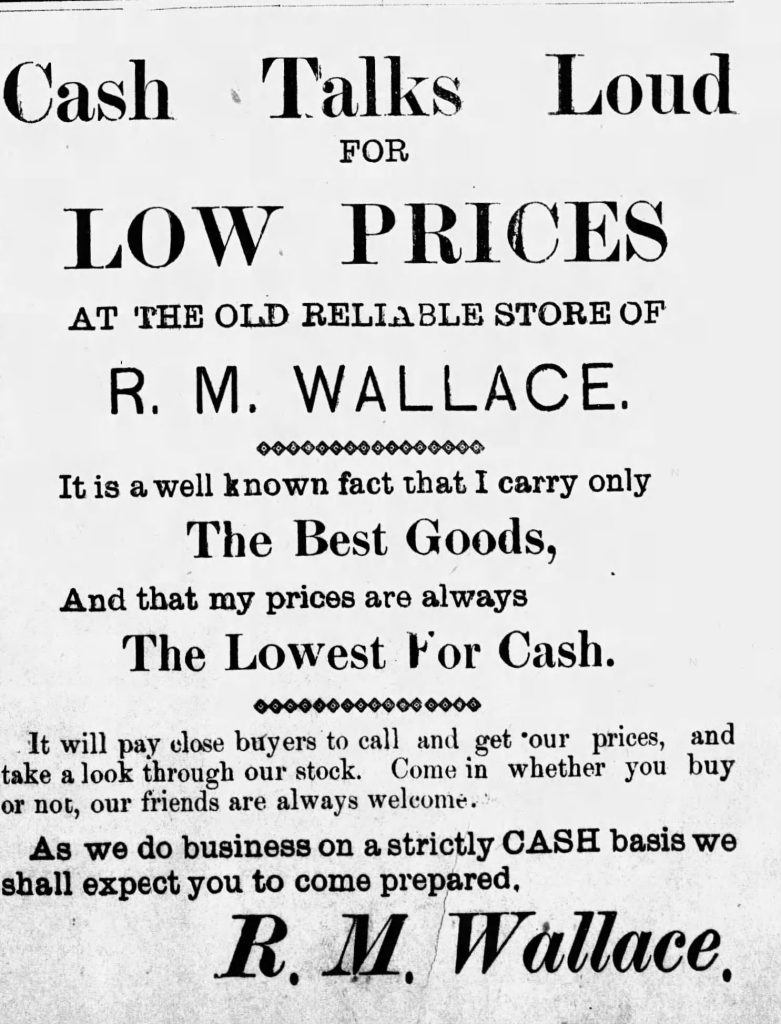
In any case, R. M.’s businesses seemed to be under his name. He had a store that sold a variety of goods: hats, caps, groceries, boots, shoes, and even toboggans. At one point, R.M. owned “The Meat Market,” which sold fruit and canned goods in addition to meat. In 1889, he had a new store and may have been in business with a Mr. Love. By 1891, R. M. Wallace & Co. was competing with Haines & Co. and Gibbs, Routh & Co., who also had general merchandising stores.
In addition to his mercantile and meat market, R. M. owned a livery and stable in the early 1890s.
J. H. Wallace and Sons was a drug store in Hiattville in the late 1880s. They carried a variety of items, even valentines. I have not yet found any relationship between this family and R.M. Wallace.
Creamery
Richard Wallace was also a key player in starting the Hiattville Creamery Company, which was chartered on December 1, 1886 with a plan to open by March 1, 1887. He was president of the company and a member of the board of directors for the company, which had $8,000 in capital stock.
By mid-June 1887, the company was making 1,500 pounds of butter and 500 pounds of cheese each day. They had plans in place to increase production. They had seven men working at the creamery and fourteen running routes to get milk for the creamery. At one point, Mr. Huntington was selling 650 gallons of milk to the creamery each day.
The butter and cheese was shipped out on the train to various points, including Topeka, Wichita, Texas, and New York City. Some changes in staff, such a, W. H. Deesler taking over management of the operation from a man from out of the area who initially ran the day to day operations, occurred over the coming few years. Despite doing seemingly good business, they sold the company on August 31, 1889 for a mere $1,600 to Dr. Kennel, who continued the operation.
Other roles
On August 31, 1885, R. M. was appointed postmaster, a role he held for several years. R. M. was also an agent for C. W.Goodlander’s undertaking business in Ft. Scott.
W.S. Wallace, who ran the Arlington Hotel for a time in the 1890s, was Richard’s son.
Wallace Livery 1892
1908 Ad
1892 Ad
Williams Family
J. H. Williams
James Hinson Williams and part of his family moved to Kansas in 1874. The family made their way to Hiattville in 1882. James, his wife, his daughter Mary (Williams) Pool, his daughter’s husband, and his son Rice (Tillard) all lived in the area.
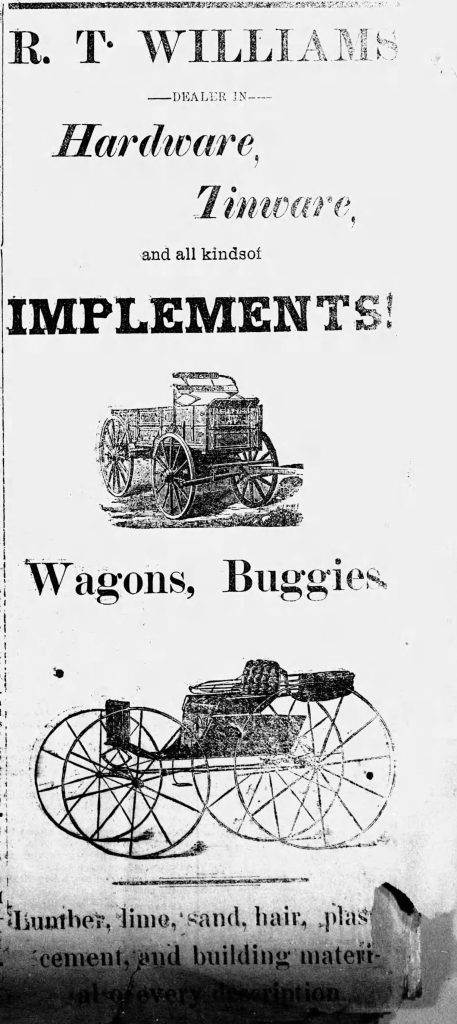
The same year that they moved, J. H. opened J. H. Williams & Son Agriculture Implements. By the late 1880s, the store carried lumber, hardware, cutlery, sand, buggies, carts, and implements. No other hardware company existed in Hiattville during this time. In addition to the store, the family also owned a grain elevator.
R. T. Williams
1908 Ad
By the 1890s, James’ son Rice, or Tillard as he was often called, took over running the business. The business became known as Williams Hardware Company.
R.T. continued to run the business and was quite influential in town. He was involved in many activities and businesses. When the Hiattville State Bank was formed, he was vice-president and was also a member of the board of directors.
For a very long time, Tillard dreamed of creating a very large grain elevator. He believed that it would promote the grain business in the area. Hence, it would grow the local economy and also grow his business. After being in business for many years, he finally decided that he was in a position to make it happen. Thus, the planning began.
Investment In Mexico
In 1909, Rice went to Old Mexico to inspect the mining operation of Sonora Mining and Smelting Company. He, along with George W. Blinco were considering investing in the company. However, upon his return he became ill. It was said to be typhoid pneumonia. He died withing days. He was only 55.
At the time of his death, the elevator of his dreams was under construction and had risen to 60 feet. After his death, R. T.’s son Columbus (Earl), who had previously started running the family business, continued in that role, although his wife inherited all of his real estate.
His son Columbus (Earl) ran the family’s hardware store after his death. In the fall of 1920, Earl sold the Williams Hardware Co.’s stock of harnesses to Frank Barringer. He focused his business on selling horse supplies, including harnesses. His business also included repairing of harnesses.
There were various other Williams in the area. More research is required to determine if they are related to R.T. or are completely separate families.
1909 Ad
Charles Yager
O. L. Settles purchased the stock of a drug store in Fort Scott. He moved the stock to Hiattville and opened City Drug Store. Among other things, he offered a service in conjunction with Fort Scott Steam Laundry where people could drop clothes off at the drug store and he had them sent to Fort Scott for cleaning. Then, the freshly cleaned clothes could be picked up at his store.
When he moved out of Hiattville, Mr. Settles sold his stock of drugs to A. Fellows & Co. After Fellows, the Wallace family owned a drug store. Then in November 1901, H.S. Wallace sold the drugstore and fixtures to Charles Yager.
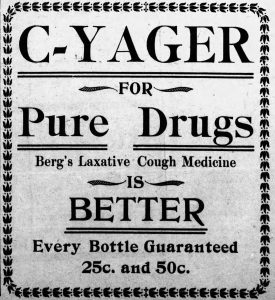
Mr. Yager dealt not only in medicines and related products, but in a wide variety of products, including clocks, school supplies and more. Over time, he added a soda fountain, lunch counter, and dining room to his facility. He eventually had sleeping rooms on the second floor of the building. These sleeping rooms may be what was referred to as the Hiattville Hotel.
Possibly the most unusual of Charles’ businesses was his jewelry store. Of all the businesses that I would expect in a small rural town in the early 1900s, a jewelry store would be nowhere close to the top of the list. However, Hiattville had one. And, in 1904 it was robbed. The thieves took jewelry, harmonicas, and cigars.
The next year Yager lost businesses in the fire. He immediately built new facilities and continued to carry on his business.
In addition to his retail business, he was an agent for an undertaker in Fort Scott. He had people covered from every angle. He could feed a person if they were hungry. Then, if a person was sick, Mr. Yager would provide medicines to help heal the person, but if the person didn’t make it, he could turn around and help with their burial.
Yager’s businesses were later known as Yager and Son.
1908 Ad
1908 Ad
1892 Ad
Routh Family
Andrew M. Routh
The Early Days
In 1888, A.M. Routh (a.k.a. Coy) moved to the Hiattville area on property formerly owned by the Patrick family. In 1890, he rented the farm land and sold the residence. As he was planning to become a “city” man, he also sold his farm equipment and animals.
In October 1890, A. M. bought an interest in Mr. Gibbs’ general merchandise store in Hiattville. Two years later, he bought out Gibbs stock and formed Routh Brothers with his brother I.P. Routh. They decided to run the business on a cash only basis. It is unclear how long that lasted. However, I suspect that they began offering credit at some point.
That same year he bought Pat Gibbons property just west of the Arlington Hotel. He also purchased six lots in block one of the Wallace Addition, which means he was close neighbors of my great-grandparents William J. and Matilda (Jury) Peelle, my great-great-grandparents Passco and Martha (Johnson) Peelle, and Matilda’s brother Walter Jury.
In 1906, A.M. made the decision to venture to Colorado to work. When he did, Donald C. Williams and Mr. Strode bought out his goods and started Strode and Williams, a general merchandise store. By 1909, Mr. Strode had bought out his brother-in-law Donald, who moved out of the area. Business, however, was brisk and he added a delivery boy to his staff to serve their customers.
Interests in Colorado
When A.M. went to Colorado in 1907, he left his family in Kansas as his children were attending Baker University in Baldwin, Kansas. Thus, his wife moved to Baldwin to be with their kids while he went west.
A. M. headed to Canon City in southeastern Colorado. He was working with his brother-in-law J. J. Hollingsworth. He was to be in charge of the Montrose office of Hollingsworth Realty Company. They had 30,000 acres of land in the Uncompahgre Valley that were open to immigration. A. M. was back and forth between Kansas and Colorado. However, his work in Colorado was short-lived. It was not long before A.M. returned to Kansas to live.
In April 1910, A. M. bought goods and moved them into a building in Hiattville. He also moved his family back to Hiattville. He was back in the mercantile business, but he returned to Colorado occasionally as he continued to have business interests near Montrose.
The New store
The Opening
After the 1910 fire, A.M. continued to be in business. However, a new big store was in order. Thus, he put together plans for a two-story building that was approximately 40 feet by 96 feet (or thereabouts as every report gives a slightly different measurement). The new store was “modern” as it had a concrete cellar and a concrete floor on the main level. It also had a facility to sterilize milk cans, an oil room, a large storage room, and a cream room with a cream tester.
He worked with the lodges and they were responsible for the hall on the upper floor.
The Anniversaries
For at least three years after the store opened, A.M. held an anniversary celebration that mimicked the grand opening celebration. In 1913, bad weather tried to dampen the celebration. Yet, 611 people registered for the drawing with winners receiving flour or coffee. Ladies in attendance received decorated cups, saucers, and plates. The men and boys received pocketbooks and combs. The crowd was treated to lunch and Hiattville’s own Freedman Orchestra provided the entertainment.
Two years later, 600 people had registered by the 3 p.m. drawing time. However, 800 were expected to attend before the event drew to a close. This year, music played from a Victrola. Again, lunch was provided, a drawing was held for coffee and flour, and the guests received souvenirs. In addition, a bread contest was held. And, like on earlier anniversary celebrations, A. M. Routh offered specials and discounts, which led to a huge sales day!
1909 Ad. John Landers was a competitior to A. M. Routh. Both sold general merchandise and coal.
Doing Business
In 1913, his son J. V. (Vivian) Routh bought half-interest in the store. He was very familiar with the operation as he had worked in his father’s store since he was a child. The following year D. D. Land, A. M.’s son-in-law bought a 1/3 interest in the business. However, the business continued to use the Routh name for the store. This latter association only lasted until the following year.
His son, however, worked with him long-term. In addition to selling general store items, Routh and his son purchased products from farmers, excluding hay and grain. They were successful and very dedicated. In one month they shipped 282 cases of eggs. That isn’t counting the eggs that they sold locally or the orders they filled for the railroad men.
In 1920, they sold over $75,000 of goods, which included a car (railroad car) of apples. Another time, they received a car of potatoes. However, sometimes the car contained things other than food, such as, coal because in addition to the standard mercantile products they sold, A. M. was also a coal dealer.
A. M. was also very active in politics and ran for office. He was said to be progressive when it came to business, but not when it came to politics. When writing about A. M. and his son, the Fort Scott Republican stated “[T] they believe in Hiattville and Hiattville believes in them.”
William H. Routh
William, Andrew’s brother, spent some years farming in Pawnee Township of Bourbon County. He had a good-sized operation. However, in 1903 he decided to move into Hiattville. Thus, he rented out his farm and sold off his livestock and farm implements. His plan was to run a grist mill. Hiattville had a mill starting in 1892. However, it was no longer in operation. So, W. H. bought the old mill equipment from Mr. Beale and added new equipment to update it to a much more improved mill. Unfortunately, his milling operation was wiped out by the 1905 fire. Some years later, he moved to Colorado to become a rancher.
Isaac P. Routh
Isaac (a.k.a. Ida) was another of the Routh brothers. He was in business with Andrew. However, Andrew managed the day to day operations of the business. I. P. was involved with the telephone company and appears to have likely had other unknown business ventures. He was also the postmaster and constable for a period of time. When A. M. took the position in real estate in Colorado, I. P. continued to own the building where Strode and Williams now did business.
Medical & Financial
1909 Ad
Doctors
Doctors seemed to love to come to Hiattville. Some came and went quickly. Others, stayed for many years.
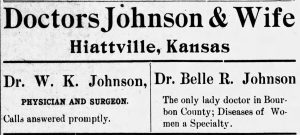
E. P. Davis of Boone County, Indiana and O.C. Bender were two of the early physicians and surgeons in Hiattville. In 1877, Mr. Brock joined them in serving Hiattville. It is unclear how such a small town could support three doctors at one time. Some of the other doctors were W. K. Johnson, Belle R. Johnson, J. L. Daugherty, C. A. Culver, Dr. Adamson, J. F. Clark, Dr. Cornell, and L. W. Griffin.
Grandpa Joe and Grandma Nellie (Peelle) McCracken tried to avoid doctors as much as possible. However, in the early days, when they needed a doctor, they contacted Dr. J. B. Robinson. That was the case when Aunt Ruby Faye (McCracken) Niemeir was around a year old. Both Grandma and her were very ill. Dr. Robinson cared for them. He was a doctor in was one of the doctors that served Hiattville the longest. He had a practice in Hiattville for 23 years.
It is also important in a farming community to have a veterinary. As early as 1892, the Hiattville area had a vet. Dr. Burns was the local vet at that time.
Financial
Grandpa Joseph Andrew McCracken’s Hiattville State Bank Book
Banking
The community was looking for a bank to locate in Hiattville in the early 1890s. Matter of fact, they were offering a prime business lot for the bank if someone would locate to the town. However, it wasn’t until May 15, 1907 that the Hiattville State Bank was chartered.
Mr. Hornaday was president and R. T. Williams was vice-president. Also among the directors were C. W. Thompson, Jacob Neth, William Kidney, John Landers, and a gentleman from Oklahoma.
They built a new building for the bank. It was 22 feet by 40 feet with a vault. A strong building with a vault did not stop it from being robbed. On at least three occasions, robbers got away with cash.
My Grandpa McCracken had money in the Hiattville State Bank. The last entry in his bank book was on October 7, 1931. The balance was $2.04.
Insurance & Real Estate
L. E. Potter was the primary insurance man for Hiattville for many years. He also dealt in real estate and loans. D.D. Land was involved in oil and gas exploration around Hiattville. For a time, there were hopes that oil would be discovered and Hiattville would become a boom town.
Supporting Cast
The third key to growing a town in this era is to have people in other occupations that support the people of the town
Blacksmiths
Jacob Dockter, from Franklin County, Pennsylvania was one of the first blacksmiths in Hiattville. In 1876, Jacob went into business with D. P. Horning, who was a wagon maker. Of the first 35 people to live in the town, three were blacksmiths. Along with Jacob Dockter, were William Smith and Mr. Rhoden.
In the 1880s, Mr. Johnson, Charles Petit, W. F. Smith, and Dr. Davis were Hiattville blacksmiths. Dr. Davis was also a dentist and livery man. He retired in 1889 due to health issues and sold his interests to Lester McNaughton.
Mr. McNaughton was working with W. F. Aidlott. Many businessmen at the time were offering lower prices to people that paid cash. McNaughton and Aidlott made the decision to work on a cash only basis. It is unclear how long McNaughton stayed in Hiattville. However in 1891 Mr. Aidlott was in business with Lou Synott. They built a new shop on St. John Street. Mr. Aidlott was the blacksmith that stayed in Hiattville the longest, having a business for 58 years.
They did have competition. Around 1903 Mr. McCord and one of the members of the Routh family also had a blacksmith shop. It is unclear how long that shop remained in business.
Carpenters
My great-grandfather William J. Peelle was a carpenter and farmer in the Hiattville area from 1879-1911. He initially lived near the Schoefield School House north of town, working for anyone in the area that had a need. He built and repaired buildings and made all kinds of object, including crutches, wagons, and the post office box for the Marmaton Post Office. Then, in the fall of 1891, he moved into Hiattville and opened a shop. He continued doing the same work.
In the spring of 1894 just prior to the birth of his daughter Nellie (Peelle) McCracken, my grandmother, he moved his family out of Hiattville to a farm later owned by Don and Kay (McCracken) Davis. He continued to do carpentry and farm in the area until his death in 1911. A Carpenter and A Farmer tells more of his story.
It is interesting to note that William J. was from Randolph County, Indiana. This was the same location that the Hiatt family, for which the town was named, originated.
Other carpenters in Hiattville include: Andrew Liddle, Frank Huntington, and D. O. Murray.
1908 Ad
Barbers
The town had a barber shop by 1889. It opened across from the “old” post office.
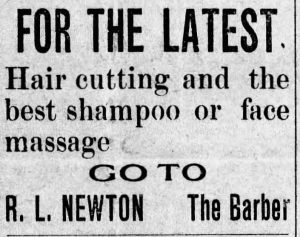
The town had various barbers over the years. R. L. Newton was the barber for several years before moving his business to Parsons, Kansas in 1909. After he left, W. Sherman took over the barbering duties. F. S. Goldsberry and Lawrence Perry were other barbers that served Hiattville.
Other Merchants and Tradesmen
Other merchants in Hiattville included: Mr. Hubbard, H. B. Brown, R. A. Cunningham, Mr. Gibbs, L. E. Potter, Charles Bader, Shriver & Son, and J. J. Stockton. At one time, there was talk that Mr. Beck was going to open a department store in town. However, that store never seems to have come to fruition.
As early as 1886, Hiattville boasted a harness shop, a butcher shop, and a shoemaker. Henry Chimpky and Shinkley & Son were two of the companies that dealt in harnesses and related items. By 1889, Mr. Chimpky’s business had outgrown its quarters and he moved to a new building located a block north of the drug store.
Those early days also brought wagon makers, millers, painters, and plasterers to the town. The earliest miller was Mr. Humphrey and the earliest painter was Mr. Botsford. In 1891, Mr. Ellis was the owner of the grist mill. And, of course, railroad men lived in Hiattville or stayed there while working on railroad projects.
The town even had businesswomen. In 1892, Mrs. A. H. Gibbs opened a millinery store with Mrs. Heaton as the dressmaker. After the 1905 fire, Bertha Wallace and Mrs. J. C. Landers opened another millinery store.
The railroad also shipped livestock and products from the local farmers and rock from a local quarry. In 1889, the quarry was loading out rock at 4 rail cars per day. Later, C. W. Strode and J. A. Killion were owners of the Hiattville Flagstone Company.
Education & Social Life
Schools
Hiattville didn’t have a school in town until 1881. Before 1881, students wanting to attend school had to go out of the village. John Hartnett, my Grandma McCracken’s first cousin once removed and the first child born in Hiattville, initially went to the school northeast of town. It was one of the closest schools to Hiattville and it became known as “Old Hiattville.” Mount Hope to the south of Hiattville was another option for students.
By 1884, a new school had been built. It measured 40 feet by 32 feet wide and was two stories high. When the new building opened, fifty students were enrolled with several more expected in the coming days.
Churches
Hiattville was once the home to four different religious denominations: Catholic, Baptist, Christian, and Methodist. The Christian Church existed by 1884. Services had stopped being held there sometime prior to 1906. The Baptist Church does not seem to be formed until around 1900. Additionally, there was talk of opening an Orthodox Church. However, I have not found evidence of services for this denomination. To my knowledge our family did not have ties to any of these churches.
However, our family did have ties to the Hiattville Catholic and Methodist churches. Both of these churches were formed in 1884 and were long lasting. However, Methodist ministers had been holding services in Hiattville since 1877. The Catholic Church closed sometime after 1950 and the Methodist Church remains in operation today.
The churches were located on the opposite sides of town. The Catholic Church was located on the west side of town to the north of the main road and the Methodist Church (Methodist, Methodist Episcopal, United Methodist) located at the east entrance to town.
The Methodist Church had several organizations within it. Included were the Epworth League, a youth organization focused on fellowship, education, and Christian service, and the Ladies Aid Society.
Some of the Methodist minsters included: Rev. Dolson (1889), Rev. Taylor (1905), Rev. Roy Tillotson (1921), and T. E. Lacy. Father Davern(?) was in charge of the Catholic Church in 1921.
An interesting twist is that Rev. J. H. Williams bought the Christian Church becoming the only minister in Kansas to own the church where he was the minister. This came to be because the mortgage on the church had not been paid in full. Thus, the church was sold. At the auction in 1893, Rev. Williams purchased the church. Two years later, he was arguing over the county taxing the church as his personal property. He believed it should not be taxed because it was still an active church with regular Sunday services.
Clubs and Secret Societies
In the early 1900s, several secret societies sprang up in Hiattville.
The Modern Woodman of America #1364 was established in Hiattville. It focused on helping families who faced hardship due to the loss of the family’s bread-winner. Evergreen Camp Royal Neighbors of America was a women’s auxiliary that likely worked hand-in-hand with the Modern Woodman of America. Great-Grandfather William J. Peelle, who had a carpentry shop in Hiattville, was a member of the Modern Woodman of America. In 1895, the Hiattville MWofA had over 100 members.
The Ancient Order of United Workmen #182 had similar goals. It provided for families if the bread-winner became disabled or died.
Hiattville also had Lodge #462 for the Independent Order of Odd Fellows. This group focused on friendship and charitable aid.
Hiattville Lodge No. 216, Ancient Free & Accepted Masons was chartered on February 19, 1908. It focused on brotherhood, moral character, and charity. The Order of Eastern Star was associated with it and allowed women to participate in similar ceremonies and events.
One of the most interesting groups, although likely not a secret society, is the Anti-Horse Theft Association. It required membership dues and a pledge to assist when any member’s property was stolen. The group would circulate information about the theft to other nearby groups. They also created posses to pursue thieves.
Another group of interest was the Good Templar Lodge, alternately called the Independent Order of Good Templars. Although a social group, its goals were to get people to completely abstain from alcohol and illicit drugs. Thus, they actively held lectures and events in support of temperance.
The Home Builders Lodge No. 36 was located in Hiattville. The elected roles of the lodge included master builder, vice-builder, architect, and banker.
Additional clubs existed for a variety of topics. Some of them included the following. The ladies had a sewing society. A poultry club met in town. In 1888, the Tippecanoe Club met. And, in 1922 the Homemaker’s Club, which was really the Women’s Auxiliary of the Farmer’s Institute, was quite active.
Events
Politics
Almost as soon as Hiattville was a town, it became a political hub. Conventions, the selection of delegates, and other activities started as early and August 17, 1874. Local men ran for positions at various levels of government. Years later Dad would be elected to the Pawnee Township Board, which serves Hiattville. When he went to work for the state, he was no longer eligible to hold the position. At that point, Mom moved into the role.
The Fair
1915 brought the fair to Hiattville. The three day event was held at new fair grounds one-half mile west of Hiattville. The event included competition for best livestock, fruit, vegetables, knitting, embroidery, etc. Various races were also held including running races and mule races. It also featured a football game between the Hiattville boys and the Walnut boys. The MK&T was even convinced to add stops to accommodate the fair crowd.
The fair was arranged by the Fair Association, which had 60 stockholders, including Clate Farmer and Loran Potter, Grandma Nellie (Peelle) McCracken’s cousins. Ray and John Harnett, Grandma’s first cousins once removed, were also stockholders.
The following year the Hiattville Farmers Institute had 300 people for an event that sounded similar to a fair, but only including judging of food, livestock, etc. without the other events.
Music & Dance
Hiattville was a hub of musical activity. The town had a cornet band and later another band, which may have been associated with the high school. They played at various events in Hiattville and surrounding towns. In addition, bands from other towns came to Hiattville to play.
The lodges, Hiattville Dancing Club, and other groups held balls, dances, and parties. They even held parties for “old maids” looking to find love or at least a date.
Sports
Hiattville had both baseball and football teams. Some of the teams seemed to be made up of young local men while others seemed to be associated with Hiattville High School. The baseball club was formed as early as 1889. Some of the teams Hiattville played against included: Hepler, Tubtown, Girard, Ft. Scott, and Arcadia. When the baseball team played Tubtown, the home team was known as the Hiattville Rooters. It seems that would be the name for the booster club instead of the team.
One game that gained a lot of interest was when the town’s businessmen played baseball against Hiattville High School. The game was quite lopsided. However, it kept the audience engaged throughout. Yes, the high school boys won.
Literary
For those not into music or sports, intellectual groups sprung up. The first known debate society in Hiattville was organized in December 1876. By 1879, there were literary societies at Hiattville and also at Mt. Hope School only a mile or so south of Hiattville.
Quick Notes on other events
The following other events also occurred in Hiattville
The first Homecoming event didn’t occur until the first Sunday in August in 1933.
Multiple ice cream festivals or ice cream socials were held. The earliest I noted was in 1889.
In 1913 a merry-go-round came to town and was located across the street from Yager’s for two weeks.
In 1888, they held a shooting competition.
Various entertainers or shows came to town for multiple days at a time.
Newspapers
With societies, events, and activities in the area, a newspaper was of the upmost necessity. A local paper could tell of happenings that newspapers in a distant location might not publish. And, Hiattville seemed to have plenty of happenings.
Hiattville Happenings
Hiattville wasn’t always a quiet small boring town. It was the site of robberies, altercations, and plenty of court cases. Matter of fact, at one time there were so many court cases that people were saying that they might need to build their own courthouse instead of having to go to Ft. Scott.
Marital Troubles
The court cases consisted of business transactions where someone didn’t pay or there was a misunderstanding of terms. More interesting, perhaps, were some of the personal cases.
In one case, one of the leading businessmen in town was accused of causing alienation of affection of his wife. That had to be big news in a small town.
In another case, a couple who did not live at Hiattville, were having martial difficulty. The woman left and went to stay with a friend at Hiattville. The man found her and insisted that the woman that she was living with was in fact a man. In that case, they finally had a doctor and two women examine the woman and testify that she was indeed a woman. This would be a lot more complicated today.
Physical Altercations
For unknown reasons, fist fights seemed to break out. At least one occurred in one of the general stores. However, the most intriguing one occurred after a baptism. I am not sure what it was about.
At least two shootings occurred near Hiattville. One of them was the result of trouble within a family. The other shooting was a young man’s affection for a young lady. Read more about the latter here.
Thieves
In 1923, thieves stole liberty bonds, silver and cash from two businesses in town. The same night similar break-ins occurred in Garland. It was believed that it was someone who was familiar with the places of business as they knew where the safes were and had no trouble accessing them. The thieves appeared to have a key to one of the businesses in Garland. In the other cases, a window near the door knob was broken or a door panel in the same location was cut out.
Previously, in 1919, thieves with two large vehicles stole around $1,500 worth of goods from A. M. Routh’s store. The stolen items included 50 to 60 pairs of shoes, 45 yards of silk, dress goods, two dozen pair of overalls, hosiery, underwear, work trousers, gloves, and 8 Ford tires.
Temperance & More
A group in Hiattville decided to take temperance and other laws into their own hands. Multiple well-respected businessmen in town were arrested for selling alcohol. The group, however, didn’t just enforce alcohol laws, they also enforced laws that prohibited playing of cards, baseball, and other games on Sunday. And, of course, gambling was prohibited on any day of the week. You can imagine that strict enforcement caused quite a ruckus.
The Hiattville Weekly Optic
Hiattville’s first newspaper was the The Hiattville Weekly Optic. It debuted in 1892. However, it had a short run with the last known issue the following May. It generally ran four pages, contained local notes, stories from out of the area, and ran ads for businesses with most being located in Hiattville or Ft. Scott.
In addition, the Optic, as it was generally called, did printing for other businesses. The short run of the Optic was likely due to the founder H. E. Bird’s move to Coffeyville, Kansas at the end of 1892.
The Hiattville News
Then in February 1908, the Hiattville News was established. It lasted one year with the last issue printed February 25, 1910. The newspaper carried a bit of local news, but mostly focused on other information. It ended because the company making it decided having a bit of local flare in a separately branded newspaper was not worth the costs involved.
Sadly, these newspapers were short-lived. Had they survived for an extended period, it would have enhanced our view of life in Hiattville during this period.
Afterward
This is only a small piece of what I have learned about Hiattville and much more research remains to be done. At a later date, I plan to write more about other businesses and activities in Hiattville, along with the various events that led to it decreasing in population. I am also working on determining where businesses and key homes were located.
While researching for this article I found a newspaper mention of Wm. Peale buying I. P. Routh’s home and his stock of goods. Although the name is spelled incorrectly, it would seem to refer to William J. Peelle. I could not substantiate this claim. The family did move out of the “big house” around this time. However, I never saw anything to substantiate this claim. I did find an article a couple of years later where I. P. sold his stock. It is possible that the deal fell through or that it was simply a rumor that wasn’t true.
While doing this research, I also uncovered more fires, but none of them did major damage to the town.
Advertisements are from the Hiattville newspapers mentioned herein and were obtained via newspapers.com.
Small towns in America have always struggled to survive. One of their greatest nemesis is fire. Hiattville was no exception. Matter of fact, Hiattville had more than its share of fires. It is a wonder that it survived beyond that early 1900s.
Building a Town
Hiattville had its origins as a post office called Pawnee, which was located near Pawnee Creek. When the Missouri, Kansas & Texas Railway (MKT) railroad was coming through, the line was located to the northwest of the post office. James M. Hiatt gave land to create a town. The post office moved to that land, which was about a mile north of the Pawnee Post Office. The town was named Hiattville after Mr. Hiatt and the post office was renamed accordingly. Thus, on April 2, 1872, Hiattville was born.
It was a time when the railroad was busy, plenty of land was for sale, and people were moving into the area. Thus, Hiattville was poised for growth. By 1880, Hiattville had a population of 35. However, it soon grew to 75. By that time, the town’s business district included: two general stores, a blacksmith, a wagon maker, and a dealer in lumber and agricultural implements.
Early on Tuesday October 5, 1886, a fire started in the harness shop in Hiattville. Within the hour the harness shop, butcher shop, and two dwellings were nothing more than ashes. Fortunately, the townspeople were able to get the fire under control before it spread further. Had the wind been stronger or the people hadn’t gotten the fire under control when they did, it is feared that other buildings of greater value would have burned. Some speculated that the entire town might have been destroyed.
Still, it was a hardship for the owners of those buildings as none of them carried insurance.
Fire of 1889
On February 6, 1889, a fire broke out in the general merchandise store in town. The store, which was called Grange store was managed and possibly owned by W. H. Deesler. The store was already beyond being salvaged when the fire was discovered at 11:30 p.m.
Seeing that the store could not be saved, the people in town went to work trying to protect other nearby buildings from the fire. They were mostly successful. Only a nearby corn crib and hay mow or stable owned by Mr. Thomas were also destroyed by the fire.
Mr. Deesler, who had been in Fort Scott, arrived on the midnight train to see his store in flames. Only $150 insurance was carried on the building. Arson was suspected as the lock was found afterward unlocked and no fire had been lit in the store that day.
This was not the first case of arson in the area. In 1878, fire destroyed the D. D. Rall home 1.5 miles south of Hiattville with nothing saved. That early fire was also believed to be arson.
1892 Ad
Fire of 1894
Early on the morning of November 16, 1894, a fire started in the rear part of A. W. Fellows Drug Store, possibly from a stove. An engineer on a train coming through town spotted the fire between 5 a.m. and 6 a.m. At that point, the fire was already consuming the drug store building, which was owned by O. L. Settles of Ft. Scott.
Upon the alert of a fire, the citizens of town, which numbered approximately 500, formed bucket brigades to fight the fire. However, they were greatly challenged as the wind was high and pushing the embers toward other businesses, which were mostly frame structures.
Besides the drug store, the fire went on to consume R. M. Wallace’s livery barn and Robert Pool’s residence. Then the fire jumped the road and burnt R.T. Williams’ lumber yard, implement sheds, and 1,000 bushels of grain. The citizens of the town worked tirelessly to save R. M. Wallace’s store and R. T. William’s hardware store. To this end, they were successful.
The Losses
The drug store was a complete loss with the loss estimated at $3,500 split between O.L. Settles and A.W. Fellows. O.L. Settles lost not only money, but also opportunity. He had left his position in Ft. Scott and was in the process of getting full control of his Hiattville property. His plan was to trade his Hiattville property for a drug store in Kansas City, Kansas. As such, he had allowed his insurance to lapse only fifteen days earlier. Now, he was out of a job and had no property to trade for the Kansas City drug store.
R. M. Wallace had 2,000 bushels of oats destroyed along with the barn. His loss was estimated at $1,100. Additionally, a man from Ft. Scott had his team and medicine wagon in the barn at the time of the fire. He succeeded in saving the horses, but his wagon was destroyed and in the effort, he received burns on his face and hands.
The other losses included the Pool residence, which was valued at $650, and the lumber yard and sheds, which was estimated to be a loss of between $1,500 and $2,000.
Fire of 1905
State of the Town
Over the years, people and businesses come and went. For instance, one newspaper had come and gone. Likewise, my Great-grandpa Peelle had owned a carpentry shop in town, but sold out and moved to a farm west of town only a few months before the 1894 fire. Read A Carpenter and a Farmer to learn more about the Peelle family in Hiattville.
However, Hiattville had generally grown. Around the turn of the century, the small town had three general stores, two blacksmith shops, a livery, shoemaker, hotel, cheese factory, grain elevator, a hardware store, a restaurant, an insurance agent, a railroad depot, and three doctors. Other businesses of the era completed the business district. And, by 1905, Hiattville was becoming quite progressive having formed the Hiattville Mutual Telephone Company.
Tragedy Strikes
Unfortunately, the town suffered a tragic fire on March 1, 1905, which destroyed several of the businesses. Charles Yager left his drug store around 10:00 p.m. The fire started in the store around 10:30 p.m. It was thought that perhaps some oils or chemicals exploded causing the fire.
Fire Detected
When the fire was detected, the entire roof of Yager’s Drug Store, which also included a soda fountain, was on fire. It was impossible to save anything in the store. Mr. Yager’s loss was estimated at $4,000 with insurance covering $2,000 of the loss.
High wind spread the fire quickly through the small town. Next to burn was Mr. Newton’s barber shop. Reports on what was saved varied with one saying nothing was saved and another saying he was able to save all the contents except a large mirror. His loss was set at $500. He was insured.
Not Under Control
Still, not under control, the fire wiped out A.M. Routh’s mercantile, which also included the post office. The upper floor of the building was a hall that was used for meetings by all the lodges. They were able to save the first class mail, Mr. Routh’s books, typewriter, several hundred dollars worth of goods, and his uncle, who was sleeping. inside. The furniture, second class mail, and most of the stock were destroyed by the fire. Additionally, everything in the upper level was burnt.
A.M. Routh had $4,400 insurance on the stock with one company and had additional insurance with other companies on the stock and building. His loss before insurance was estimated at $10,000 for the stock and $2,000 for the building.
The fire then headed to E. E. McCord’s blacksmith shop. He was able to save only a few of his tools. The building was only estimated to be worth $150. However, the tools and machines destroyed were valued at $2,000. He carried no insurance.
Still More Losses
The citizens of the town, who were joined by people of the surrounding countryside that saw the glow of the fire, fought tirelessly to put out the fires started by embers that flew quickly in the brisk wind. However, they were not able to save W. H. Routh’s flour mill. The only thing saved was between one-half and two-thirds of a pile of corn and that corn had been damaged by the fire. The loss from the flour mill was estimated at $2,000 and the facility was only insured for a small amount.
Ed Hall also lost his business. For him, this was the second time his livery stable had been burnt out. The first was in Pawnee (Anna). He would encounter fire again in Redfield the following year and just escape another fire in Bronson later on. In this fire, he lost the building and hay, but was able to save his horses and buggies. His loss was $700. Since the insurance company had refused to pay when he had the fire in Pawnee, he had become wary of insurance and had none on his livery in Hiattville.
The last business to burn was the Arlington Hotel, which was owned by George Howell. The hotel had twenty furnished rooms. The people of the town had time to get the furniture out of the hotel. However, they erroneously thought that the fire would not reach the hotel. Thus, they had not removed the furniture. The loss was estimated at $2,000 for the furniture and $2,500 for the building with only a small amount of insurance.
Saved
The townspeople finally started to get the fire under control around midnight. By then, the town had lost seven businesses. They had managed to save the nearby homes of Dr. Clark, Charles Gray, and F. J. Showalter. To save the homes men got on the roof and used water handed up to them to put out fires as soon as the embers landed. On Dr. Clark’s house there were so many embers and the heat was so intense that Clayton McClelland had to cover himself with a wet blanket to keep fighting the fire.
The citizens of the community were also able to save John Lander’s barn. A ton and a half of hay burned only two feet away, but they kept the barn from burning. Likewise, they saved Scott Wilson’s mill and the section building. Despite being a quarter of a mile away, an ember had ignited them. Fortunately, the fire was seen before serious damage occurred.
The Prediction
This was the third time in fifteen years a building had burned on the corner where Routh’s store had sat. Oddly, it was claimed that eighteen years prior (1887) a medium had gone into a trance and predicted that three buildings would burn on that corner. She also predicted that after the third fire, no more fires would happen on that particular lot for the next 100 years. Since there had been three fires, speculation was that it was safe to build on that lot and that the owner wouldn’t even need to waste their money on fire insurance.
Recovery/ The Aftermath
Mr. Yager apparently reconsidered and decided to stay in Hiattville. This AD is from 1908.
After the fire, John Hartnett reported on the decrease in taxable property in the township. However, the townsfolk rallied, and many found ways to keep their businesses open. A. M. Routh, used his “old” building temporarily while he built a new store. It is unknown if he believed the prediction of the medium or not, but he did rebuild on the same lot. Mr. Newton’s solution was to move his barber shop into his home.
Not everyone, however, decided to stay in Hiattville. For instance, E.E. McCord moved his blacksmith shop to Pawnee (Anna). And, Mr. Yager was considering going back to Kansas City despite not having property to trade.
However, new businesses sprung up. Bertha Wallace and Mrs. J. C. Landers noticed that since the fire, no hats were available for sale in Hiattville. Thus, they decided the town needed a new millinery store. So, they headed to Ft. Scott to purchase stock for a new store.
1906 Fire
On October 18, 1906, Mr. Aidlock/Aldlot’s family was wakened by unusual howling and actions of their dog. When looking to see what the problem was, they discovered fire in the eaves of the Christian Church next door. Unfortunately, they didn’t have a ladder high enough to reach the eaves.
Soon, however, people arrived with ladders, but it was too late. An ember had gone down the cupala (small structure on top of the building) and the building was engulfed in flames. Mr. Aidlock’s blacksmith shop also caught fire and could not be saved despite heroic efforts of the townspeople.
Despite the losses, the town was fortunate that the wind was from the west and was light. Thus, no embers reached any other buildings. People speculated that if the wind was stronger or blowing from a different direction that the loss would have been much greater.
A. M. Routh owned the church. It had not been used in that capacity for several years. However, it had been used recently as a town hall. The building was not insured and was not rebuilt. Two years later, Mr. Thompson of the Hiattville State Bank built a new home on the property.
Mr. Aidlock’s loss was $1,500, but it was fully insured.
Ad for Hiattville Doctors in 1910
Fire of 1910
The previous fires had stopped the growth of Hiattville. By 1910, although it still had stores, a blacksmith shop, post office, and more, the number of businesses in town had dropped. Likewise, the population had fell to 250.
Strode Brothers General Store
On February 23, 1910 about 10:45 p.m. fire was discovered in the wareroom (store room) of Strode Brothers General Store. The exact circumstances of the discovery vary.
Two Versions of The Story
The Hiattville News, in their very last issue ever printed, indicating that C. W. Strode was at the store. He had just recently checked the store over and all appeared to be well when he heard an odd sound. He thought it was someone at the front door, but alas it was fire in the wareroom.
On the other hand, the Fort Scott Tribune and Fort Scott Monitor reported that Mrs. Strode discovered the fire. Her husband and two other men were in the main store, but hadn’t smelled the fire. When Mr. Strode went to the wareroom and opened the door, the flames were right upon him.
Fighting the Fire
They immediately sent the fire alert and worked to save the post office items. They were successful in that endeavor. However, they lost most of their stock and the building. The building was estimated to be worth $2,000 and the stock worth $12,000. Mr. Routh owned the building and had $1,000 in insurance. The stock loss fell upon the Strode Brothers who were insured for half of the loss.
As soon as it was clear that the Strode store could not be saved, the people of the town turned their attention to saving Lander’s General Store and the lumber yard. With lots of hard work, they were successful.
This store was built around 1912. It continued to be a grocery for many years to come.
The origin of the fire seemed to be a mystery. The wareroom did contain a heat stove, which was lit at the time. It was to keep a large inventory of potatoes from freezing. However, the fire appeared to originate at the north end of the room and the stove was at the south end of the room.
Despite the significant loss, Mr. Strode, who had been doing a lot of business in the area, immediately began considering rebuilding a bigger and better store.
1911 Fires
Johnson & Cordts’ Homes
On June 13, 1911, Mrs. Lem Johnson, who lived near Hiattville saw flames at her neighbor Henry Cordts’ house. She headed to their house to alert them. When she looked back toward her own house, it was also on fire. The Cordts family was not home to help and both homes were a total loss.
One must suspect arson although it is possible that something caught on fire at the neighbor’s house and an ember landed on her own. Yet the fact that a large barn near the two houses has burnt only four weeks prior raised more concern. The barn fire burnt the building, grain, hay, a colt, and a mare.
Mosley Home
The very next day (June 14, 1911), the O. J. Mosley home in Hiattville was completely destroyed. The story was that a roomer dropped a lighted match and the house caught on fire. However, it seemed that people questioned that story.
The fire destroyed the home, but the goods on the main level were saved. Everything on the upper level was destroyed. The loss was estimated at $600 for the house and $300 for the goods.
1913 Fires
Livery Barn & More
Around 10:30 p.m. March 31, 1913, members of the band were on their way home after practicing at the school. They noticed flames at John Fox’s Livery Stable. As they formed a bucket brigade, they tried to get the horses out. However, the fire was too big to allow them to safely go very far into the building.
Soon, people from all over town arrived and joined the bucket brigade. However, the fire was too big to quickly get under control. The entire building and all of its contents were destroyed. They were only able to save two of the eight horses that were inside. The loss was estimated at $2000 with only $800 covered by insurance.
The home of Pat Kelly, who was the rural mail carrier, burnt next. Fortunately, the townspeople were able to get most moveable items out of the house. Mr. Kelly carried insurance to cover his $800 loss.
R.M. Wallace Ad from 1892
The Wareroom
Next in the path of the fire was Wallace’s wareroom. In this case, it seems to be a storage building that wasn’t attached to the store. It contained oils and gasoline, which were stock for his store that he kept separate, fortunately, from the store. Knowing what was in the building and that the hardware store was only a few feet away, the town put up a mighty fight to beat down the fire before the oils and gasoline caused it to explode and become even bigger.
They kept the fire away as long as they could. The fire did eventually make its way to the wareroom. Explosions did occur, but the effort had helped contain the fire enough that the explosions were much smaller than feared. This was the last gasp for the fire and the people of the town were able to save Wallace’s Hardware Store. His loss was estimated at only $100.
How the fire started was a mystery. It was determined to have started in the northwest corner of the livery barn. However, nothing stored there was thought to have possibly started a fire.
Hotel Fire
Between 8 p.m. and 9 p.m. on August 2, 1913, fire was discovered in Charles Yager’s Hiattville Hotel. Fortunately, the fire was discovered before the fire got too large. The people of the town got the fire out in a few minutes. However, the building still received substantial damage. Had the fire gotten any larger before it was discovered, the building would have been a total loss.
The fire appeared to have started in a closet that contained “bed clothing.” Among the items were a number that contained feathers. The only guess at what occurred was that maybe the large number of feathers in a small stuffy space led to spontaneous combustion.
1932 Fires
Routh’s Garage
On March 10, 1932 about 10 a.m. fire was discovered in I.T. Routh’s garage. The townspeople were able to get the car stored inside out. However, the building and most of the tools and other items stored inside were destroyed. Additionally, while trying to save the garage, Mr. Routh received burns on his hands and face. They were described as painful, but not serious.
Once it was clear that the garage could not be saved, the focus shifted to the nearby lumberyard. It was feared that the intense heat combined with flying embers would catch one of the buildings or the lumber on fire. Fortunately, the townspeople’s hard work paid off and the lumberyard was saved.
Lumber Yard and More
On March 31, around 3 a.m. Mrs. Henry Baker woke up and saw the glow of a fire lighting up her bedroom. She quickly woke her husband and he alerted others in town. By the time they arrived at the scene of the fire, I.E. Morrison’s lumberyard, sheds, and lumber were all ablaze. There was little they could do to save the business.
Williams’ Property
Seeing that the Earl WIlliams’ place, currently occupied by the H. J. Lundberg family, was in the path of the fire, men rushed to alert them. The family was asleep and had no idea that a fire was burning so close by.
The townspeople managed to save the home by watering it down. However, the coal house, chicken house, and garage at the back of the Williams property were destroyed. Mr. Lundberg lost 53 chickens in the incident. Burr Armstrong had a bigger loss as his brand new Plymouth coupe was parked in the garage that burnt. It was a total loss as were the other items stored inside.
Williams’ building, which had previously housed Williams Hardware Store but was currently unoccupied, also caught fire. It had recently been rented, but luckily nothing had yet been moved into the building. Fortunately, the townspeople were able to contain the fire to the back of the building. Although the building sustained substantial damage, it was not completely destroyed. By the time the fire was done growing, the fire had covered about a half a city block.
When & How
The exact time and location the fire started was unknown. Several Hiattville men had returned from Ft. Scott about 12:15 a.m. They had passed right by the lumberyard on the way to their homes. None of them had seen anything suspicious or smelled smoke at that time. Thus, it was believed that the fire must have started after they reached their homes.
Furthermore, it was believed to have started at the western edge of the burn area. Wind out of the west was believed to have propelled it eastward causing it to grow in size.
The damage was estimated to be between $15,000 and $20,000.
1954 School Fire
In 1954, William Koppa, the custodian of the Hiattville School, built a fire at the school. As he headed home, he happened to look back and saw sparks on the roof, which started two fires. However, he had no ladder that reached the roof. So, he needed help.
By now, the town could alert people of a fire via telephone, which is what he did. People nearby soon arrived at the school with pails and ladders. They formed a bucket brigade and saved the school. Only a small area of the roof was damaged and insurance covered the repairs. Had, Mr. Koppa not looked back towards the school, there might have been a very different outcome.
1955 Church Fire
On August 20, 1955, the Methodist Church, which was started Oct 25, 1884 and which had just undergone renovations, was reduced to ashes. It was insured for $5,500 and the church had a $500 improvement fund. At the time of the fire, it was estimated that the new church would cost $12,000.
A new church was built on the site and was dedicated a year later on October 28, 1956. Classrooms and a basement were added in 1967-1968. Services are still held at the church and it has been a gathering place for our family and the community for many years.
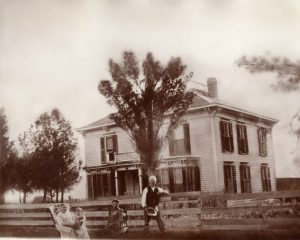
In 1894, William J. Peelle, his wife, children, and parents moved to a house west of Hiattville. That house was referred to as “the big house.” Something occurred related to mortgages, which resulted in the family moving back to their earlier home north of Hiattville.
The Davis family then began moving into “the big house.” They moved most of their furnishings into the house, but were still waiting for the last load that had gotten stuck in the mud. Ruth Alley, whose husband was the foreman and who was good friends with the family was doing laundry when the house caught fire from the kerosene powered washer.
Again, the Peelle family lucked out, as they moved before the house burnt. The Davis family was not so lucky.
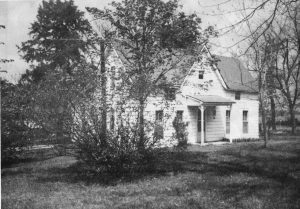
Later, Mount Hope School would be moved to the property and located near the ruins of “the big house.” Don and Kay (McCracken) Davis and family would live in the school turned house for many years.
The Homeplace
In 1993, Dewey and Jackie (Corfman) McCracken’s house, also known as “the homeplace,” caught on fire. They caught it early and on instinct called Dad. (I think before calling the fire department.) He didn’t know anything except that they had a fire. When he got there, he could see smoke coming out from under the eaves. They had thought the fire was in the chimney, but Dad realized it was in the attic. By the time the fire department arrived, Dad had the fire under control. They were fortunate. The damage to the house was repairable and most of the contents were salvageable.
tidbits about Other Fires Around Hiattville
A prairie fire on Charles Warren’s destroyed 10 acres of hay.
In late October 1876, a freight train started a prairie fire near Hiattville. Mr. Rall lost hedge and rail fences. Teachers and students had to fight to keep the fire away from Mt. Hope School.
Mar 2, 1914 at 7:30, Sam Henning, who lived 4 miles north of town lost his house. The only contents saved were those in one room. His daughter was baking bread and the fire was really hot. She went to the kitchen to check on the bread and the roof was on fire. They were getting ready to retire for the evening and lost most of their clothing and their shoes. Mrs. Henning was ill and had to be carried out on a stretcher. They thought the fire was from a defective flue.
In 1922, Lon Crays’ home caught on fire while the family was at Sunday School. Almost everything burnt that was in or near the house. The house and barn were owned by Curt Deering.
On July 13, 1910, Mrs. Chambers was home alone when she suddenly realized the roof of her house was on fire. The family’s six-room home two miles west of Hiattville was a complete loss. Very little furniture was saved as Mrs. Chambers could only get out items that she could carry by herself. The loss was $2000 with only $800 insurance.
Hiattville Today
Today, Hiattville is only a bit more than a ghost town. The Methodist Church is still in use, but the businesses are all gone. Even the railroad tracks have been removed. Quality of roads, automobile travel, and other mechanical and technological advances helped kill small towns like Hiattville. Still,the fires contributed significantly to the decline of the town.
Afterward
As I was finishing this article, I found another articles about fires at Hiattville. That article is titled “The Fiery History of Hiattville” and was authored by a K-State student. (Download the pdf)
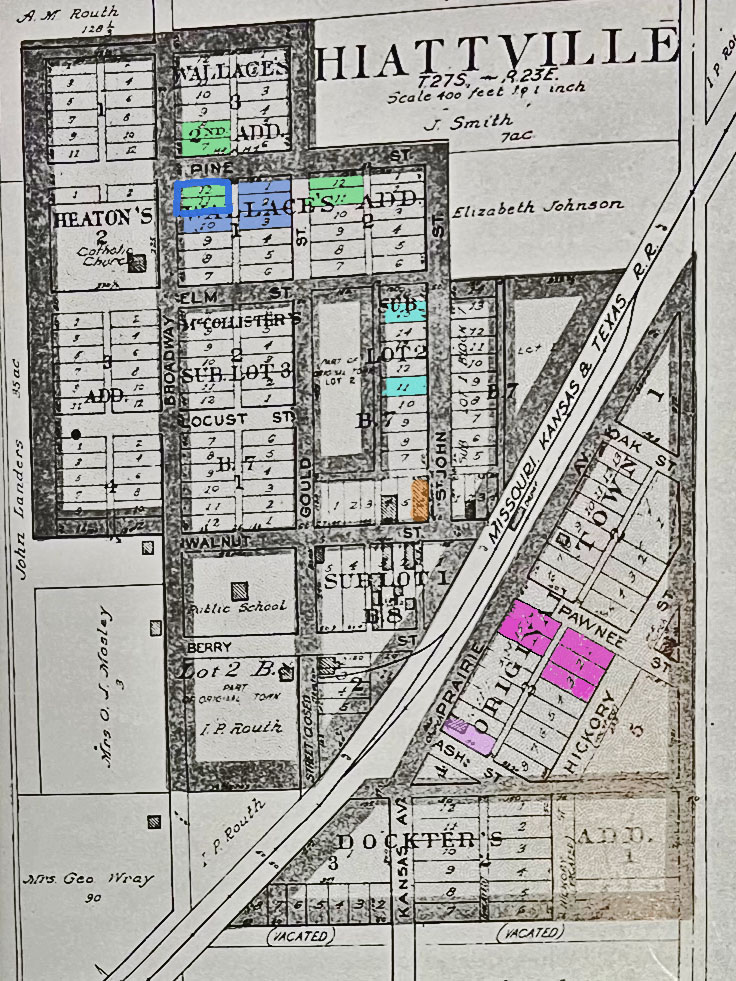
Featured Image: Hiattville map showing land ownership. Pink – Passco Peelle; Green – William J. Peelle; Blue – Walter Jury; Turquise – Wilburt Jury; Lavender – Early hotel and likely where Thomas Harnett lived given they ran a hotel; Orange – Grocery store. Map Source: Historic Reflections of Bourbon County, Kansas.
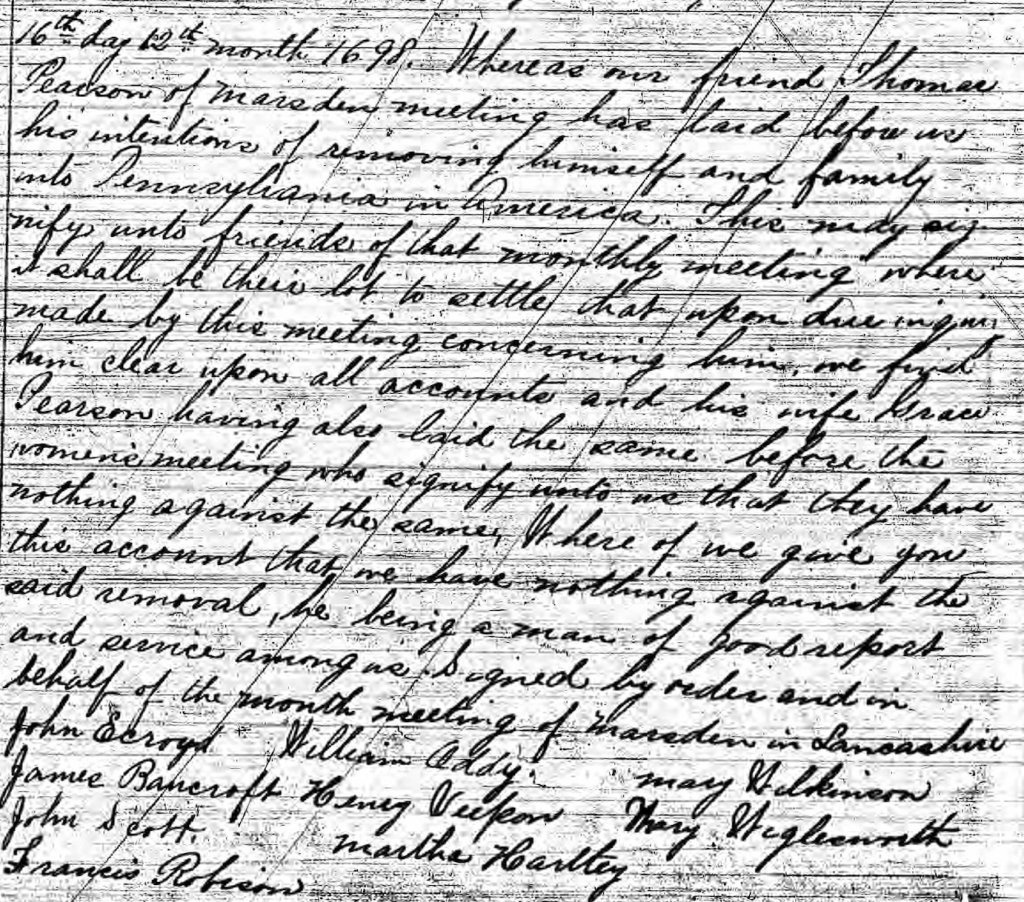
In 1698, Thomas and Grace Pearson decided to move their family to America. It was a decision that would turn deadly.
Extwistle Hall. By Mark Belshaw, CC BY-SA 2.0, https://commons.wikimedia.org/w/index.php?curid=14280884. Ruins of this building still exists. Zooming in with Google Maps shows the building’s large footprint.
Life In England
On April 24, 1679, Thomas Pearson, a linen draper (fabric merchant), of Keighley, Yorkshire, England married Grace Veepon. The couple married in a quiet Quaker ceremony at the home of her parents John and Elizabeth Veepon in Briercliffe, Lancashire, England (marked in pink on map). Assuming they lived in the same home as they did in 1662, it was quite large, having five hearths. It was one of three homes of this size. The only house that was larger was Extwistle Hall. It had 11 hearths.
Grace’s parents, James Veepon, and Edward Veepon were all in attendance. However, according to the records of the Marsden Monthly Meeting no one with the Pearson name is listed among the attendees. Keighley was some distance away, but it wasn’t so far as to prohibit any travel. It likely was a matter of his family not belonging to the Society of Friends.
After their marriage, Thomas and Grace settled into their home in Keighley, but continued their association with the Marsden Monthly Meeting. In the coming years, Thomas and Grace would have three daughters: Grace, Elizabeth, and Sarah. Grace was born on May 31 of the year following their marriage. Elizabeth came along two years later on March 25, 1682. And, finally Sarah on October 15 1684. Their three daughters’ births were all registered in Keighley.
America Bound
Certificate of Removal
On August 20, 1698, Thomas Pearson informed the Marsden Monthly Meeting that he intended to remove his family to Pennsylvania, America. The reason for the move was not directly stated. However, the family was going on the journey with other members of the Society of Friends. The Lancaster Meeting had chartered the Britannia to take Quakers to America. Many friends from surrounding meetings joined the voyage.
Lancashire County, England with places of interest marked. Source: Lancaster University Library. Lancashire… from Cary’s New and Correct English Atlas, 1789 by John Cary, London, 1789. Creative Commons 4.0
It is likely that the Quakers were moving to America to gain religious freedom. Although some leniency in religion had been allowed more recently, Quakers were still required to take oaths and pay tithes to which they objected. It is not known if Thomas had simply paid the tithes or objected like many others who attended the Marsden Meeting. However, it is likely that he had objected and been punished as this was the case for his father-in-law John Veepon.
John Veepon’s Persecution
Prior to Thomas and Grace’s decision to make America their new home, John had spent considerable time in prison. His crime was refusing to pay tithes and to take oaths as they were against his beliefs as a member of the Society of Friends. In 1676, John had a piece of kersey (coarse wool cloth) taken from him for payment of tithes. It was valued at one pound and 10 shillings.
By 1682, the Church of England had strengthened their penalties for non-payment of tithes. That year ten individuals, including John Vipon were prosecuted in the Ecclesiastical Court of Tithes. They were prosecuted based on suite brought by Edmund Ashton of Whalley (marked with light green on map). Mr. Ashton was described as an impropriator, a layperson who possesses church property. They were excommunicated from the Church of England and received an “excommunicatus capiendus,” which required them to be arrested and imprisoned until they made amends with the church.
It is unclear how long they served, but they were out of prison by the fall of 1684, as on September 1 of that year, John and eight others from the Marsden Meeting were back in court at the request of Edmund Ashton. Upon refusal to take the oath, which they did not believe in, they were again committed as prisoners. They were imprisoned at Lancaster Castle until August 23, 1686 when released by proclamation of King James II.
Just over a year later, John and 18 others from the Marsden Meeting were back in Court again at Mr. Ashton’s request. On October 4, 1687, they were in the Bishop’s Court at Chester. Again they refused to take the oath and they were imprisoned. They were held until August 22, 1688 when King James II again freed them.
John had a slight reprieve. Then on April 28, 1691, John and 31 friends from the Marsden and Rosedale meetings were imprisoned. Six of them died “for their testimony”. I am not sure, but this wording implies to me that they might have received this as their sentence. In June 1695, King William granted John and the other prisoners a general pardon. They were finally released after serving four years.
The only question this raises in my mind is, “Why didn’t Thomas take Grace’s father with them to America?”
Marsden Meeting record .of certificate for Thomas Pearson and family
Preparations to Set Sail
Thomas got his affairs in order for the move. I am not sure if he owned property, but being a merchant, it is likely that he had property – land, home, or furnishings to dispose of before the journey to America. During the months that Thomas and family were preparing for the move, the Marsden Meeting investigated, as they always did before a person moved from the area to ensure they were in good standing and that all debts had been paid. They found the family to be in good standing. On February 16, 1699, the meeting provided the family a certificate that they could present to their future Quaker meeting in America.
The family traveled to the port at Liverpool (marked in green on the map), taking whatever goods that they intended to take to America. On April 16, 1699, they began loading goods that were being transported to America for commercial purposes on board the Britannia. Only ten men shipped goods to America, most of them also sailed on the ship. It is not known if Thomas planned to continue as a fabric merchant in America. If he did, then he likely was one of the 10 men shipping this type of goods.
By May 5, the loading of commercial goods was complete. Then, the passengers and their personal goods were loaded on board. Ready to set sail, Richard Nicholls guided the Britannia out of the port at Liverpool. The ship sailed for Cork, Ireland, arriving May 20. In Cork, they obtained provisions before heading out to sea.
At Sea
At the time, it typically took about eight weeks to travel from Liverpool to Philadelphia. However, the Britannia was significantly slower in crossing the Atlantic, taking approximately 13-14 weeks to make the journey. The ship wasn’t the fastest available and they had likely encountered winds that were unfavorable to swift travel.
Additionally, the ship appeared to be overloaded with both passengers and goods. The ship’s capacity was 140 passengers. However, 145 people have been identified as sailing on the ship and this is not considered a full list. It is believed that over 200 people may have been on board.
Thus, before they reached Philadelphia, the provisions on board ran low. This was especially challenging because it was very hot and dry during their journey. One man wrote home that the passengers were very thirsty and that the ship did not have enough water and beer. Even if they prepared for a delay in the travel, it is unlikely that they would have brought on board enough liquid for such a long journey.
The Sick Ship
During the journey illness raged on the ship. It is unclear exactly what ran rampant through the ship. Some people reported it to be smallpox. Others said that people had fever, dysentery, and jaundice. However, records indicate that it was likely Typhus, which was also known as “Ship Fever.” Typhus was highly infectious and was common in that era on crowded immigrant ships. Poor sanitation was a major contributor to the disease, which was transmitted by lice.
The illness was definitely severe and it was reported by those traveling that over 50 people died before the ship docked in America. The group most greatly impacted were the men, followed by women. Children and young adults were the least affected.
Thomas Pearson was among the men who perished on board the Britannia.
Arrived
Once in America, the Britannia stopped at a couple of ports (maybe more) to allow passengers to disembark before reaching its final destination. The ship finally reached Philadelphia on August 24, 1699.
More Illness and Death
Many of the passengers arrived sick and weak. Unfortunately, arrival on land did not mean the end of illness and death. Twenty more passengers succumbed, including Grace Pearson. Grace died on September 14, 1699, three weeks after their arrival.
It is assumed that Grace was ill at the time of arrival. However, a Yellow Fever epidemic was also raging in Philadelphia at the same time. It seemed to rage, then calm, then rage again. It was so bad around the time the Britannia arrived that all business in the city was suspended. Many deaths, however, occurred in September with many among members of the Society of Friends. Thus, the illness that led to Grace’s death could have been contracted on the ship or on the shore.
In total, twenty more people on the Britannia died within weeks of arriving in Philadelphia. When word got back to England about the fate of so many on board the ship, the Quakers in the are recorded “that all Friends who are concerned in transporting people into foreign parts take care not to crowd them together in ships to prejudice their health or endanger their lives.” It is said that no Friends from Lancashire moved to America for some years to come.
Orphan Daughters
Thomas and Grace’s three daughters, ages 19, 17, and just shy of 15 found themselves alone in a strange land, having lost both parents in a matter of weeks. Fortunately, the members of the Society of Friends in Philadelphia and other nearby areas stepped up to care for the sick and assist the widows and children. However, this led to the sisters being split up. Grace, who was nineteen, stayed in Philadelphia and was cared for by the Philadelphia Meeting. Meanwhile, Elizabeth and Sarah were cared for by the Neshaminy/Middletown Meeting in Bucks County. (Note: In this time period, this meeting was called Neshaminy in some records and Middletown in others. F or readability, Middletown will be used herein.)
It is unknown who took in the the three teenage orphans. An Edward Pearson family lived in Bucks County, Pennsylvania at the time. Edward was from Wilmslow, Cheshire, England (blue dot on Lancashire map), some distance away from Thomas and Grace’s previous home. No evidence, however, has been found to indicate that they are related or that they had a hand in caring for the teenager girls.
Settling Thomas’ Estate
Upon learning that Elizabeth and Sarah were in their midst, the Middletown Meeting requested that William Hayhurst, a prominent member of the meeting, arrange for Sarah and Elizabeth to provide their father’s certificate from their prior meeting as soon as practical. They also asked Mr. Hayhurt to send a request to the Philadelphia Meeting to have Thomas Pearson’s estate distributed. This request was likely made in order to obtain funds for Elizabeth and Sarah’s living expenses.
Being the oldest, Grace was responsible for distributing her father’s estate. However, she was a single female and only 19 years of age. Therefore, the Philadelphia meeting assigned David Brentnall to assist her in settling the estate. Before Grace married in May 1700, the Philadelphia Meeting requested that David Brientnall, Anthony Morris, and William Forrest attempt to get Thomas Pearson’s estate settled, if possible, before Grace’s marriage.
One of several entries in the Quaker records regarding Thomas Pearson’s estate.
I have not found anything as to the size of the estate or what it may have included. However, many of the people who came to Pennsylvania in the 1600s had already purchased land before they made the journey across the sea. So, it would not be surprising if he owned property in Pennsylvania. In addition, since he was a fabric merchant, it is possible that he had fabric that he intended to sell. Thomas and his wife also likely brought some personal items that also had to be distributed.
Elizabeth
(March 25, 1682 – August 21, 1743)
On September 4, 1702, Elizabeth Veepon Pearson married John Stackhouse. John was also an Englishman and member of the Society of Friends. He had come to America in 1682 with his uncle and his brother.
It is from Elizabeth and John, that Rod’s family line descends. At the time of their marriage, Elizabeth appears to have been living in Burlington, New Jersey. Meanwhile, John Stackhouse is living in Bucks County, only a few miles away across the Delaware River. Their marriage intentions were presented at the Burlington Monthly Meeting in Burlington, New Jersey. What Elizabeth was doing in New Jersey is unknown. However, since her sister Sarah also lived in Burlington and Elizabeth and John stated their marriage intention in the Burlington Quaker, it suggests that her stay in Burlington was a bit longer term. It is possible that the family they were living with in Bucks County moved to the area.
John Stackhouse and Elizabeth Pearson Marriage Intention
John and Elizabeth settled in Bucks County, Pennsylvania. They were the parents of nine children, including Thomas Stackhouse from whom Rod’s family descends.
Elizabeth died August 21, 1743 at Middletown, Bucks County, Pennsylvania. She was 61. Elizabeth is buried at the Middletown Friends Cemetery. John outlived Elizabeth by fourteen years, dying in 1757.
Grace
(May 31, 1680 – April, 1719)
In 1700 Grace and Robert Heatom went the the Quaker approval process to get married, declaring their intention to marry at the Philadelphia Monthly, Meeting. On May 8, 1700, Grace married Robert in Bucks County and it was recorded in Middletown Monthly Meeting records. Robert had also been on the Britannia, having gone to England on business.
In attendance at the wedding were her sisters, Thomas Stackhouse Sr., Thomas Stackhouse Jr. and a large group of other members of the Society of Friends. Elizabeth would later marry Thomas Sr.’s nephew John, who was the brother of Thomas Stackhouse Jr.
Grace and her husband Robert had nine children. However, in 1719, disease struck the family. Grace died in April. Over the coming months, her five youngest children followed her to the great beyond.
Sarah
In 1707, Jonathan Woolston married Sarah Pearson, of Burlington, New Jersey. They had several children.
An interesting note is that Jonathan Woolston’s brother-in-law John Stackhouse was a witness to his will. Based on information found, it seems that Sarah, Elizabeth and their husbands remained close throughout their life.
Lineage
The following chart shows Rod’s relationship to the Pearson, Veepon, and Stackhouse families. It is important to note that the Veepon name is recorded with many different spellings. Some of the spellings found in records are Veepon, Viepon, Vipon, Vipond, and Vipont. Pearson is also recorded as Pierson. Clearly the early generations are quite distant relatives, but are also an important part of his English Quaker ancestry.

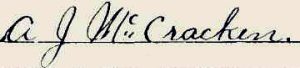
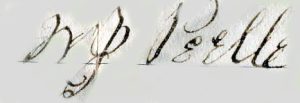

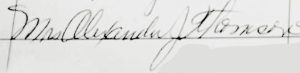
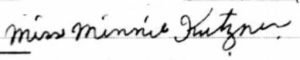


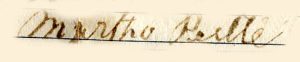


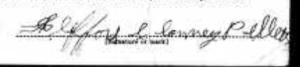



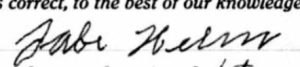



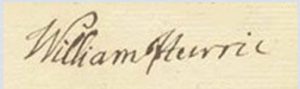


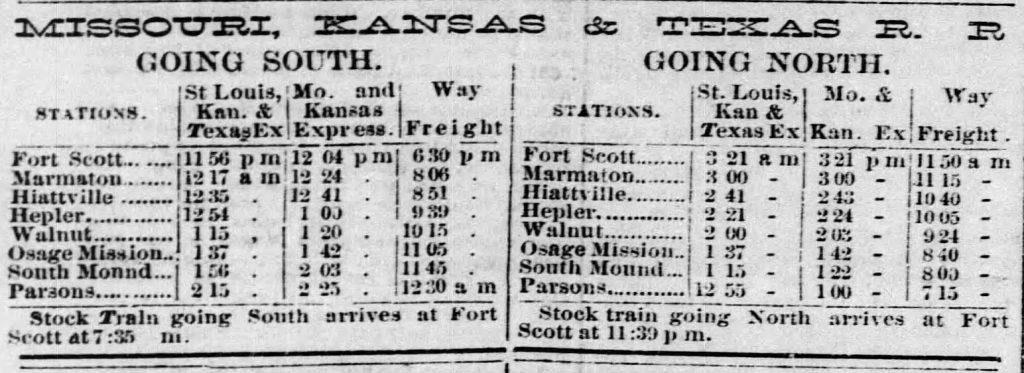
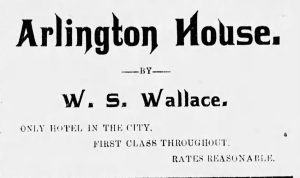
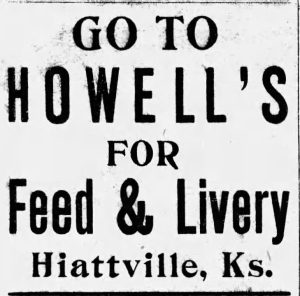
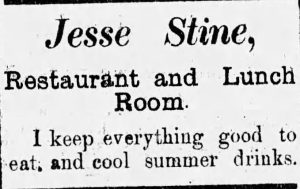
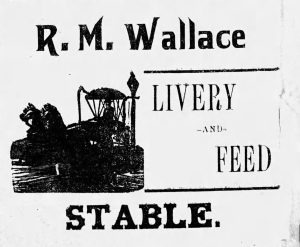

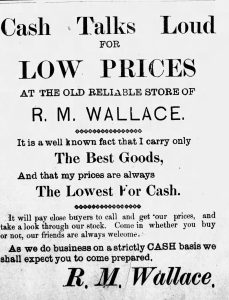
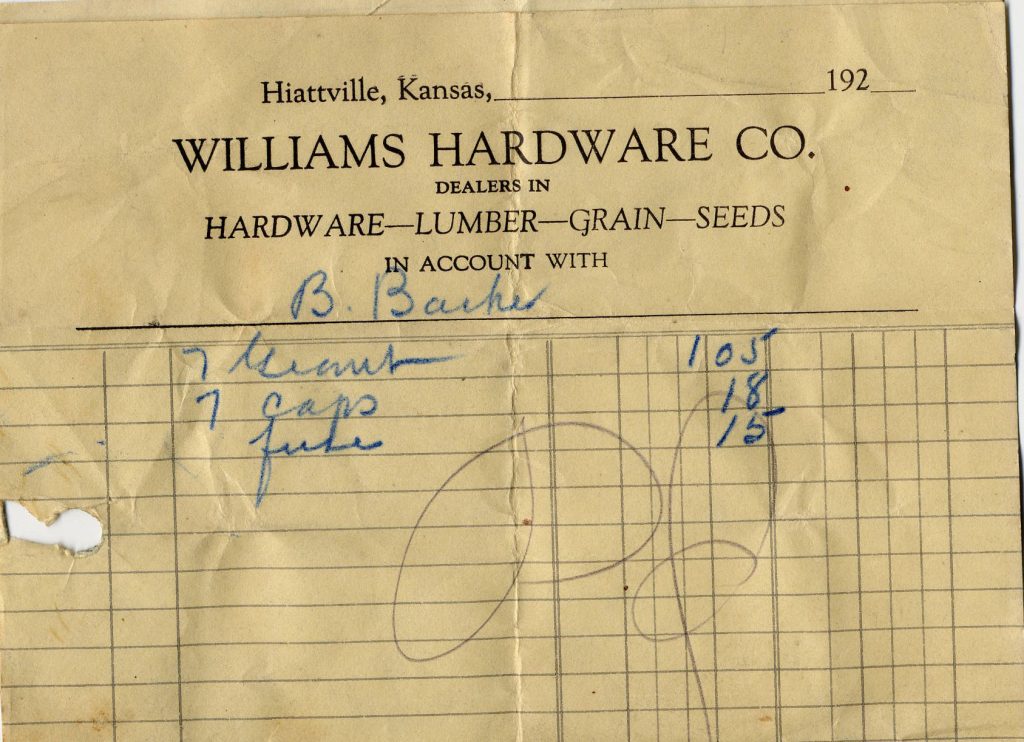
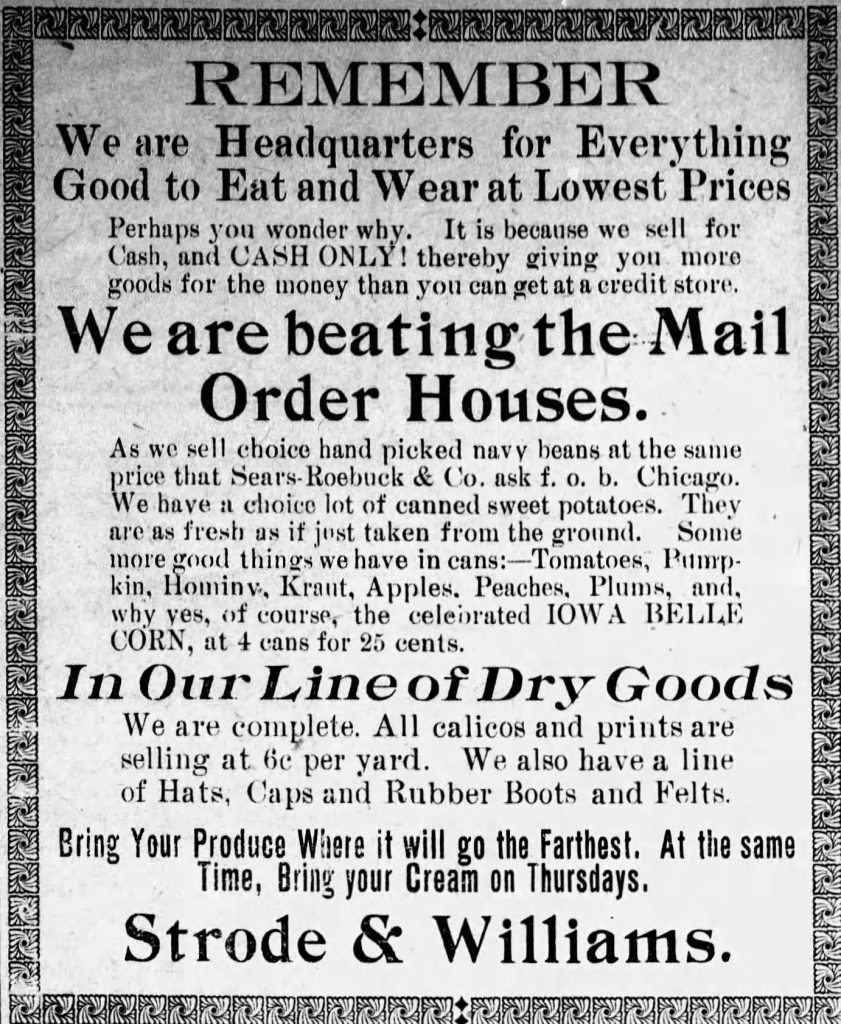
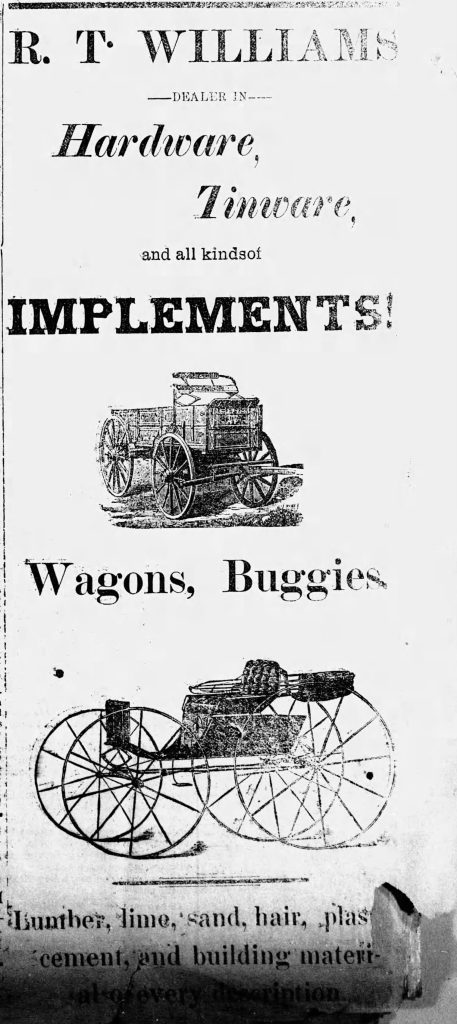
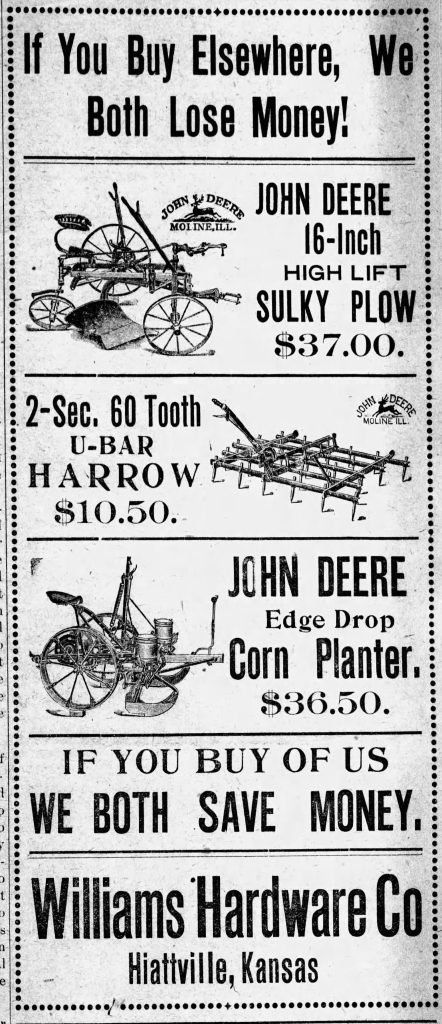
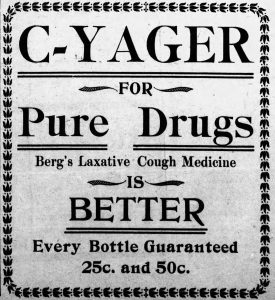
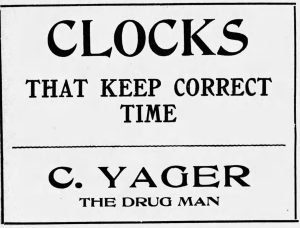
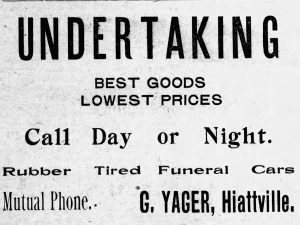
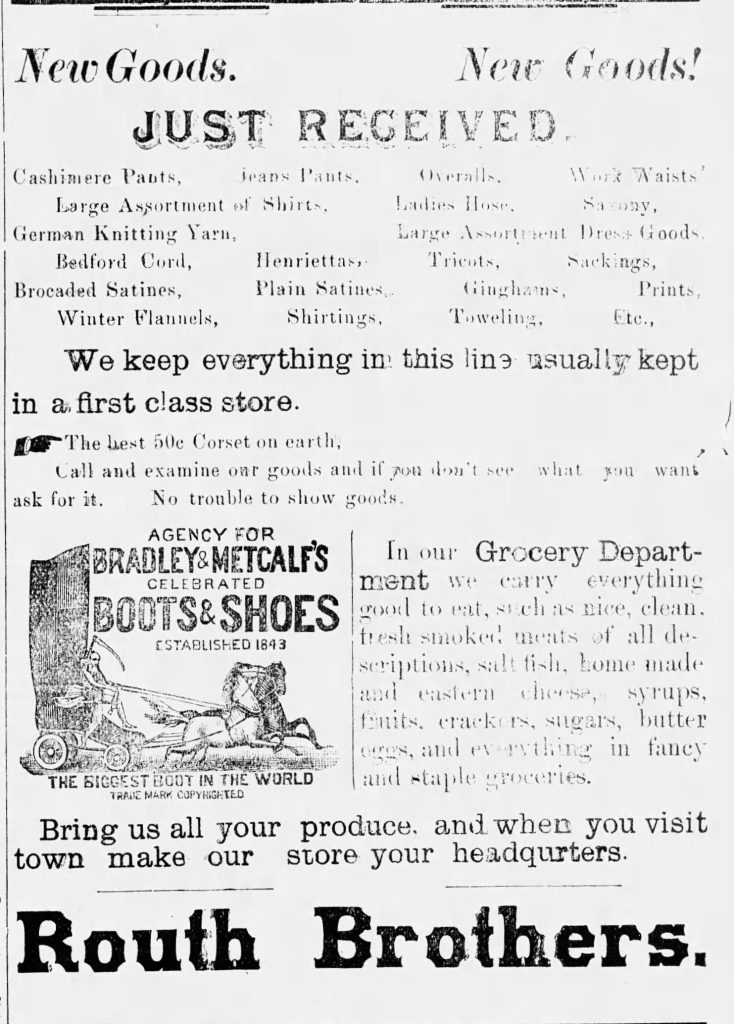

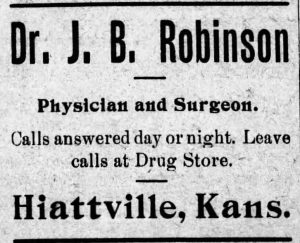
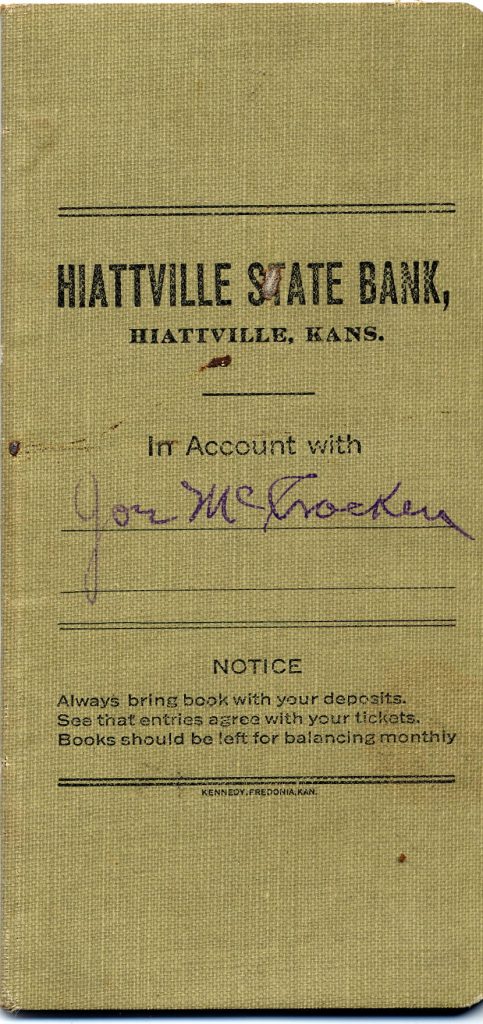
 Carpenters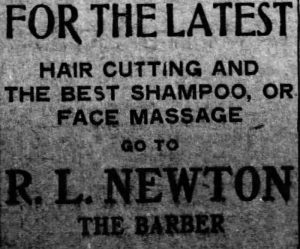
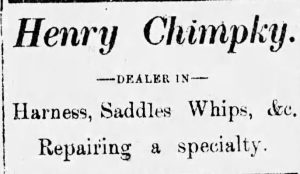
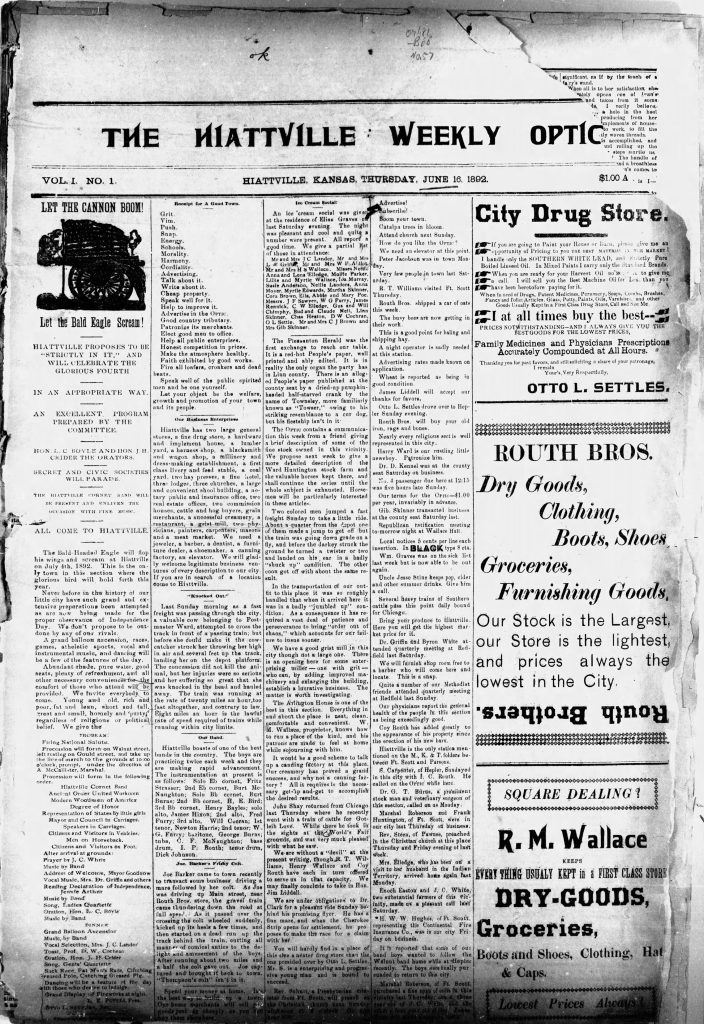 Newspapers