Religious views are one of  many attributes, views, skills, etc. of your ancestors that are passed down through the generations or flow through your DNA.  They may be tied to your ethnic background, but not always.  This article explores the different religions that influence me today.


Dad’s Family
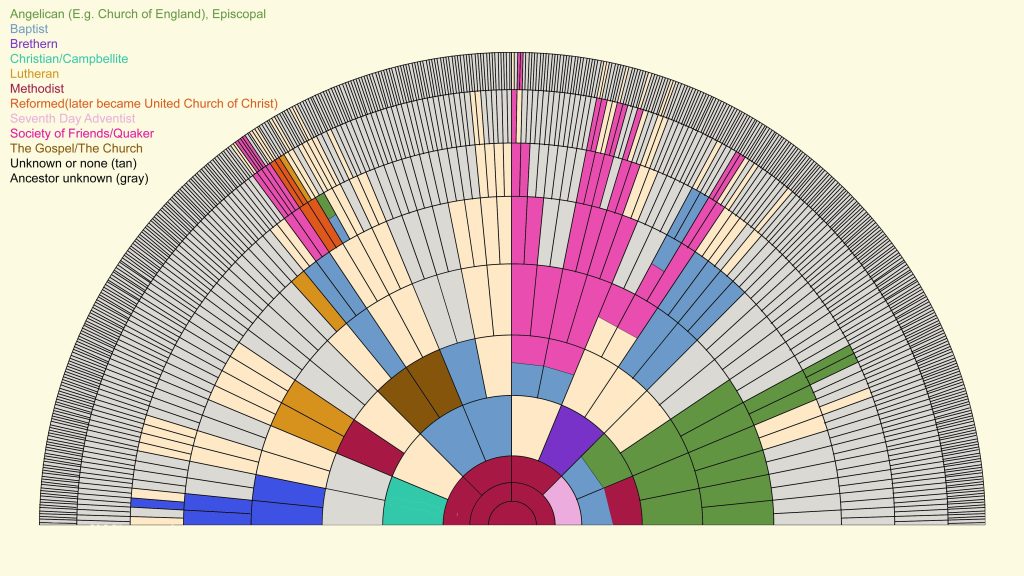
Known religions of my dad’s family.

The Chart

In the above chart, my dad is at the center, with his parents in the next row, their parents follow, etc.  The chart can be read from left to right with the male ancestor to the left and the female to the right.  So, on the left side of the row above dad is first his father and then his mother. In the row with his grandparents are his paternal grandfather, paternal grandmother, maternal grandfather, maternal grandmother.

You may notice that some slots are split between two colors, or two religions, that is because I found them associated with different religions at different times.  The slots that are tan are ancestors that are identified, but for whom I have not yet associated them with a religion.  In some cases it would seem that they likely had the same religion as a parent or spouse, but that is yet to come to light. 

Many of the identified ancestors are verified, meaning they meet my standard of proof of being the parent of the person in a closer generation.  However, some are highly likely, but not verified. Meanwhile, I have some information for others that  indicates they are possibly the parent, but are far less certain.

When you make charts that show 10 generations of your ancestors, it becomes clear that as much as you may know, there is a lot that you don’t know.  The gray in the chart shows just how few people I have identified in those 10 generations for my dad’s family even though I included the McCracken and Peppard families that I have identified as tied to Lemuel McCracken.


Observations

In recent generations, the Methodist religion shows up strongly.  However, if we look at earlier generations, the three religions that show up the most are Anglican (green), Baptist (blue), and Quaker (bright pink).  It should be recognized that some of this is influenced by the availability of records.  For instance, the Quakers made meticulous records.  That said, many Quaker meeting houses burnt.  Thus, there are places where the Quaker line may extend back multiple generations beyond what is shown.

Another interesting thing of note is where I indicated “The Gospel/The Church.”  These are cases where the person’s obituary or other records said the person believed in/practiced/belonged to the gospel/the church as if there was one and only one set of religious beliefs.


Preachers

My direct line on dad’s side includes at least two preachers. 


Nathaniel Hall

Nathaniel Hall, who is an ancestor in the Ellis family, was an Anglican/Episcopal minister in Virginia.  However, like many others at the time of Independence, he left the faith.  He then joined with the Baptists and became a Baptist reader and preacher.

Nathaniel is believed to be a direct ancestor.  However, he remains unverified because it has been impossible to prove that Conrad Storms is Lucy Ann’s father.  Circumstantial evidence says that it is very likely and DNA matches exist, but require further review to show this is the only possible connection.


Nathaniel Hall’s Connection

Nathaniel Hall (Unverified Ancestor)

Nancy (Hall) Storms

Conrad Storms

Lucy Ann (Storms) Ellis

Joseph L. Ellis

Rosa I. (Ellis) McCracken

Joseph A. McCracken

Joseph E. “Ed” McCracken

Francis Peppard

The earliest ancestor in the Peppard family was a Presbyterian (darker blue on far left) minister.  His son in our family line was one of the earliest elders in the Presbyterian Church in Wayne County, Ohio. I suspect there are more members of that family that followed the Presbyterian faith.  However, according to family information, Lemuel did not.

DNA indicates Francis is a direct ancestor, but he remains “unverified” because I haven’t proven in which of his sons was Lemuel’s father.


Francis Peppard’s Connection

Francis Peppard (Unverified ancestor)

Johnathan Peppard

Unknown Peppard

Lemuel L. McCracken

Andrew J. McCracken

Joseph A. McCracken

Joseph E. “Ed” McCracken

Mom’s Family
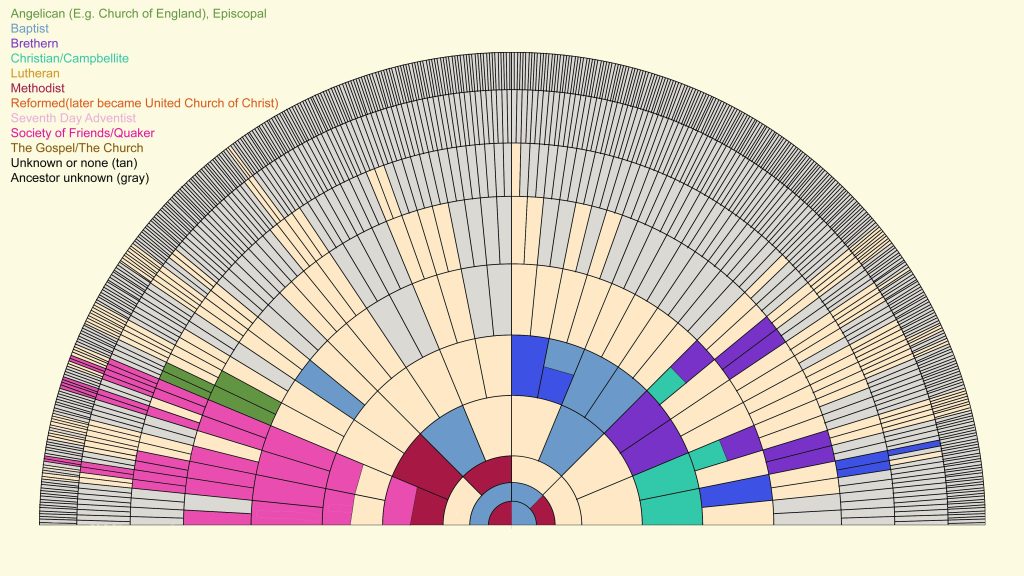
Known religions of my mom’s family

The Chart

This chart is similar to the last except that my mom is in the center.  If you jumped here because you are interested in her side of the family, I suggest that you read the chart section under Dad’s Family to understand what it is shown.

Observations

You will notice that the chart for Mom’s family has a lot of identified ancestors, but a lot more unidentified religions.  I believe this, in part, is due to the religions and the locations.  I suspect many of her ancestors  that are tied to Kentucky may have been Baptists.  However, I have not yet found records to support that assumption.

Family stories also say that the Thomas family was “very” Presbyterian.  Thus, I suspect earlier generations were Presbyterian.  However, I haven’t found any indication of their religion.  On the other hand, Elizabeth Brown Donaldson was “very” Baptist.  After she married Henry Thomas, she attended the Presbyterian Church.  When Henry died, Elizabeth went back to the Baptist Church.  But, as the family story goes, in the end the Presbyterians got her, as Elizabeth was buried beside Henry in the Presbyterian cemetery.

The other interesting observation is the mix of the Brethren and Christian religions in the Ashby family.  This is also prevalent in other members of the family that are not direct ancestors.  It seems that when exposed to the teachings of the Christian Church, some of the family liked the more relaxed, moderate views and others stayed with the Brethren religion.

Preachers

Griffith John

Griffith John is interesting because it is well documented that he was a Quaker “minister.”  Since the Quakers didn’t include clergy in their belief system, that seems odd.  I am assuming that he was more of a missionary spreading both the word of God and the Quaker beliefs.  His brother, who came with him to America, also served in this capacity.


Griffith John’s Connection

Griffith John (Verified ancestor)

Abel John

Abel John Pellett

Seth Pellett

Henry Pellett

Clifford Pellett

Elma (Pellett) McCracken

Joseph Ashby

Joseph Ashby started out in the Brethren Church and later was with the Christian Church.  It appears that he was a minister for both denominations and some members of his family belonged to each of the churches.

Joseph has a double connection to my mom as two of his grandchildren married.

Joseph Ashby’s Connection

Joseph Ashby (Verified ancestor)

Job Ashby – John Ashby

Grant Ashby – Elizabeth “Lizzie” Ashby

Sarah Ellen (Ashby) Thomas

Dessie (Thomas) Pellett

Elma (Pellett) McCracken

What does all of this say about me?

 Although the religions that have been identified are all of the protestant realm, I clearly don’t have an ancestral history with one religion or even a couple of related religions.  Matter of fact, these religions seem to span the protestant spectrum.

On many beliefs, Quakers seem to be at one end of the spectrum and Baptists and Brethren at the other end.  For instance, Quakers view heaven more as a spiritual state of being while Baptists and Brethren generally appear to view it more literally.  The view of the different religions on the Bible is similar with Quakers taking a less literal approach and the Baptists and Brethren being more literal in their beliefs.
This makes me wonder about Quakers who later became Baptists (See the chart for Dad’s side).  That seems like quite a leap from one end of the spectrum to the other.  I know that in some cases, the church people attended or associated with in other ways was more of which church was most convenient rather than which church matched their belief system.  Still, this seems like quite a change.

My Views


Methodist/Presbyterian

I do find it interesting that in the last couple of generations, the family’s beliefs  became more moderate given Methodists tend to be in the middle of the spectrum on many topics.  As such, they align well with many of my beliefs.  Still, I can observe aspects of the entire spectrum in myself, although I probably lean more toward the Quaker side than the Baptist/Brethren side.

Quaker

Quakers’ believe in a personal relationship with God, equality, plain living (or i should say non-excessive living), integrity, and religion as an individual experience all appeal to me.  I am less a believer in literal interpretation, ultra-structured religion, and rituals/ceremonies.

That said, most of these religions evolved over time becoming more modernized.  There are also many different variations of the religions with some being more modern and others remaining very traditional.  The Quakers had a split with some continuing more of the practices of the earlier years while others in the faith focused more on preaching and the Bible like other religions. 

Whether there is a major split or not, there is a great variety within each religion.  For example, we attended a Presbyterian Church service in Philadelphia at Old Pine Church.  If I didn’t know it was a Presbyterian Church, I would have never guessed as the service was so different than ones I have attended elsewhere.  The church we belonged to in Colorado was at the other end of the spectrum as it was the most modern of all the Presbyterian Churches I have attended.  I definitely didn’t feel as comfortable with the service in Philadelphia.


Rules

Now the biggest issue I would have had with the Society of Friends/Quakers is all the rules for daily living that they had.  I am not big on anyone telling me how to dress, who I can and cannot marry, and how to speak.  I would have likely gotten disowned, as many of our family did.


Baptist

Baptist also believe in having a direct connection to God and for localized decisions for the church.  These are appealing to me.  Additionally, the Baptist perspective that baptisms should take place when the person is old enough to make that decision for themselves does make a lot of sense to me.  However, strict interpretations of the Bible and literal belief in Heaven and Hell are not my cup of tea.


Anglican

Anglican is probably the least best religious match for me based on what little I know about the religion.  It is somewhere between Protestant and Catholic.  And, from what I have read it is very ceremonial and structured. 


This all makes me wonder about my DNA mix.  Did I get more DNA from certain lines with which I tend to align more closely?  Inquiring minds want to know.


Other articles about our family and religion:

Out of Religious Persecution Rises A Family (Pellett)

A Love-Hate Relationship with Religion (Tilton, which ties to Pellett)

An Early American Nonagenarian  (John, which ties to Pellett)


Featured Image: Pexels via pixabay.com

Prompt: Religious traditions

#52ancestors52weeks
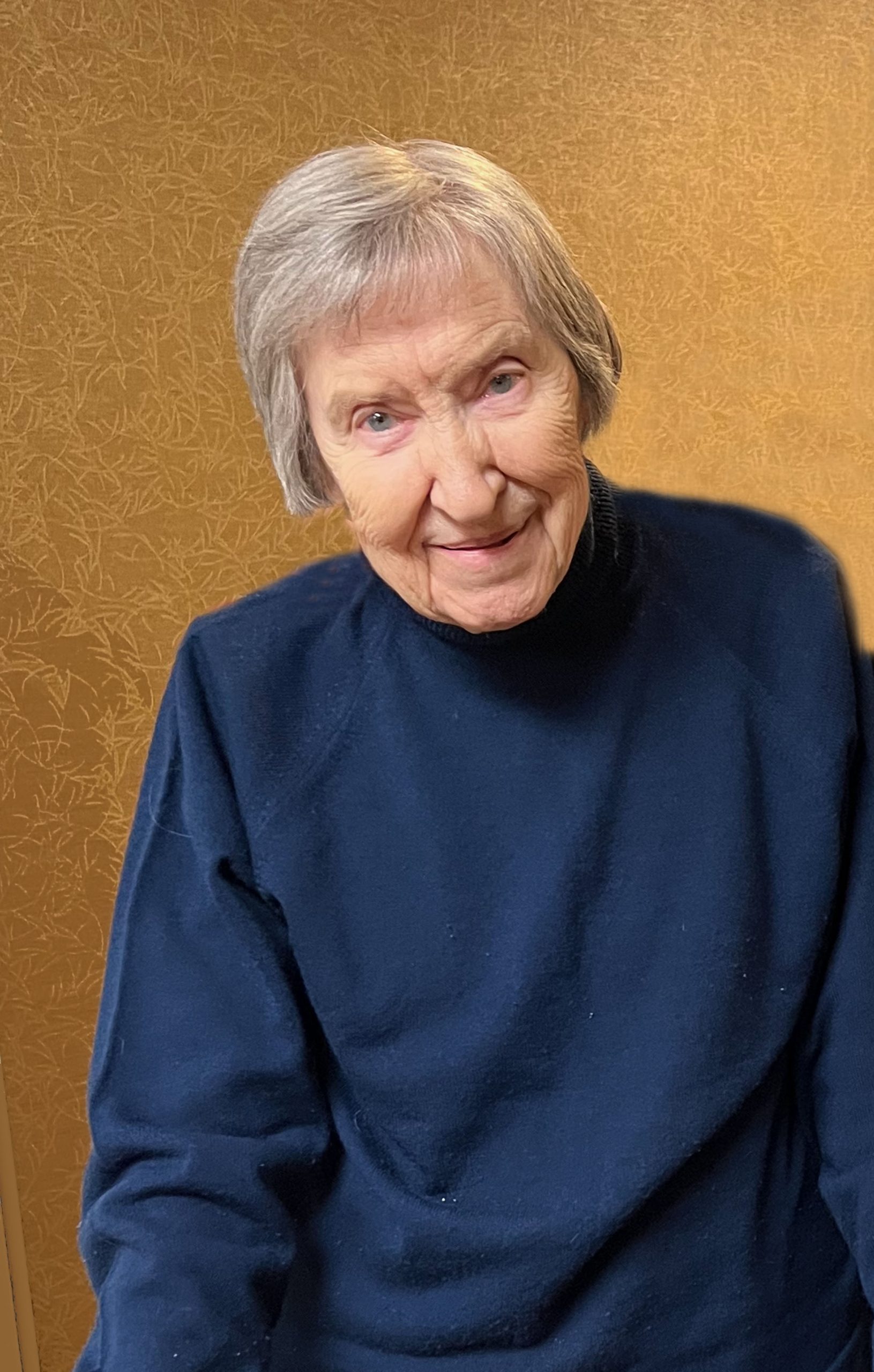
 

If you have a bunch of old McCracken-Ellis family photos and you don’t have a clue who half the people are, take them to the esteemed Pearl (McCracken) Linke.  As her 100th birthday approaches, she remembers so many of the family and can still readily identify them for you.


Pearl with brothers Neil and Marvin

Childhood

Pearl May McCracken, my dad’s first cousin, was born in Farlington, Crawford, Kansas on September 16, 1925 to Elmer Thomas and Ethel Faye (Matlock) McCracken.  Pearl is the only girl in the family and the oldest of five children.  Brothers Lawrence (Neil), Marvin Leslie, Wayne E., and Roger E. followed over the next twenty plus years. 


Family

Farlington was a tiny little town, but it was full of relatives.  Both her McCracken/Apt and Matlock grandparents, along with many other family members lived in the town or nearby.  She never knew her Grandfather Andrew McCracken as he died before she was born.  By the time Pearl was born, her Grandmother Rosa (Ellis) McCracken had remarried to William “Bill” Apt, who had boarded with her sister’s family for years.

Being the only girl in the family, she looked outside her immediate family for female friends.  Yet, it was hard not to have friends and playmates when so many family members lived in the area. 

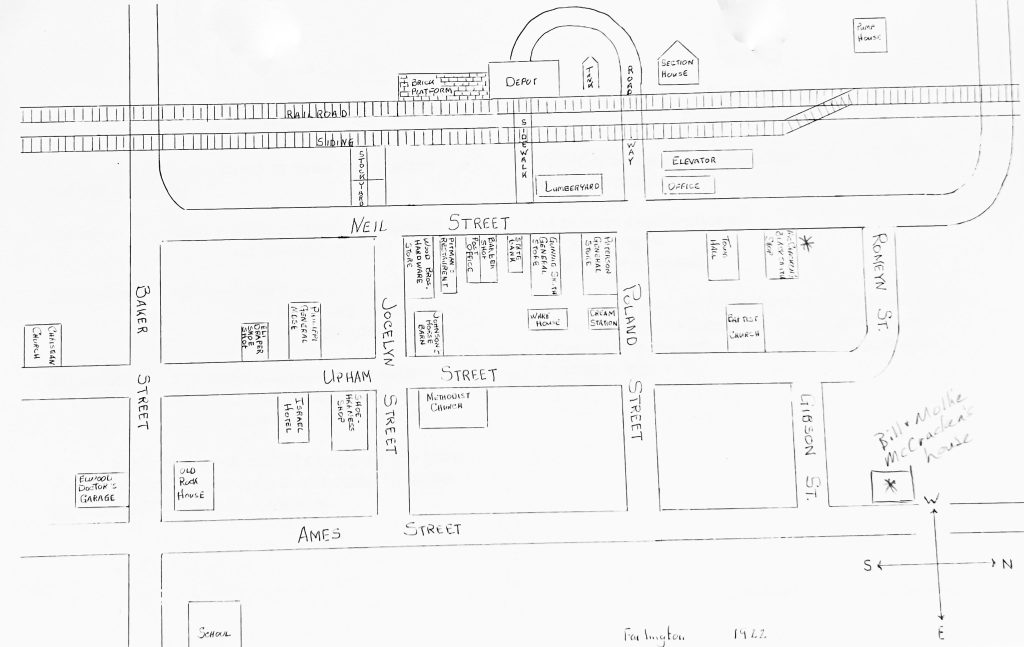
Map of Farlington, Crawford, Kansas


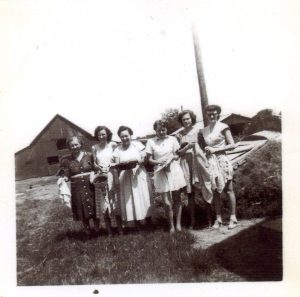
“The Kitchen Brigade” Ethel, Pearl, Belle, Ruthe, Kay, and Dee

Family Gatherings

Although my grandpa (Joe McCracken) and his family did not live in Farlington, travel became such that Pearl could be buddies with grandpa’s daughters.  Dee was a year older than Pearl and Ruthe a year younger.  Therefore, Pearl fit right in with Joe’s middle daughters.  Additionally, Dee and Ruthe went to the same high school as Pearl.  So, they had additional opportunities to interact.

The photograph of “The Kitchen Brigade” is from a family gathering that was held at the house where I grew up (I recognize that barn, garage, and cellar).  It would have been during the time that Grandma and Grandpa McCracken lived on the property.

Pearl said that music was a big part of many family gatherings.  That must have been gatherings with the Matlocks on her mother’s side as the McCrackens were mostly known for gatherings with lots and lots of food.


Pearl with her mother when they recognized her mother’s years of playing music for the Farlington Methodist Church

Church

Pearl’s family attended the Farlington Methodist Church.  Her mother was the pianist/organist at the church for 30 years despite having had only three piano lessons.  Obviously, Ethel had some inherit talent.  She taught Pearl to play.  Pearl played at home; however, she did not play publicly, keeping her organ playing for family enjoyment.

Pearl’s mother was very active in the church and community.  Being very social, that was something that Pearl also gravitated towards.  As an adult, Pearl was involved in various church groups and choir.  She also cooked and helped out for various church meals and bereavement meals.  The only major difference from her early days was that she converted to her husband’s faith, becoming a member of the Lutheran Church.


Store

Pearl’s family had unique living quarters as they lived in the same building as the store that they ran.  The first floor included the store, a living room, and a kitchen.  Upstairs was another large living room and three bedrooms.  This arrangement made for fun times with her friends as they could play both “house” and “store.”

As soon as Pearl and her siblings were tall enough to see over the counter and could count change correctly, they were allowed (or maybe required) to help run the store.  Pearl has a story about her brother Neil (the second oldest) who filled his piggy bank as soon as he was tall enough to reach into the cash drawer.  I suspect that didn’t go over too well with their mom and dad.

Yet, working in the store had its upside.  Candy, cookies, and soda were readily available, but I am sure there were limits.  The store had its upsides for Dad and his family as well.  Dad remembered going to the McCracken store.  He said that his Uncle Elmer was generous when measuring beans and the like.


Elementary School

Pearl attended elementary school in Farlington.  The school served grades one through eight for kids in Farlington and the immediate area surrounding town.  Softball and basketball were common activities for the school children.  Most of the time the students at the school played against each other.  However, occasionally they had competitions with other schools. 

They played both sports outside.  Pearl and the other kids were very excited when they finally got to play basketball on an indoor court.


High School

Pearl went to high school in Girard, which was about eight miles from Farlington.  It was special to get to go to high school as at that time many kids in rural areas didn’t get that opportunity.  She had to chose between two course work paths.  Pearl could either follow a teaching path or a secretarial/business path.  She chose the secretarial path.  As a result, Pearl became very efficient taking dictation by using shorthand.  She was also a very fast typist.


Work Life

Job on the Square

Pearl graduated from high school while she was still sixteen-years-old.  She got a job working at the drugstore on the square in Girard.  Daily travel between Farlington and Girard was not practical.  Thus, Pearl rented a room from a family she knew in Girard.  She was out on her own and enjoying life.  Pearl still has fond memories of the time she lived and worked in Girard.


Beauty Supply

After two years, a friend of Pearl convinced her to go to work at Bottenfield’s Beauty Supply in Pittsburg, where she worked.  Pearl and her friend shared an apartment within walking distance of their workplace and a bus ride to the rollerskating rink.  In this job, Pearl was able to put her shorthand and typing skills to work.  Mr. Bottenfield and his son dictated letters and memos to send to their distributors and suppliers.  Pearl filled her notebook with shorthand, which she later typed and mailed.

Pearl loved the work.  As a bonus, she got to see the latest beauty products and even got samples.  She was especially drawn to the nail polishes.  She began polishing her fingernails and continues to have beautiful, polished nails today.  However, in the last couple of years, she has given up doing the task herself.  Just imagine regularly polishing your nails for 80 years!


Courting & Engagement

Edward “Ed” John Linke filled in as a telegrapher for the Frisco Railroad in Farlington.  It was a job that would change his life as he met Pearl while working there.  However, with World War II in full swing, Ed soon enlisted in the Navy.  He maintained a relationship with Pearl while serving as a radioman on a Navy supply ship.

After some time, Ed decided to propose.  He bought an engagement ring from a Navy buddy whose proposal had not went the way he hoped.  However, Ed didn’t want to take it with him on the ship, so he left it with someone in San Francisco to await his return.  He planned to get the ring upon his return and go to Farlington on leave to propose.  But, the best of plans don’t always go as planned. 

Instead of docking in San Francisco as Ed assumed they would do, his ship sailed through the Panama Canal and docked in New Orleans.  This left Ed with a dilemma.  He was heading to Farlington to see Pearl.  He wanted to propose, but the ring was in San Francisco.  What was a man to do?  He could hardly propose without a ring.  So, he did the logical thing.  He bought a second ring.

He proposed.  She said, “Yes!”  Ed retrieved the original ring.  And, Pearl ended up with two engagement rings.  I guess he really wanted to marry her!


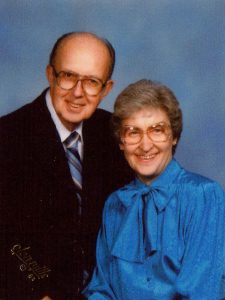
Pearl and Ed Linke

Early Days of Married Life

Pearl and Ed married March 14, 1945 in Girard, Kansas.  Ed was still in the Navy.  So,Pearl stayed in Kansas visiting him on a couple of occasions when his ship was docked at Treasure Island.  Pearl boarded the train in Farlington and traveled to Union Station in Kansas City, which was always packed with travelers.  From there, she headed west to San Francisco. 

After Ed completed his service, he went back to work for the Frisco Railroad.  He worked as an extra board agent in small towns in southeast Kansas.  They moved from town to town often.  Ed and Pearl rented a room where they slept.  Sometimes they cooked their meals on a hot plate and other times they ate at the restaurants in town.

Since Ed often worked the night shift, they would sleep during the day.  And, Pearl went to work with him at night.  They continued this lifestyle even after their first son Larry was born.  Finally, Ed had enough seniority to bid on a regular job.  So, Pearl, Ed, and Larry, who was a toddler, had a bit more typical life.  Still, they moved from town to town often.


Raising a Family

While living in Fort Scott, Bourbon, Kansas, Pearl, Ed, and their two sons attended the Lutheran Church, which met at 9th and National Avenue.  It was a very small church and shared a minister with the Lutheran Church in Brazelton, Kansas.  The Fort Scott church had a parsonage that was not being used by the pastor.  Thus, the Linke family had an opportunity to rent the parsonage.  They called it home for six years.  It must have been an adjustment to Pearl to stay in one place for an extended period of time after moving so much in their first years of marriage. 

Of course, Pearl now had two growing boys to keep fed and clothed.  Always the devoted housewife and mother, Pearl would  have food ready when the boys came home from school for lunch.  The boys had the luxury of home-cooked lunches since the parsonage was about a ten minute walk from Winfield Scott Elementary School where Ted, her younger son, attended and from Fort Scott Middle School where Larry attended school.  When Larry was promoted to high school, he had an even shorter walk to come home for lunch as they lived close enough to Fort Scott High School that they could likely hear the cheering at football games.

Ed didn’t have the luxury of coming home for lunch since he did not get a lunch break.  Thus, each day Pearl fixed lunch for Ed to take with him to work.  She also made cookies for him for a snack.  The boys were all too happy to help eat any cookies that were leftover.


Pearl submitted this recipe to the Farlington cookbook “Memories Are Made Of…”

Parmesan Chicken

1 c. seasoned bread crumbs

2/3 c. grated parmesan cheese

1 tbsp. dried parsley flakes

1 clove garlic minced or dried equivalent

2-3 lb. frying chicken or boneless chicken breasts

½ c. melted margarine


Combine bread crumbs, cheese, parsley and garlic.  Dip chicken in margarine and roll in crumb mixture. Place in a shallow pan. Sprinkle with remaining crumbs and margarine, if desired. Bake at 375° for 45 minutes or until tender and browned.


Note: the crumb mixture will be more than enough for one chicken.


The Ed and Pearl Linke Family

Springfield

In 1964, the family was again moving.  Ed was a train dispatcher in Fort Scott for the Frisco and the railroad transferred their entire dispatching function to Springfield, Greene, Missouri.  So, the Linke family packed up and moved again.  It would be the last town to town move for the family as a whole.


New Church

In Springfield, the family transferred to Trinity Lutheran.  Pearl continued to be active in church activities.  Additionally, Ed and Pearl sang in the church choir for several years.


Frisco Auxiliary

Since Ed continued to work for the Frisco, Pearl became very involved in the Frisco Auxiliary.  The Frisco women met at various locations including the Colonial Hotel, Heritage on Glenstone, Kentwood Arms Hotel, and the Grove.

Pearl was an officer at times and also helped hostess some of the events.  For one springtime event, Pearl and her co-hostesses decorated with flowers, watering cans, and garden tools.  At Christmas, the hostesses decorated with a topiary tree on the head table with sprays of pine, holly, and Christmas ornaments on the other tables.

Another activity of the group was a yearly style (fashion) show.  In at least a couple of years, Pearl was one of the models.  In 1967, Pearl and several others modeled the latest fashions from Sears.


Friends, Family, and other events

Being very social, Pearl was involved in other social activities.  For example, she participated in Gourmet Day, which was sponsored by the Women’s Division of the Springfield Symphony Association.

Ed also liked to socialize.  Thus, the two of them often socialized with friends and family.  One of their favorite activities with friends was playing cards.  They enjoyed the now lost art of just visiting.  Pearl still loves to do this today.


Arts & Crafts

Les Arts de Mardi

Pearl was an active member of Les Arts de Mardi, which was a group under the Southwest Missouri Museum Associates that supported the Springfield Art Museum.  The members of Les Arts de Mardi met regularly for talks and activities.  They heard a talk on hypnotherapy, watched a slide show of a lady’s trip abroad, and went on a historical walking trip of Springfield.  One day, they worked with silk flowers at Pearl’s house.  They also participated in garage sales and bazaars.


Crafts at Home

I don’t know how Pearl had time for anything else, but she did.  She loved to embroidery, she sewed, she quilted, and she did cross-stitch.  Meanwhile, Ed started doing woodworking.  He began making items and Pearl painted them.  They even sold their projects at craft shows for a couple of years.  Additionally, Pearl turned her love of angels into many hand-crafted angels designed using a variety of craft supplies.


Pearl with son Ted and his wife Judy. January 14, 2025

100 Years

As Pearl approaches her 100th birthday, she has slowed a bit.  However, as an avid reader her entire life, she continues to love to read.  Her favorite genres include romance, suspense, and biographies.  Additionally, she still loves to visit with people and seems to never tire of conversation.

If I were to guess as to her key to longevity besides genetics (her mom lived to be 91), I would guess that it is because she has done many enjoyable activities throughout her life.  She continually amazes me with her excellent memory and her ability to identify people in photographs who she hasn’t seen in decades!


Credit:  Ted Linke contributed significantly to this story.

 Prompt: Cousins

#52ancestors52weeks

Gaining statehood in 1861, Kansas was the 34th state admitted to the Union.  Six years earlier Bourbon County had been formed as a part of Kansas Territory.  In the 75 years that passed between the formation of the county and my mother’s birth, 19 of her direct ancestors lived in the county and all but two are buried there with 12 of them buried in the same cemetery.  But, where did they come from and what led them all to Bourbon County?


Key Families

The 19 ancestors came from the Pellett, Conner, Portwood, Thomas, and Ashby families.  All of the direct ancestors in these families that moved to Bourbon County stayed there the remainder of their lives except Grant and Elizabeth Ashby, who moved west after a few years.  However, even that family maintained ties to Bourbon County.

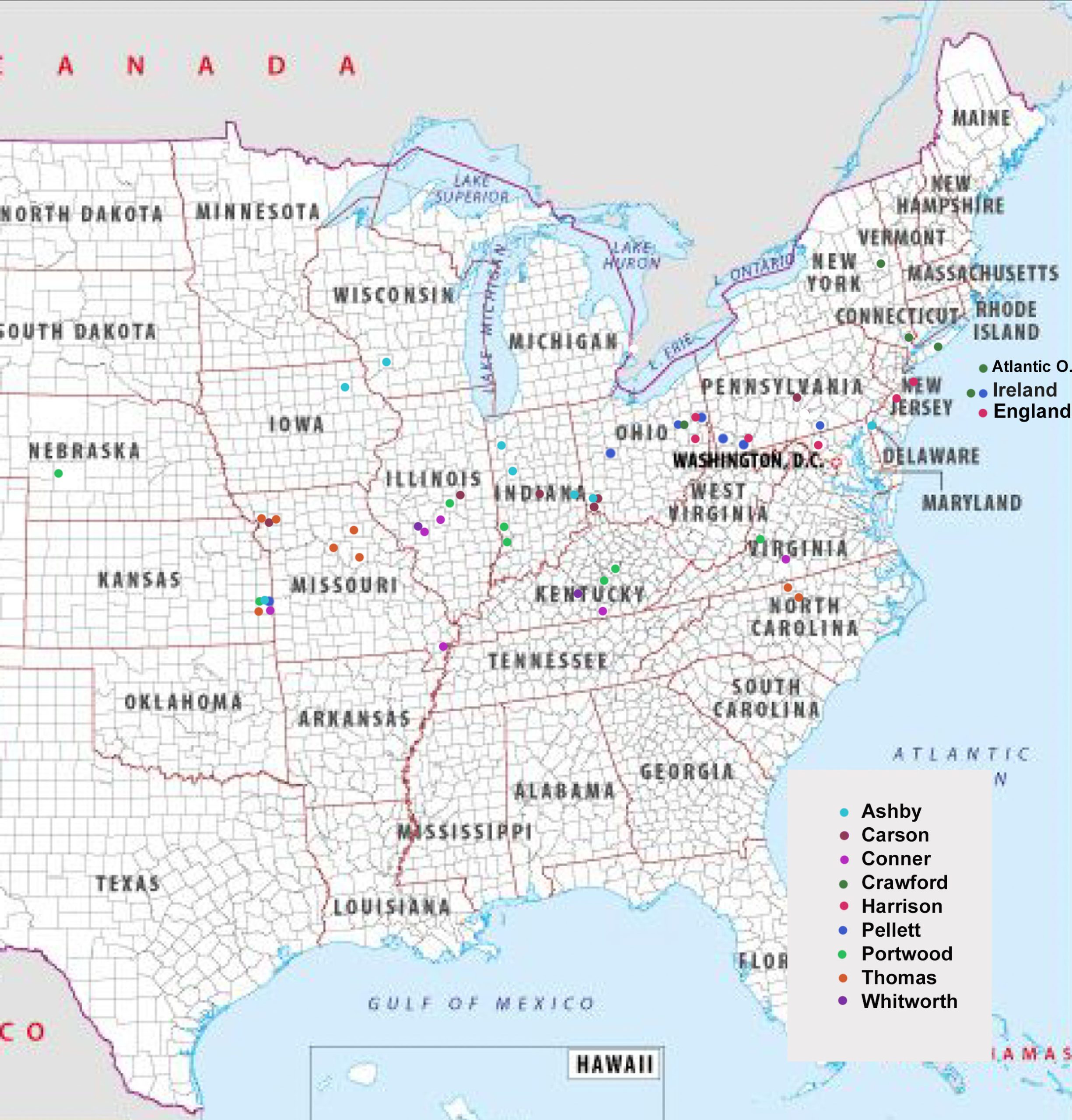
The image at the top of the article shows some of the places these families are known to have lived.  It also shows the locations of the families of the women who moved to Bourbon County.  For example, it shows places where Eunity Harrision and her Harrison ancestors are known to have lived.  The chart does not show the locations where all of the known ancestors lived as it is impractical to represent them all in one image.

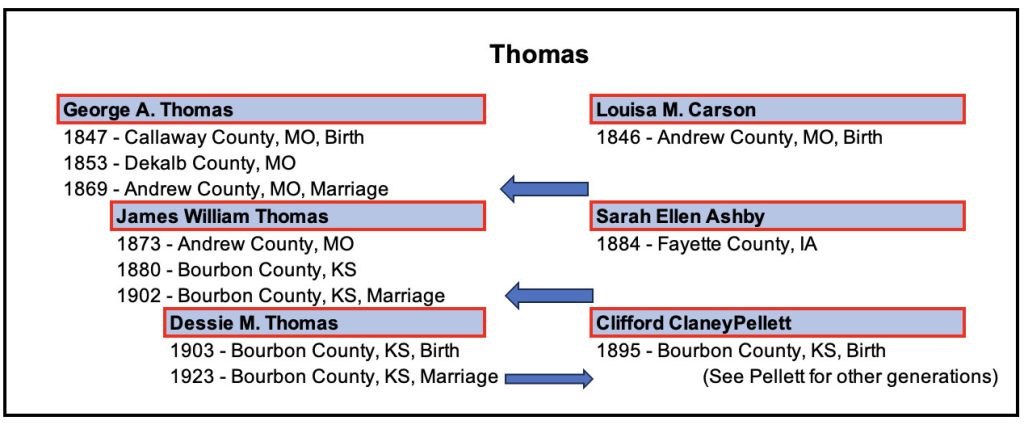
Each key family has a chart that shows more detail regarding the movement of mom’s ancestors that lived in Bourbon County. 


Pellett

Why did they move?

Abel John and Eunity (Harrison) Pellett had eleven children.  Nine were living when they moved.  The oldest two stayed in Ohio.  The remaining seven children moved with six of the seven being sons.  It seems very likely that the family moved so that each son could own property in the area.  In 1878, Abel John and his sons owned a total of 1,319 acres (a school was on one acre of the 1,320).

Why Bourbon County?

One of them was said to have been a scout.  It is possible that he was the one that selected the location.  However, Kansas was a new state and it was likely that available land was the draw.  Besides, Fort Scott had rail service and was adding more.  In addition, the area had become mentioned in numerous publications due to the Border War during the Civil War.


Conner

Why did they move?

It isn’t clear why the Conner family moved to Bourbon County.  However, it could have been that Willis, who had served multiple terms during the Civil War, was looking to continue his military service.  He joined the 19th Kansas Volunteer Cavalry in October 1868.

Why Bourbon County?

It is likely that the opportunity to join the cavalry was one draw to the area.  It is also possible that Willis had traveled to the area during the Civil War given the Border War and that Fort Scott was a Union supply depot. Thus, he may have decided that it was a good place to live.


Portwood

Why did they move?

In September 1858, Woodson lost his second wife and his youngest son.  I have not uncovered the circumstances.  It could have been that they died while moving.  Or, it may have been that Woodson decided to pick up stakes after they died.  In either case, he remarried in Bourbon County the following February to Ann (Watkins) McMenomy, who had also lost her spouse in 1858. Likely, they each needed a spouse to be able to raise their children.

Why Bourbon County?

Kansas wasn’t a state yet when Woodson moved to Bourbon County,  although the county had been formed. I have no idea why he moved his family to Bourbon County at such an early date. 

Thomas

Why did they move?

The Thomas family likely moved for the same reason they left North Carolina years earlier – they were related to too many people where they lived.  Interestingly, the remainder of George’s siblings stayed in or around Andrew County, MO.  Most of Louisa’s siblings stayed in that area as well.  George was a middle child in a large family and that might be a driver to the move. 

Why Bourbon County?

The Thomas family came a bit later than some of the others, arriving in the mid-1870s.  I suspect that they came for land and that being from just inside the Missouri border, although further north, they looked for land near the border between the two states.  Additionally, rail service existed making the Fort Scott area attractive.  However, I also wonder if they had friends that moved to Bourbon County that encouraged them to join them.


Ashby

Why did they move?

The Ashby family was very adventurous. Grant’s father Job had been born in Butler County, Ohio; he  lived in Tippecanoe County, Indiana;  in Richland County, Wisconsin;  in Jasper County, Indiana; and finally settled down in Fayette County, Iowa (which he lived in at least two different times).  I think it was this spirit and their desire for new lands and new adventures that enticed them to move. 

In addition, Grant’s father had died in 1895 and his mother had died previously.  Many families moved on after the death of their elders.  Sometimes that was because they inherited money or land that they sold.  Other times it was because they didn’t inherit land.  According to Job Ashby’s estate, he apparently died without a will.  Grant’s older brother was the administrator of the estate and Grant was one of the sureties.  Job had loaned Grant $800 only a couple of months before he died.  It is listed as owed to the estate, but Grant received a very small portion of the land his father owned.  So, although more investigation is required, it may be that the $800 became a significant portion of his inheritance.  He likely took the money and moved to where the money would purchase more land.  Of  course, he could have already been planning to move and simply delayed it due to his father’s death.


Why Bourbon County?

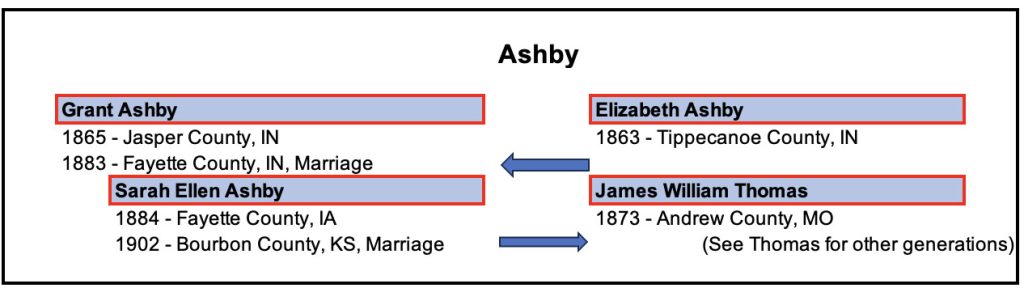
I am not sure how the Ashby family chose to move to Bourbon County.  However, it was just a stopping point for the family except their daughter Sarah Ellen “Sadie Ella.”  She married James William “Will” Thomas and made Bourbon County her permanent home.

After about ten years in Bourbon County, Grant and Elizabeth moved on settling near Holly, Colorado, which was just inside Colorado near the border with Kansas.  Choosing to live in Bourbon County was a much better choice than living near Holly.  Life near Holly was very difficult.  It was very dry, desolate and isolated.  To build anything requiring wood, meant a trip across the Colorado plains to the edge of the Rocky Mountains as trees were sparse to nonexistent in the area.  Their neighbors were few and were far away.  So, if they were looking for a place of solitude and hard work, they were successful.

After Grant died of a stroke at age 50,  Elizabeth “Lizzie” and most of the kids moved to California.  The family only stopped moving when they couldn’t move any further west.  Despite the continual moves, the family maintained contact with friends and relatives in Bourbon County.


A Look at the Map

1878

Three of the families owned property in Drywood Township in Bourbon County in 1878. The following images shows the land owned by the Portwood (green), Pellett (Blue), and Conner (pink) families in that year.  These two maps show adjacent areas near Memphis, Kansas, which is now known as Garland.  The Pellett family owned far more land than the other families. 


 Source:https://usgenealogyresearch.atwebpages.com/Kansas/Bourbon/maps.html
 Source: https://usgenealogyresearch.atwebpages.com/Kansas/Bourbon/maps.html
 

1920

By 1920, the plat map for Bourbon County had changed.  Some of the Pellett property was still owned by the family, but some portions were not.  However other land had been purchased.  Additionally, during this interval, Willis Conner had expanded the land he owned.  And, George Thomas owned property in the same area.  The Ashby family, of course, had already sold out and moved on.

 Source: https://usgenealogyresearch.atwebpages.com/Kansas/Bourbon/maps.html

 Source: https://usgenealogyresearch.atwebpages.com/Kansas/Bourbon/maps.html


Prompt: Travel

#52ancestors52weeks

Names are interesting.  Some sound really good when you hear them.  Others, make you wonder what the parents were thinking.  And, others stick with you simply because they are unique or interesting.  Such is the case with the man who is the subject of this article.


The Name

The man of interest is Marmaduke Horseman.  Either name on its own might be interesting, but combined it really stuck with me.  The name Horseman most likely came from an ancestor of his working with horses in some capacity.  Still, it is not a name I have encountered elsewhere.  Additionally, I have not encountered the name Marmaduke in any other family, although this family has multiple.  The name is thought to be a variation of an old Irish name.  It also has been interpreted of having the meaning “a mighty noble.”  But, I have to admit that I always think of the dog Marmaduke of the Archie comics.


How Am I Related to Marmaduke?

To get from me to Marmaduke, one must go back ten generations.  The family line is as follows:

  1. Elma Pellett
  2. Clifford Claney Pellett
  3. Henry Pellett, Sr.
  4. Seth Pellett
  5. Eunity (Harrision) Pellett
  6. Sarah (Bunting) Harrison
  7. John Bunting, Jr.
  8. John Bunting, Sr.
  9. Abigail (Horseman) Bunting
  10. Marmaduke Horseman

This would make Marmaduke my 8th great grandfather. 


Who was Marmaduke?

First, I will say that researchers seem to have varying data about men named Marmaduke Horseman.  That is likely because there appear to be several generations of men with this name.  And, although unproven, it appears men with the same name may possibly be my 9th and 10th great grandfathers in that family line.  Additionally, there is a at least one Marmaduke Horseman who is likely a grandson of this Marmaduke.  And, possibly more.  There was at least one Marmaduke Horseman living as late as 1877.

This Marmaduke Horseman was born in the mid 1660s in either England or Burlington County, New Jersey.  There appears to be some belief of each location.  This confusion likely arises because it appears that his family may have immigrated to America just before he was born or soon after. 


Marriage

That said, I found a ship record for 1677 for a Marmaduke Horseman and his wife Sarah.  However, although this Marmaduke had a wife Sarah, this record cannot be for him as he was not old enough to be married.  His marriage didn’t take place until 1690 when he married Sarah Woods at the Chesterfield Monthly Meeting of the Society of Friends.

It appears that both Marmaduke and Sarah were members of the Chesterfield Monthly Meeting prior to their marriage.  However, I do not know if Marmaduke’s parents were Quakers or not.


Land Ownership

In May following his marriage, Marmaduke purchased 100 acres of land from Mr. Davenport.  The following November he purchased another 53 acres of land from Samuel, who was married to Susannah Horseman.  The next year, Marmaduke purchased 50 acres of land from Francis Davenport.  Then in 1695, he purchased another 100 acres from George Hutchinson.  This land was adjacent to land he already owned.  And, in 1701, he purchased 400 acres from Benjamin Field while selling him the original 153 acres that he had purchased in 1690.  Lastly, in 1714, he sold 50 acres to Jacob Doughty. 

Now, was it the same Marmaduke that bought and sold the lands?  That is not 100% guaranteed.  However, the description of the land indicated that the land from Mr. Davenport and Samuel Taylor was the same land that was sold to Benjamin Field.  It is also likely that the 50 acres from Francis Davenport was the same land that he later sold to Jacob Doughty.  Thus, several of these transactions are tied together.


Making a Living

Over the years, Marmaduke made a living as a yeoman or husbandman (both are words for farmer) on his plantation.  In those days, farms were called plantations and did not have to be huge or focused on one specific crop.  However, that ties into the land purchases.

Marmaduke was also a very active member of the community.  He served as constable for Chesterfield.  The record said that he served “for John Warren.”  I assume that means John Warren was elected and he served instead.  Additionally, in 1696, he was one of several men to lay out a new road from the town of Burlington to the Falls.

He was also mentioned in several wills in various capacities.  In some cases, the estate owed him money and in others he owed the estate money.  Another role was as bondsman for the executors/administrators of a will.


Another Marriage

Sarah died in Upper Freehold Township, Monmouth, New Jersey in 1742.  Two years later Marmaduke married Mary Fitz Randolph.  It is believed that he was Sarah’s third husband. 

Marmaduke died March 25, 1748.


The Next Generation

Among Marmaduke and Sarah’s children, was Abigail, my 7th great grandmother.  She inherited one quarter of the remainder of her father’s estate after other provisions (e.g. for his wife) were subtracted from the estate.

Records from the Society of Friends (Quakers) show that Abigail married William Bunting.  Several more generations of this family belonged to the Society of Friends.  The Quaker records were critical in tying my family back to Marmaduke and Sarah.


.


Featured Image adapted from work by iffany @ pixabay.com

Prompt: Favorite Name

#52ancestors52weeks


This story started as a tribute to a boy, who the McCracken family has placed flowers on his grave for decades despite not being related to him.  Along the way, the story got bigger, more complicated with people moving all over the place and using different names on different days of the week, and I found connections to relatives and neighbors.  This just proves that you need to be cautious when opening a can of worms because the simplest of stories can lead to a place you never expected.

The Story

All I ever knew was that my Uncle Dewey wanted flowers to be placed on the grave of Arden Johansen each Decoration Day, which is now called Memorial Day.  I knew they were friends, Arden had lived across the road, and that Arden didn’t have family in the area.

For years, Jackie, Dewey’s wife, put flowers on the grave.  When she was no longer able, my mom, dad, and sister took over.  And, for the last three years, I have taken on the job.

I was hoping to find out how why Arden died at age 15.  I also hoped to learn why his family left and where they went.  Well, the story was a bit more complicated than that.


Introduction to the Johansen Family

In order to understand Arden’s life, it is important to understand a bit about his family history.


Grandfather Johansen

On November 21, 1832, Arden’s grandfather Peter T. Johansen was born on the island of Zealand near Copenhagen, Denmark.  He became a sailor at age 14.  He sailed to Norway, Sweden, Iceland, and Australia, where he participated in the Australian gold rush.  Finally, he sailed for America.

Peter went to Effingham County, Illinois where he married Mary Jane Layton in 1871.  He settled down there for much of his adult life.  He was the school treasure for 43 years and was a very prominent member of the community.  However, one day he pulled up stakes and moved much of his family to Arkansas.  As you can see, he was adventurous.  Apparently, that was a gene he passed down to at least part of his children of his children.


The Move To Arkansas

In the fall of 1903, the family moved to Sharp County, Arkansas.  Peter stated that the reason he was moving was that in Illinois he could not acquire enough land to leave a sizeable piece to each of his children.  Land was both cheaper and more readily available in Arkansas, where he purchased 560 acres.

Peter and Mary Jane were joined in Arkansas by their son John (William), daughter Flora Charlotte “Lottie,” daughter Mollie, daughter Tillie and son Grover.  Their son Layton apparently didn’t have the travel gene or his wife wanted to stay in Illinois.  Tillie also didn’t last long in Arkansas, moving back to Illinois and marrying there.  Likewise, William didn’t stay long.  Between 1906 and 1910, William moved to Ford County, Kansas.  However, William and his wife Mary, and children did not stay long in this location. Their oldest two Gladys and Seth had been born in Illinois.  Then Peter had been born in Arkansas.  Now, it was time to go back to Illinois where their next child Lloyd was born in February 1911.


The property that they were living on when it was foreclosed is the SW 1/4 of Section 13, which in 1920 was marked as B.E. Perry. That is where the Zimmerman family lived when I was growing up. And, matches the description of where they lived when their son drank coal oil at Baldwin Barker’s house (B. Barker).

Bourbon County

By fall 1912, William and family were in the Hiattville/Pawnee area in Bourbon County, Kansas.  William was making plans to move into Ft. Scott.  It was reported that he moved his household goods.  However, in April 1913, William was a visitor at Rocky Vale School #78. This is just up the road from where I grew up.  Either the move wasn’t completed or they didn’t last long in Ft. Scott.


Coal Oil

At the end of November, William and Mary left their young son (I assume this was Lloyd) with Mr. and Mrs. Baldwin Barker, who lived a half-mile east of them, while they went to church.  This would have been at the house where I grew up.  Anyway, Mrs. Barker was cleaning with coal oil.  She sat a cup of it on the table and the young boy got it and drank some of it.  He became ill and Mrs. Barker realized what had happened.  She immediately induced vomiting and called for a doctor.  Miracle of miracles, he survived unharmed.


Peter’s Death

The following spring, William’s father Peter, who had still been living in Arkansas, stayed with William.  After Peter died, William and his mother accompanied Peter’s body back to Illinois for burial.  His estate was handled in Illinois.  An article mentioned that he owned 160 acres of land near Hiattville and other interests.  However, it did not call out any land in Arkansas, where he had been living.  I don’t know if he had already distributed that land to his children, he no longer mentioned it, or Hiattville simply made the paper since that is where he died.

Peter’s wife stayed in Illinois for an extended period.  The following year she traveled back to Kansas to live.


Life Goes On

In 1915, William and his wife Mary were still living in Bourbon County with their children Gladys, Seth, Peter, Jesse, and a son whose name appears to be Reward.  I believe this is the son that is later listed in records as Lloyd R. 

William’s mother Mary Jane was also living in Pawnee Township between two Deesler families.  The head of the household appeared to be J.H. Johnson.  Note that the name was written for his name and then the name Johansen followed for other members of the household.  Thus, I assume that his name was Johnson and that this was not a typo.  Other members of the household included Mollie, Caley, Lottie, and a one-boys name which is not decipherable.  I assume Caley was Callie, Mary Jane’s youngest son’s wife.  Likewise, I am guessing that the one year old was Callie’s son as that matches with his birth year.  Additionally, Lottie was married, but her husband was not with the family.

Things began changing again in January 1917.  Foreclosure proceedings were held for the property where William lived.  Several different families, some of which were known to have lived on the property, were listed in the suit.  Thus, a variety of issues may have arisen with paperwork or some non-payment.  Before 1920, they would move to Nebraska.


Arden’s Life

Now enter William (Arden) Johansen who was also known as Billie.  He was born July 17, 1917.  But, where?  And, to what parents?  Before we can answer that question, let’s look into Arden’s life and continue to keep an eye on other members of the Johansen family.


Rocky Vale

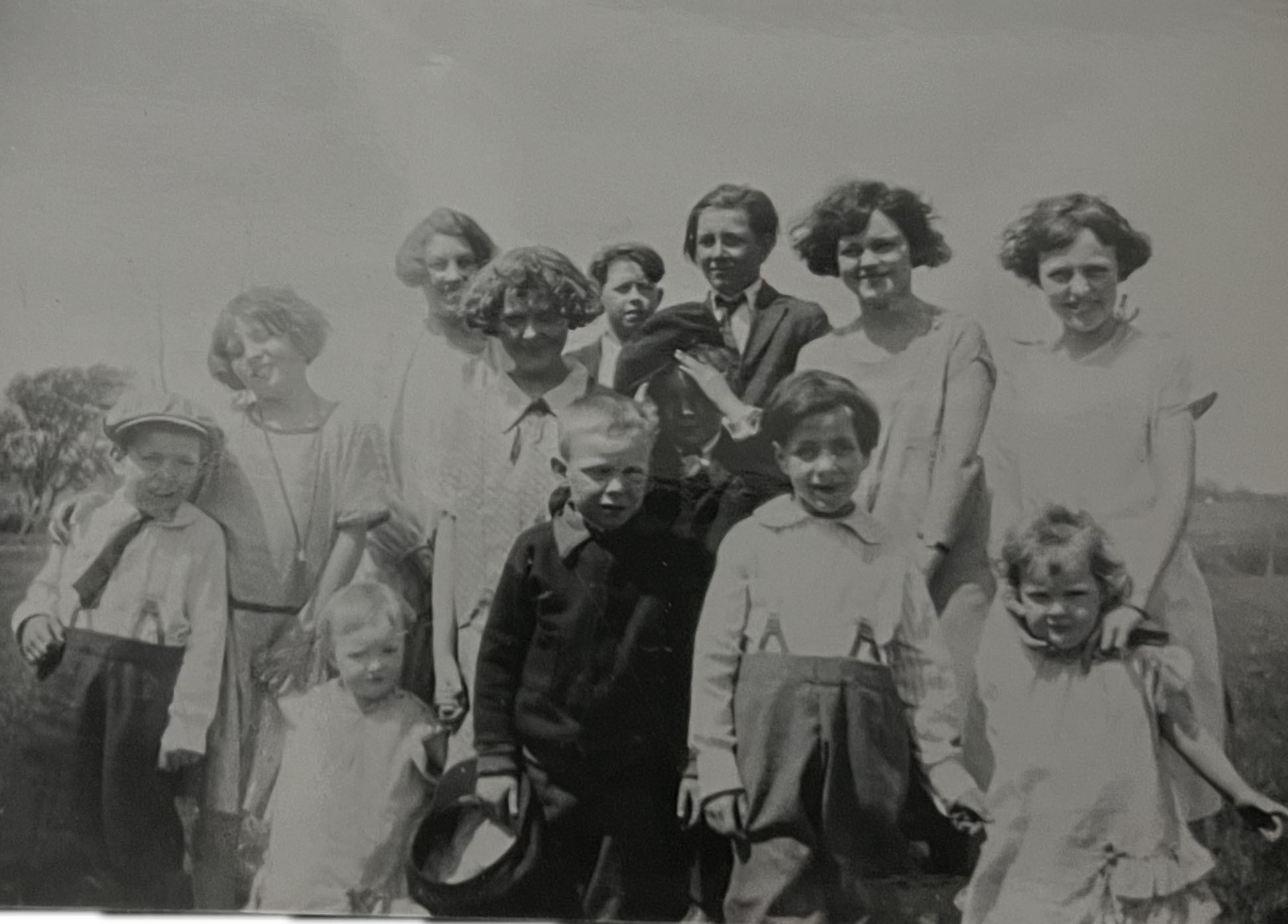
The first mention I found of Arden in records or newspapers was in April 1922 when Arden and his brother Jack visited O’Ella and Ester McCracken.  It was followed by a busy fall.  Arden started school at Rocky Vale in September.  The featured photo at the top of this article is Rocky Vale students in 1926.  O’Ella, Ester, Dewey, and Howard are in the photo.  Plus, two little McCrackens not yet in school.  I believe the boy in front with suspenders might be Arden and the boy far in the back could be Jack.  If you recognize those two boys as someone else, please let me know.

Then, in October of that year, Arden and Jack went with their Aunt Charlotte “Lottie” to Ft. Scott.  And, in November, he landed on the sick list. Then, in December, when Arden’s grandmother Mary Jane Johansen, who suffered from arthritis and didn’t get around well, fell against a hot stove, Arden came to the rescue.  At only five-years-old, he couldn’t help her directly, but he was able to run outside and find his Aunt Charlotte, who was able to assist his grandmother.

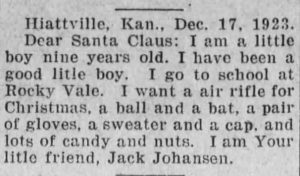
Jack’s 1923 Letter to Santa

The next year included day to day life with additional visits to other neighborhood families.  His brother Jack wrote letter to Santa that year that was printed in a Ft. Scott newspaper.  It is much like the ones that children write today except that he didn’t ask for an iphone or video games. 


Illnesses & Injuries

In the spring of 1924, Grandma Johansen was not well and was confined to bed.  Her son William came from Nebraska to see her and his sister Charlotte.  It was believed that William was going to buy a farm east of Pawnee.  However, I have not found any indication that the purchase took place. 

Just before his birthday, Arden had a significant mishap when he somehow got two large nails stuck in his foot.  That keep him in bed for a few days so that the foot could heal.  Around Christmas of that year, a newspaper in Illinois reported that two of Grandma Johansen’s children were traveling to Kansas because their sister had died of pneumonia.  I believe this is a misunderstanding because  none of their siblings died at that time and the next February it was reported locally that Charlotte was still recovering from pneumonia.


Location, Location, Location

In the 1925 state census, Arden and Jack were shown living with their Aunt Charlotte and their grandmother Mary Jane, where I suspect they had been living since at least 1922.  They were listed with one household between McCracken family and them.  The map shows the property of Roy Cornelius, Charlotte’s husband.  So, Arden did indeed live right across the road from Dewey.

In December 1925, Charlotte filed for divorce from her husband, who I had never found to be living with her.  She stated that he had abandoned her in Chicago some years earlier.  The land she lived on had belonged to her parents.  Her husband Leroy (Roy) Cornelius had made a deal with her mother that he would get the land in exchange for taking care of her mother for the remainder of her life.  He not only hadn’t taken care of her mother.  He hadn’t been present in her life for at least five years as the last record I have of them together was when they were renting property in Miami County, Kansas in 1920.  Thus, her divorce suit asked for the land to be awarded to her as compensation.  She had taken care of herself, her mother, and the land.  She was awarded the property.

Sometime between the time the divorce was finalized and the end of 1927, Charlotte married Stanley Calvert.  They continued to live in the Hiattville/Pawnee area.  In January 1928, Charlotte required surgery and she died a few days later.  She was buried at Hiattville Cemetery. 


Moving Away

Apparently, Stanley continued to care for Arden, Jack, and Grandma Johansen.  Later that year, Mary Jane’s son Layton and her son-in-law John Hanna came and moved Grandma Johansen back to Illinois to be cared for by their families.  The next March, Stanley and the boys moved to Waverly, Kansas where Stanley had family.


Arden’s Death

On June 29, 1933, Arden died in Waverly, Kansas.  The cause of death of the boy who was not yet 16 was typhoid.  His body was brought back to Hiattville for burial.  He is buried next to his Aunt Charlotte, who helped raise him.  It is assumed that his aunt’s second husband had purchased two plots and used the second one for him.  Like in their days of youth, Arden, Billie as Dewey called him, is right across the road from Dewey.  The two friends are buried only a few feet apart.


Arden’s Parents

Now, lets turn our attention back to the question of who were Arden’s parents?  And, where was he born.  We know that he was a grandson of Peter and Mary Jane (Layton) Johansen as there are multiple references to this relationship.  We also know that Charlotte was said to have been Arden and Jack’s aunt.  References also indicate that Arden and Jack were brothers.  We also know that Jack was born around 1914 and Arden was born in July 1917.  Additionally, a couple of references list Jack as Heber or a similar name.  I also saw one article that said that they lived with Charlotte after their mother died.  However, other articles about her caring for the boys do not mention this piece of information. 

For completeness, let’s consider all of Peter and Mary Jane’s children that were living at the time that the boys were born.  Layton and his wife lived in Illinois the entire time.  They never had children and both lived to be over 80.  Likewise, Tillie and her husband lived in Illinois.  They had one son and whom they raised.  Thus, it seems extremely unlikely that they would ship subsequent children off to live with an aunt in another state.  Charlotte is a consideration even though they claimed she was an aunt.  However, they were not living with her in 1920 and there is no reason that she wouldn’t have claimed them as her own since she raised them.

Now that we have removed half of the Johansen siblings as possible parents, let’s consider the other three more likely ones.


William and His Wife Mary

I considered William and Mary as their parents.  They had a son Jesse E., who was about the age of Jack and who also used that nickname.  But the questions that immediately came to mind was, “Why have Jack with them at times, but never Arden? And, why these two of all their children?”  Even if they would have been the youngest two, that would have made more sense.

While living in Nebraska, William did come to visit, but it never mentioned that he was visiting his sons.  Additionally, Mary did not die young.  I looked at that fact over and over with such a common name.  However, evidence points to him being married to the same Mary Lane throughout their life while living in at least six states (Illinois, Arkansas, Kansas, Nebraska, Mississippi, and Virginia). 

This possibility although interesting as their son Jesse/Jack was the right age shows up too much with his parents.  He is with them in each census and shows to be consistently living in Lincoln, Nebraska.  Thus, I believe they are not his parents.


Mollie

Mollie it seemed had some type of issue as she shows up at the state hospital at Osawatomie in records from 1920 throughout the rest of her life.  I don’t know the first date that she was there, but it was after 1915 and before 1920.  That said, I also found records for a woman with her name and birth year living in Fort Scott in the 1950s.  So, perhaps she was in and out of the hospital. Could she have been their mother?  This seems possible.  Jack could have been the one-year-old boy that is listed in the 1915 state census.  However, he is listed after Caley (Callie) and not with Mollie.  Additionally, I don’t know where they would have been in 1920 since they weren’t with Charlotte and Grandma Johansen. 


Grover & Callie

The woman Caley (Callie) in the 1915 census with Grandma Johansen would appear to be son Grover’s wife.  I am assuming that the one-year-old boy was her son.  In September 1918 when Grover registered for the draft, they were living in Arizona.  He was working as a miner at that time.  It is possible that she had another son and then she died.  Tracing Grover and Callie has been very difficult.  This makes me wonder if are the parents.

UPDATE: I believe I can now conclude that Grover and Callie are his parents.  I remembered seeing Arizona somewhere in the records.  I dismissed it at the time because I had not found any of the family to have been in Arizona and other records appeared to indicate that they didn’t know.  However, that aligns relatively closely with the draft registration.


What it was like for Arden?

I am trying to imagine what life was like for Arden.  He may have never known his parents at all.  And, if he did, it would have been only when he was very young.  He was raised by an aunt, who I imagine loved him as her own.  But, still not the same.  Then, she died.  And, Grandma moved away.  He was left with his brother and his aunt’s husband.  Then, the three of them moved away.

It must have been even worse for Jack as he would have been a bit older.  And, on top of all that Arden went through, he lost his brother, too!


Afterward – The Connections

While living around Hiattville/Pawnee, William was mentioned in the company of C.C. Callow, L.F. Lozier, Mr. Runkle, and Elias Deesler. 


McCracken

The first McCracken connection to his associates came through L.F. Lozier.   His daughter Fern married Grandpa Joseph Andrew McCracken’s brother Lemuel Lewis “Lem” McCracken.


Deesler

I researched the name Deesler, as I knew this family.  Well, it turns out that William didn’t just associate with Elias Deesler; he was related to him.  William’s mother Mary Jane Layton’s sister Christina had married William Henry Deesler, Elias’ father.

I knew Elias’ son Raymond (Earl) and his wife Pearl.  Matter of fact, in high school, I took care of Pearl, who was elderly, when her daughter’s family was away.


McCracken via Deesler & Barton

The Deesler family had another connection to our family.  William Henry and Christina (Layton) Deesler’s son Pomeroy married Ada Maude Barton whose brother Fred Franklin Barton married Florence Edna McCracken, Andrew McCracken’s brother William T. McCracken’s daughter.


Prompt: Friend, associate, Neighbor

#52ancestors52weeks