Part I: Paisley, Scotland
This story starts in what has been called the “biggest town” in Scotland. It isn’t the largest city, but rather the biggest town.
Thomas Ronald
On May 27, 1798, Thomas Ronald was born to Thomas and Margaret (Stewart) Ronald. He was born in Paisley, Scotland, which is just west of Glasgow.
Thomas’ mother died young as did one of his three siblings, leaving sisters Mary and Agnes.
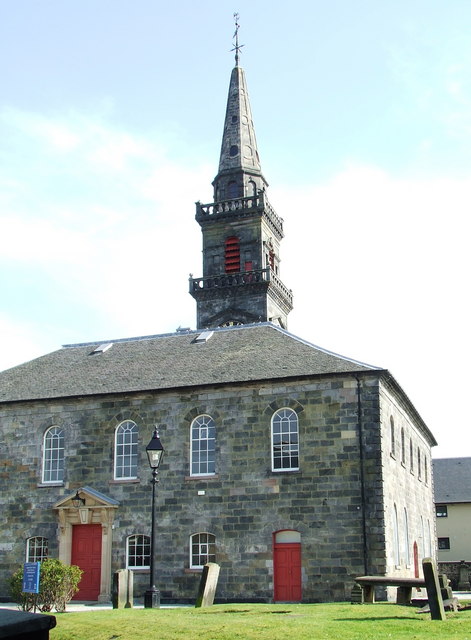
On June 6, 1820, Thomas Ronald married Mary Gourley in Paisley High Church. It was the same church where his parents had married twenty-seven years earlier. It had been built in the mid-1700s. Located at Church Hill and Oakshaw Street, the building continues to be used today by the ecumenical Oakshaw Trinity Church, which was formed in the 1990s when the congregations of Paisley High, St. John’s and the Paisley Congregational churches united.
Mary Gourley
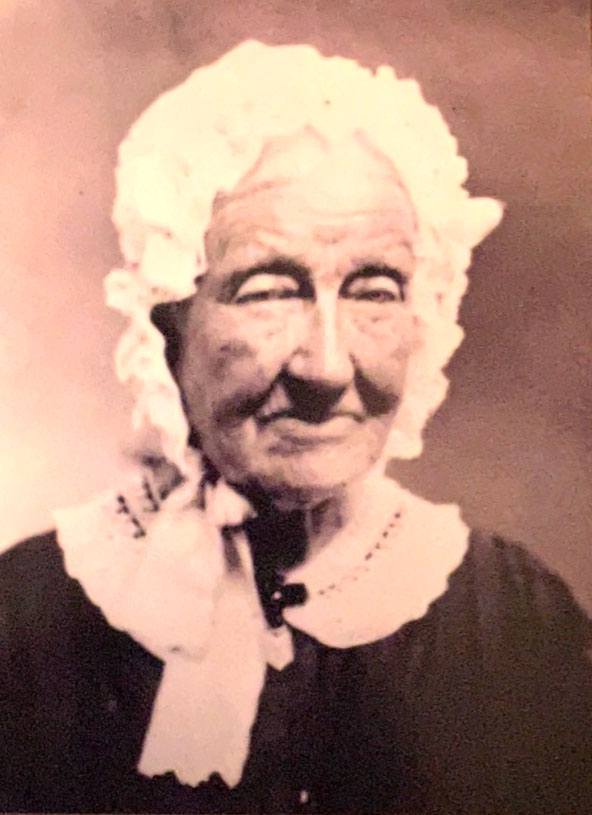
Mary Gourley was born in Paisley on February 18, 1803. Her parents were Robert and Margaret (Young) Gourley.
Mary’s siblings are not fully confirmed. It is believed that some died young. Yet, one brother William Gourley is known and well documented.
Mary married Thomas Ronald in Paisley High Church although her parents had married in Paisley Abbey. It appears that the family had changed churches by the time Mary was born 7 and a half years later, as she was baptized at Paisley High Church a few days after her birth.
The Abbey had an even longer history than Paisley High. Its history dated back to the 8th century. However, in 1307, Edward I ordered it destroyed during the Wars for Scottish Independence because it was linked to the powerful Stewart [unknown if related to Margaret (Stewart) Ronald] family who supported the rebel leader.
It was rebuilt, but the original design was altered. In later centuries, portions of the building fell into disrepair and were abandoned from use, while some parts continued to be used. Numerous reconstruction projects have occurred over the years.
Services are still held at Paisley Abbey today.
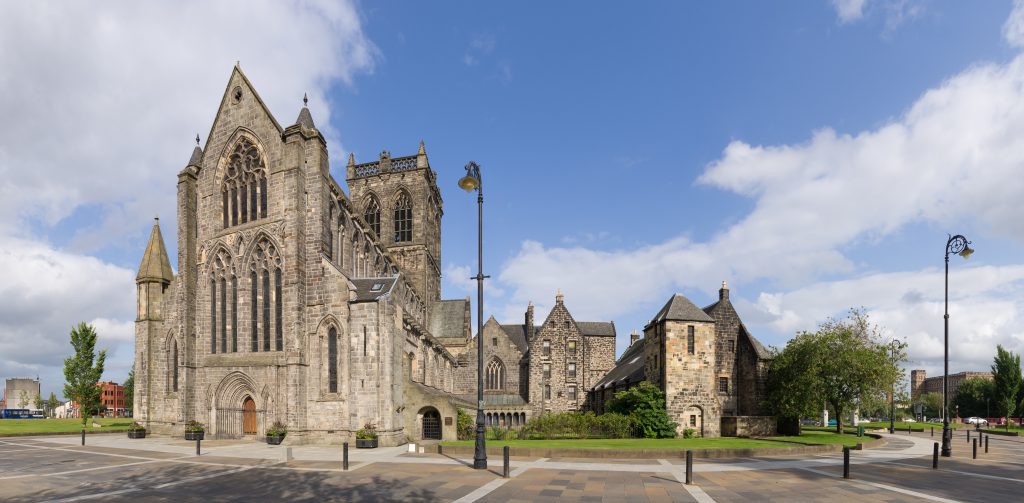
By © User:Colin / Wikimedia Commons, CC BY-SA 3.0, https://commons.wikimedia.org/w/index.php?curid=28660792
The Weaver
Thomas’ occupation at the time of his marriage is unknown. However, by 1841, Thomas was working in the textile industry as hand loom weaver. It is very possible he had been working in the textile industry for many years prior to this time as a hand loom weaver was a very skilled position and the textile industry had long existed in Paisley.
In the early 1800s, Paisley artisans had first created an imitation of the Kashmire shawls with its very intricate pattern. The artisans had refined the design and westernized it. Then around the time of Thomas and Mary’s marriage, they had made modifications to looms to accommodate the pattern and create colorful designs for which Paisley became famous.
Thomas is said to have been an expert weaver, making broché shawls. These shawls were high quality shawls using the paisley design. They used a brocade-style weaving technique. Extra color yarn was inserted as needed by the pattern, which created raised designs that had the appearance of embroidery. The shawls were seen as a status symbol and although not cheap, they were not nearly as expensive as the Kashmire shawls.
Since work was often done in the home or small workshops, Thomas may have been the lead weaver in a small group since his son William, who was 18, also worked as a hand loom weaver, while his fourteen year-old son John was a hand loom weaver assistant.
Thomas The Hand Loom weaver
Weaving was not a simple job. Before the loom could be operated, Thomas would have had to threaded hundreds of threads in the loom. This included measuring, threading, and tying them very uniformly. This was not a quick task. The time required was dependent on the complexity of the design to be woven. If a specialty design, such as, the paisley design or a floral, was to be created for a multi-colored shawl or cloth, the setup time could be quite extensive, as an exact count of each color of thread had to be made. A single thread count off and the pattern would be ruined.
Operating the loom might be compared to playing an organ where both the hands and feet are involved. And, a good rhythm is necessary for success. Thomas would have used his feet to press the treadles to raise and lower specific threads to create an opening. Then he would have used his hands to put a wooden device with thread in it into the opening. In a quick motion, he would have pulled a wood frame forward to tighten the threads and build the cloth. A continuous even rhythm made for a good weave. Some weavers could do this process as many as 80 times in a minute (i.e. faster than once a second!!!).
The Great Famine
This unfortunately created a great strain on Paisley with new workers that would work for less money and people vying for food and housing. Because the textile industry of Paisley was struggling, Queen Victoria bought 17 Paisley shawls in hopes that would boost the industry. She wore the shawls when she made public appearances, including the christening of her son. Thus, the paisley pattern became a status symbol for women of high-society. Eventually, the paisley pattern adorned various clothing and accessories in addition to the famous shawls.
A Decade Later
By 1851, Thomas was listed as a weaver and a cloth inspector in the Bleachfield. This likely meant that he now worked for one of the textile factories. As a cloth inspector, Thomas would have inspected cloth looking for any issues with sizing, lumps of thread, broken threads, uneven edges, issues with color, etc. All issues would be marked and recorded. Sometimes an inspector would repair minor issues. Thomas would have been a trusted employee upon whom the company relied to ensure the quality of the product that they were producing.
Since Thomas worked in the Bleachfield, that meant that he inspected cloth where it was whitened and finished. Originally, this job was literally in a field. However, at this point, it was part of the factory process. He could have worked with a wide array of woven fabrics or even threads. Note: Advertisements for selling or leasing Bleachfield Printworks should not be confused with working in a bleachfield. These advertisements were simply for weaving/print facilities that included a bleachfield. Thomas working in a bleachfield didn’t imply that he worked at any specific factory, although family stories say that he may have worked at Blackland Mill for a period of time. This is possible as it was only a short distance from Potterhill, the location where he resided in 1851.
By this time, Thomas’ wife Mary had joined him working in textiles. Mary may have been working to help the family financially as despite the high production of Paisley, economic challenges plagued the industry.
Mary was a warp winder. Mary’s job, one that many women held, was to wind yarn onto a device to create a “warp” of threads to be used on the weaving loom. Although not as highly skilled as weaver, the job of a warp winder also required precision. Like with the weaving loom, the threads have to be even and at the correct tension. This was a very important role as a breakage or tangle could ruin the work of the weaver. However, it was not considered a highly skilled job.
America Bound
Family Moves
In 1850, Thomas and Mary’s sons John, Thomas, and William Ronald boarded the ship Jamestown. On January 10, they headed for America. With them were the elder Thomas’ widowed sister Mary Bunten and her son William Bunten, who was 17. Also making the trip were Thomas Shaw and his wife Isabella. Thomas was the son of the elder Thomas’ sister Agnes.
The reason for the move isn’t known specifically. Family stories say that the boys worked on farms along the Hudson river that summer. However, it is possible that some of them were recruited to come to America to work in the textile industry as America was offering people even better wages and more stability. It is known that they stayed on the East Coast for about a year before moving inland and that Thomas Shaw continued to work as a calico printer beyond that time.
Thomas and Mary Move
Six years later, Thomas, Mary and their children Mary, Margaret, Jane, and Robert would board the ship Franklin King (Captain Watts) and make a similar journey. Oddly, the ship manifest listed them under Ireland. We know that they were not Irish, nor were their parents. Thus, this is either an error or they lived in Ireland for a time prior to moving to America.
Belfast?
Why would they have moved to Ireland, especially given the economic and food situation that had been occurring in Ireland? Well, although not proven, it appears that they may have had economic incentive to move to Belfast or other town in Ulster, Ireland. Although the shawl trade would remain quite active until around 1870, it was constantly plagued by fluctuations in the need for workers and wage disputes. Additionally, the textile industry in Scotland was also undergoing a shift to more and more mechanized processes. And, the industry was struggling with the changes. This may have impacted Thomas’ role.
On the other hand, the textile industry in Ireland was booming. Thomas would have been a highly sought after employee because of his expertise. The companies from Ireland even came to Paisley, Glasgow, and other areas recruiting supervisors and people with special skills, including quality control and their understanding of complex weaving patterns, to come to Ireland. They offered better pay and stability for management and highly technical roles.
Thus, although it is possible that the recording of Ireland as their residence was in error, it seems very likely that Thomas and Mary lived for a time in Ireland.
Laborers & Servants?
The ship’s manifest also begged the question why would Thomas and his son Robert be listed as laborers if Thomas, at least, had a history in the textile industry. Similarly, all the females in the family were listed as servants.
Apparently, neither of these were uncommon. Clerks on ships often simply listed artisans as laborers no matter how prestigious a role they might play. Additionally, it was very common for all females age 12 and over to be listed as servants except the wealthy or other rare exceptions.
Why America Now?
Thomas, Mary, and their youngest children likely left Scotland at the urging of their children who were already in America. Besides, the textile industry, in which they were employed and which was a primary driver of the Paisley economy had not been stable since the 1840s when many facilities had shut down due to economic issues. Thus, if they remained in Scotland, work may have become increasingly more difficult to find.
On the other hand, if Thomas and family did actually migrate to Ireland, they may also have had a reason to immigrate to America. The Crimean War created a boom in the textile industry in Belfast and other areas. Cloth was needed due to blockades preventing Russian linens from being exported. Prices, demand, and wages were high during the war. The war, however, ended just a short time prior to the family sailing for America. With the end of the war came the loss of many contracts in the region, which meant a lot of out of work textile workers.
Today In Paisley
Today, Paisley is home to approximately 80,000 people. The major employers in the town are the government, colleges, hospital, and airport. However, many of the people living there work in Glasgow.
Paisley is known for its history, weaving legacy, cultural heritage, and architecture. The textile mills and factories are all gone; however, nearly two hundred years after it became famous, the paisley pattern continues to be prominent in fashion, decor, and more.
Coming Soon
Part II of the story will focus on life across the ocean in Paisley, Nebraska.
Prompts: A Spot on the Map
#52ancestors52weeks