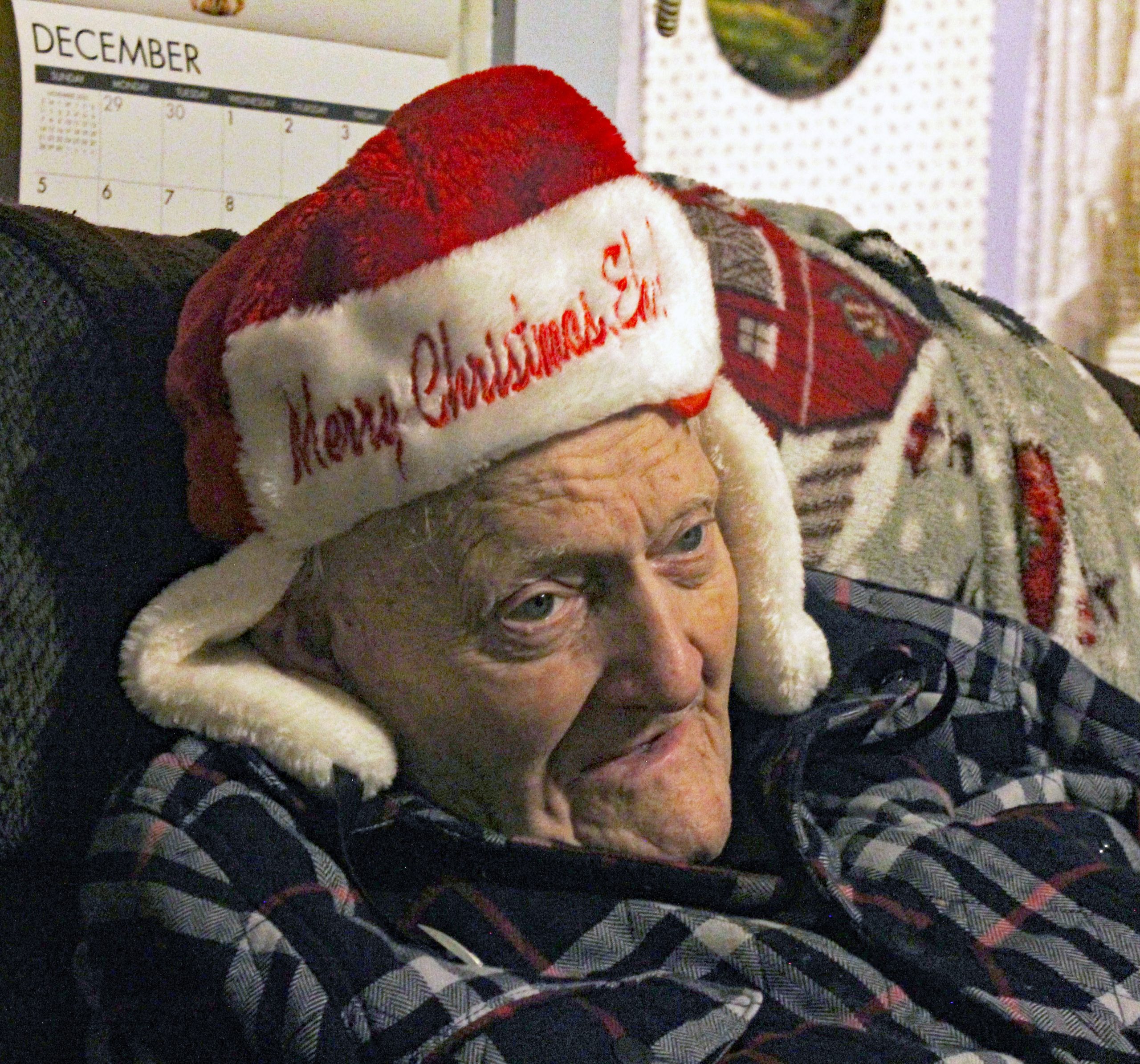
Dad always did things for people, but he never made a big deal about it and he rarely would accept money for his actions no matter how much time he spent or how inconvenient it was to help the person. Two good deeds that he did at Christmas stand out in my memory.
Out of Commission
One Christmas Eve many years ago, a tractor trailer broke down along Highway 7 near Uncle Dewey’s house. I don’t remember exactly how dad got involved. Maybe he was just driving by and stopped.
In any case, Dad, who throughout his life worked on just about any machinery or vehicle there was (ok, I exaggerate, but he worked on anything somebody needed fixed), had to my knowledge never worked on a semi before that day. That didn’t stop him from delaying his plans. He climbed up on the truck to see if he could determine what was wrong. He tinkered with it awhile and before you know it, he had the truck running. The truck driver was going to be able to make it home for Christmas after all!
The man offered Dad $100 and in those days that was a lot of money. And, we didn’t have an overabundance of money. But, in his normal fashion, Dad turned him down. He told him to get home to his family and have a Merry Christmas!
Family In Need
One year, a family in town was struggling due to having had a house fire. Dad knew the man and knew that due to the circumstances the family would not have any money to spend on Christmas. We were far from rich, but he was committed to helping them out for Christmas.
We gave them our artificial Christmas tree and borrowed one from someone else for us to use. I don’t think we bought presents. However, I remember shopping with Mom in a little store in Ft. Scott that year, possibly getting ornaments and other decorations for them or replacing some we gave them. And, I know Dad also gave the man some money. To my knowledge, there was no one coordinating help for the family. It was just something he did.
Dad never talked about it much. It was just something he did and nobody ever needed to know about it. He figured it was nothing special and that anybody that could help others should do so. Matter of fact, right now he is probably looking down scolding me for writing about it.
Good-bye 2024 . . . Hello, 2025
I am taking next week off. But, I will be returning to my blog in 2025.
Have a Merry Christmas and a Happy New Year!
If you celebrate a different holiday or none at all, know that my well wishes extend to you, too.
This article focuses on the dogs that over the years who were chosen to join our family and live at the home where I grew up.
Timeline
Our first dogs were Sputnik and Gypsy. We inherited them from Grandma and Grandpa McCracken
Ginger joined them as the Mayberry family insisted that we take one of their dog’s pups since Sputnik was the father.
After Sputnik died, we got Trixie.
Misty joined the family after Gypsy died.
Misty died very young. She had gotten injured. However, her death did not seem related. She died mid-stride while running. That is when Coco joined the family.
When Ginger died, we got Tina.
After Trixie died, we only had Tina and Coco.
Tina only lived six years. After she died, Smokey joined the family.
When Coco died, Rocky joined the family.
After Smoky died, Rex came to live with the family.
After Rocky died, the family only had Rex.
After Rex died, Tucker joined the family.
Meet The Pups
The dogs are presented in no specific order.
Rocky
Rocky arrived in the McCracken household at Christmas 1995. He was a tiny little fur ball. We went to get him and brought him home to surprise Mom and Dad. When we arrived at the house, I slipped him under my coat and walked into the house. Dad immediately said, “You got a dog.” I responded, “Why do you think that?” He said, “Because you weren’t pregnant when you left here.”
When Rocky was a pup, Uncle Dewey would bring leather gloves with him when he came to our house. The reason was that his skin was thinning and he bled easily, but he really wanted to play with Rocky.
However, Rocky didn’t like lightening or even light from a lighter. Likewise, he didn’t like the flashes of light with fireworks. So, he would sit in the car with mom while she watched the fireworks. I guess he thought he was safe with her.
He loved everybody and everybody was supposed to stay home. One time sis was at our place and Dad was getting ready to go out of town to a funeral. Rocky planted himself on Mom’s lap as if to say, “You aren’t going anywhere.”
Breed: Pomeranian, Cocker Spaniel, Dachshund
Misty
Misty was a tiny little girl. Her signature activity was hauling shoes upstairs to get you out of bed. You see, if you did not get out of bed when Misty thought you should, she would bring you shoe after shoe until you got up. She wasn’t picky, as she would bring you anyone’s shoes until you took the hint. It was really funny since she was so small.
Her night time habit was to run across us while we were in bed to get to the window to look outside.
She also liked to sit on my lap or next to the driver’s door while I drove.
Another favorite activity was burying dog food and popcorn in the closet. We aren’t sure what she was keeping it for or who she was hiding it from. One night she came in and she was just a crying away. Found out Mom had thrown out some uneaten popcorn and Misty had a mouth full of it.
Breed: Terrier Mix
Smokey
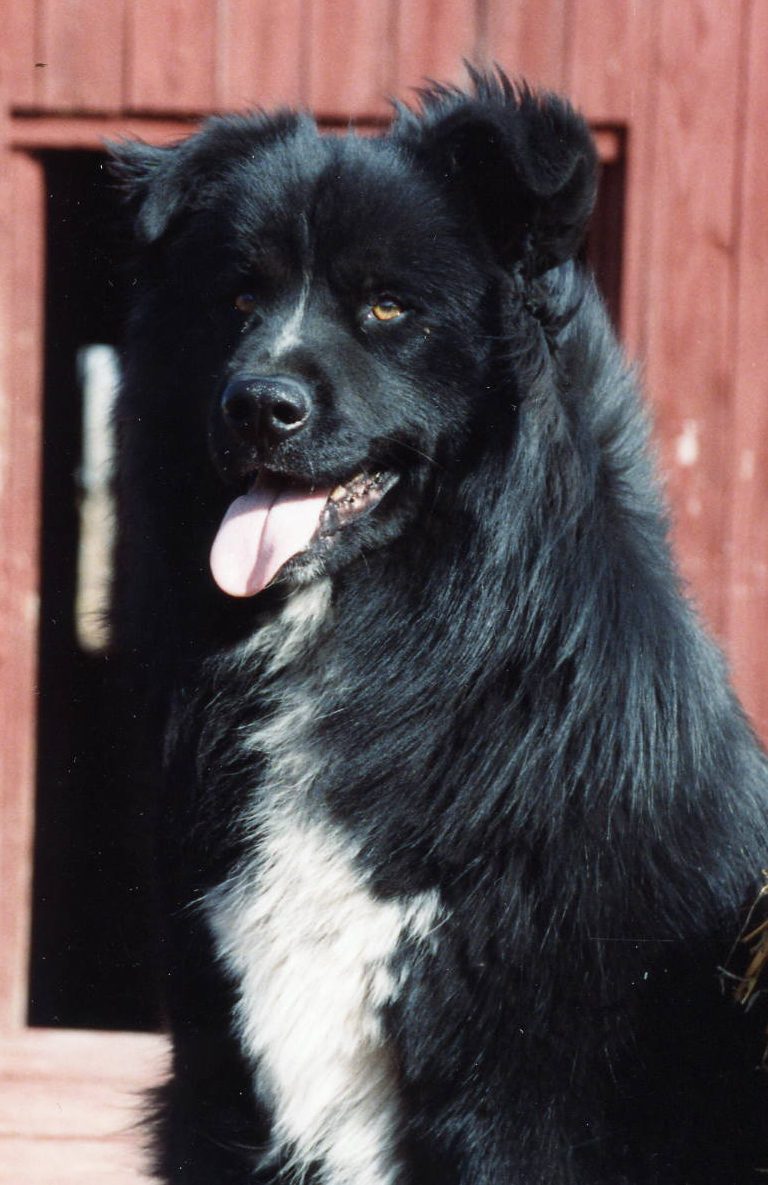
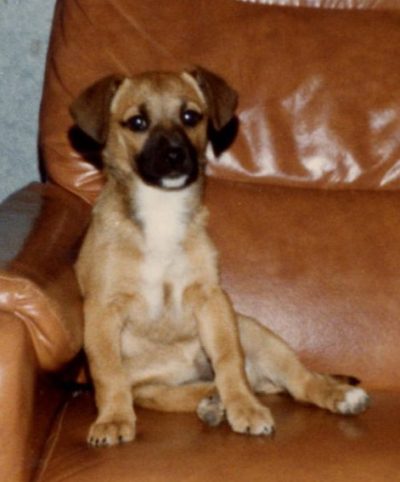
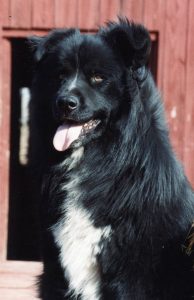
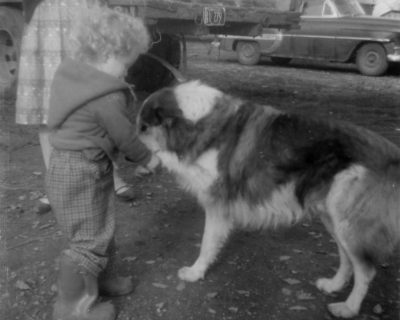
When Smokey was young he looked a lot like a Bear, which is what Uncle Dewey called him. His similarity to a bear was so strong that Dad worried that someone would mistake him for a bear.
He was very dedicated and lovable, but a bit clumsy. If he saw a squirrel run up a tree, he would sit by the tree for hours. At other times he would love all over you, but might knock you over being clumsy.
Smokey liked to play games. He would put his head above Coco’s head. She would growl , he would run, and she would chase him. He continued to do this even after she was too old to chase him.
Another game occurred one day when Jake was around two, Jake was playing with a ball and smokey took it away wanting to play with it and maybe he thought Jake would chase him.. Anyway, Jake cried. We caught the whole incident on video. Later, when we watched the video, Jake cried again.
Breed: Border Collie and Newfoundland (Ann’s guess)
Coco
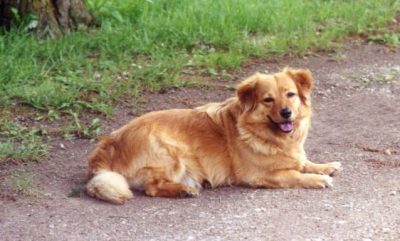
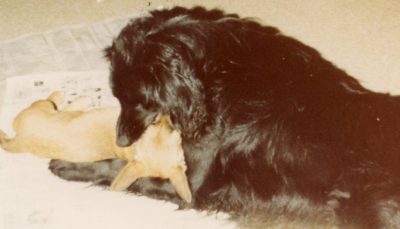
Coco was a born mother. Despite being spade, she was bound and determined to be a mom. So, when we had some kittens at the house, she treated them as if they were her pups.
She carried a kitten in her mouth and put it in a rocking chair and curled her body around so that the kitten couldn’t escape. She also used her body to block the kittens in the bathroom so that they couldn’t escape.
Coco knew when a storm was coming and would move to be by your side. One time Ann was out mowing on the riding lawn mower trying to finish as much as possible before it stormed. Coco chased her around the yard until she quit. It is unclear if she was protecting you or wanted protected.
Coco also loved corn on the cob. She would go steal an ear out of the garden and eat it.
Breed: Cocker Spaniel mix
Tucker
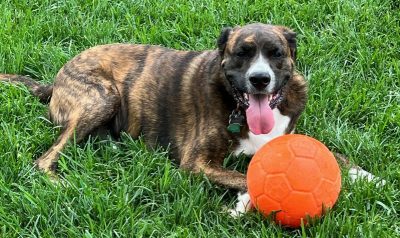
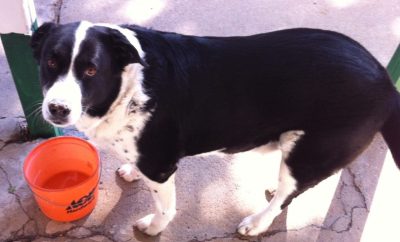
Tucker was a little guy when we first met, but his paws told us that his size wasn’t going to last long. Today, he is somewhere in the 90 pound range.
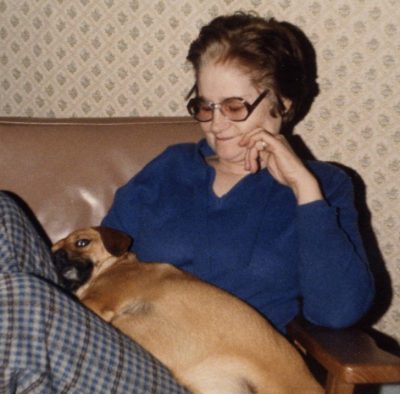
Ann let him sleep on her lap when he was little and now he thinks he gets to even though he is huge. That said, he really is a love bug.
He loves to run, chase deer, and play ball (mostly he likes to keep it away from whoever is nearby).
He also loved to chase Brylee (cat) when they were living together. She loved it, too. He played mostly with Maverick when Maverick and Winchester (Jake’s dogs) stayed with us. However, he played the most at Thanksgiving with Echo (a new addition to Jake’s household), who loves to pick on dogs and people. Tucker and her played and played.
Tucker believes that anyone who sits down on the floor or ground is inviting him to sit on their lap. And, he will argue with you if you try to push him aside.
Breed: Boxer mix with a giant dog (possibly Great Dane)
Trixie
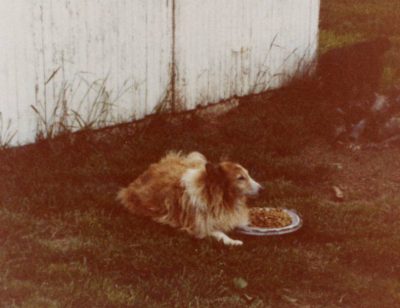
The photo shows Trixie in her favorite spot – sitting by the food bowl guarding it. Not sure who or what she thought was going to steal all the food, but they were going to have to go through her first.
Trixie’s other favorite thing to do was to announce that someone was in the outhouse. No one could use it without anyone within hearing distance knowing.
She usually liked everyone except if you were fighting or she thought you were fighting. Then she would nip at whoever she believed was the aggressor or who she thought was winning.
There was one time that Uncle Don spooked her. She chased him to the house, which in turn spooked him.
Trixie was another dog that like to run over to Uncle Dewey’s when we went over.
Breed: Collie
Rex
When Rex was little someone had to hold him at night so he could get his snuggles.
When he got a little older, he would jump person to person or one piece of furniture to the next when he got what Ann calls the “Zoomies.”
Rex also liked to climb up on Dad. One time he kept inching higher until he tipped the recliner over backward, sending the chair, Dad, and himself to the floor.
Rex also loved the water in his early years and loved to take a dip in the creek. However, he did not like fireworks. They scared him.
He also was not a fan of heights. Rex had to be rescued multiple times because he got up high and was afraid to come down. One time I remember him getting up on a narrow, but high rock in the pasture. Dad had to work and work with him to get him off of it.
He was lovable, bu love to run and knock you down. And, he could even if you braced for the attack. He also scuffled with Rocky, but only for fun.
Breed: Border Collie, Labrador
Sputnik
Sputnik was one of Grandma and Grandpa’s dogs that we inherited. He got his name because when he was young he would repeatedly run circles around the house. Thus, Grandma Nellie (Peelle) McCracken named him Sputnik after the Russian satellite since he orbited the house.
Sputnik’s favorite thing to do was to run over to Uncle Dewey’s house when we went over there – just so he could ride back in the car.
One night soon after Dad bought the Rambler, Sputnik (or Sput for short) ran over to Dewey’s like usual. However, it had been raining and he was a bit muddy. Mom was mortified when Dad let him into the car to ride home. Dad said, “What can I do? He expects to get to ride home in the car.”
Breed: Collie and Sheepdog
Ginger
Ginger was Sputnik’s son. His mother was Mayberry’s bird dog.
Ginger’s signature move was to take his leg and put it around the back of your leg, which led to may a fall. It was a move Dad adopted and mimicked. The move became known as a take down.
He liked to play and run and try to knock you down and he really liked to wrestle with Dad. However, if he accidentally knocked a child over, he would get really upset.
Ginger was a protector. I never worried about anyone messing around the farm even when Dad was working away. Ginger wasn’t going to let anyone hurt any member of the family. He also wasn’t going to let any animal into his territory. He let other dogs know they weren’t welcome. He would even attack coyotes if they got too close to the house.
Breed: Collie, Sheepdog, and bird dog
Tina
Tina was a bit skittish. She did not like kids at all and was even nervous around Dad. Our guess was that she had been abused before we got her. However, Tina loved Rod. We never knew what it was that made her comfortable with him and not others.
One day Dad was carrying his lunch box. Tina was following him with her nose to the lunch box.
She also followed Dad when he was planting potatoes. In this case, she would eat the potatoes as he placed them on the ground. Like Coco, Tina also liked corn on the cob.
Another activity Tina enjoyed that didn’t include food was jumping off the bank into the creek.
Breed: Terrier mix
Gypsy
Gypsy was one of Grandma and Grandpa’s dogs that we inherited. Unlike many of our dogs she primarily stayed outside. It seems Grandma had taught her not to come into the house.
Although she was a member of the family at the same time as Sputnik, she never ran over to Dewey’s house with him. She always stayed home to guard the property.
When people think of handing down things, often they think of people handing down clothes to younger siblings or handing down family heirlooms to the next generation. This article, however, takes a look at some of the other things, many non-material, that were handed down from one generation to the next in the Peelle family.
Handed Down In Families
Families also pass down skills, abilities, interests, beliefs, lifestyle, culture, longevity, stories, tendencies for particular diseases and more. Some of them genetically and others via teaching or sharing with their children. All things they “hand down” to the next generation are important as they are important components in making the next generation who they are.
This article takes a look at some physical traits and then touches on several other things that were passed down in the Peelle family.
Hair & Eyes
Physical traits handed down from generation to generation are more obvious in some families than others. The Peelle family is one family where physical traits are interesting.
Passco & Martha
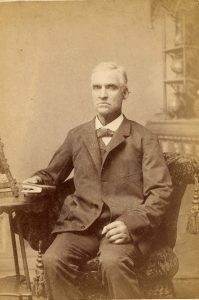
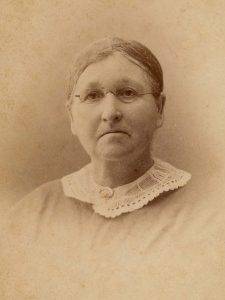
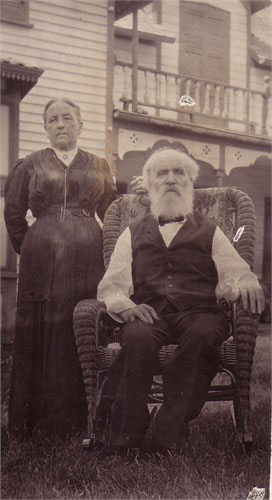
It was said that Martha (Johson) Peelle had very dark or black hair and dark eyes. The first photograph, which is believed to be Passco and Martha (Johnson) Peelle soon after they married, shows that she has very dark hair. The details aren’t clear. However, her eyes do appear dark. Passco appears to have a bit lighter hair. His skin appears a bit ruddy, likely from being in the sun.
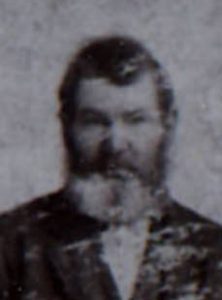
The next two photographs show Martha and Passco in their later years. Their hair has grayed; however, it is clear that Martha has dark eyes. Passco’s eyes, on the other hand, are not clear in the photograph.
Tiny photograph believed to be Passco & Martha (Johnson) Peelle soon after their marriage.Martha (Johnson) PeellePassco Peelle
The Kids
The next group of photographs show six of Passco and Martha’s eight children. Unfortunately, I didn’t have photographs of all the children. Additionally the children vary in age, which is not ideal.
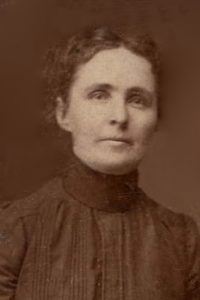
The first image is Mossie Lea (Peelle) Wilkie. Although her hair and eyes do not appear as dark as Martha’s, she clearly favors her mother. She has brown hair and brown eyes.
The second image is Emaline “Lillie’ (Peelle) Potter. Since she is older, her hair color is not known. However, she clearly has brown eyes.
William Johnson Peelle is the third image. His hair is a much lighter brown and his eyes appear to be light. Thus, likely blue.
On the next row is Rachel (Peelle) Benson. Her hair is very dark, possibly black. However, her eyes do not seem as dark as Lillie’s. They appear to possibly be blue.
The next is Elzena “Jennie” (Peelle) Lewis. Her eyes appear very dark and her hair, although not well seen appears to be reasonably dark.
The last photo is of Sarah (Peelle) Longnecker. Her hair is dark, but possibly not as dark as some of the others. However, she seems to have lighter eyes.
Rachel (Peelle) Benson and four of her children
The Grandkids
Example: Rachel’s Children
Using Rachel (Peelle) Benson and her children as an example, it can be seen that three of the four appear to have dark brown hair with one having lighter brown or blond hair. The three females appear to have brown eyes with her son William’s eyes being unclear in the photograph.
William’s military draft record, however, clarifies the situation stating that he has brown hair and blue eyes. His brother Emmerson’s records say that he also has blue eyes and states that his hair is dark.
Overall View
I took a look at the hair and eye color for as many as of Martha and Passco’s grandchildren where I could determined even one of the two attributes. Much of the information came from draft registrations. I supplemented it with my best guess of each by looking at photographs. Given that the photographs were almost all black and white, it is a bit of a guess. Yet, it is quite interesting. When looking at hair color a majority had brown, dark brown, or black hair. About 30% had light or blonde hair. It is interesting that given the hair color that over 50% of the grandchildren had blue eyes.
With the exception of one of Passco and Martha’s children, all of them appeared to have had children with a range of hair color from light to dark. In that particular family, none of the kids had light hair or blue eyes. The remaining families had either a mix of blue and brown eyes or exclusively blue eyes.
Nellie (Peelle) McCracken & Lydia Peelle
Example: Grandma & Her Sister Lydia
The photograph demonstrates the differences in coloring between Grandma Nellie (Peelle) McCracken and her sister Lydia. Grandma’s hair is light and she had very light blue eyes. Meanwhile, Lydia’s coloring is much darker as she had brown to dark brown hair with brown eyes.
Grandma clearly favors her father’s coloring (See William Johnson Peelle above). Lydia, on the other hand, appears to be darker than her mother and her grandfather John Jury, Sr. Thus, it would appear that she probably got part of her hair and eye color from Martha Peelle.
That is, if she is in fact a full sister to Grandma Nellie. Given the stark differences in their coloring, I have considered if she was actually William J. Peelle’s daughter or not. Her mother Matilda (Jury) Peelle was pregnant when she married William J. Peelle. Thus, adding even more intrigue. However, this question will likely never be answered since Lydia did not have any children.
Their brother Pat’s coloring was somewhere in-between Grandma’s and Lydia’s. This makes it seem more likely that they were all full siblings.
The Hair Line
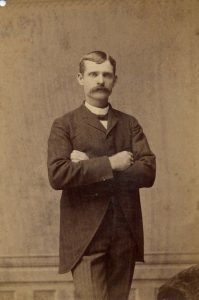
Another thing that was passed down to many of the Peelle men is the hairline. It is shown of an unknown man in the Peelle family. If you look at William Johnson Peelle’s hairline and Passco’s hairline, you will see that they are similar. Passco’s is more noticeable in the picture when he was younger.
Longevity
Passco and Martha each lived into their eighties, giving their descendants a good foundation for a long life.
This chart clearly shows that if a person in the family made it to adulthood, that they had a high chance of living into their seventies or eighties. It is not uncommon that multiple people had heart related issues that caused or contributed to their death. This occurs a lot in families.
One set of deaths that is a bit unusual is that of Mossie Lea (Peelle) Wilkie and her son Ollie Wilkie. Mossie took a cold in 1905 and it quickly worsened. Nine days later she died of pneumonia. Two years later, her son Ollie became suddenly ill while visiting friends. A few days later, he died from pneumonia. It seems that they both had a weakness that allowed pneumonia to quickly overtake them.
Personality
Although each person has their own personality, some personality traits tend to run in families. One of the areas that the Peelle’s were similar is being strong minded.
Strong Minded
In my experience the Peelle’s and their descendants were very strong minded. As Grandma Nellie, who to most people would seem as a quiet, very nice lady, would say, “My head is made up!” This meant that you didn’t need to even argue your case that something was different than her point of view because she had already decided. I know a few cousins where this definition fits. I have also communicated with distant cousins where this was definitely the case. They were sure they were right no matter what evidence exists or doesn’t exist.
Interests/Skills
Occupation
When considering occupations, one has to dig a big deeper as Martha and Passco had only one son. That said, most of this branch of the family farmed as their primary occupation. However, the Peelle family also continued an interest in law as Passco’s brother and multiple of Passco’s brother John’s children practiced law. In our family line, William Johnson Peelle did not practice law, but was very interested in it. He attended trials from time to time. In addition, he was involved in several inquests when someone died.
Does that interest and knowledge transfer to the next generation automatically via DNA? Or, does the next generation learn and absorb via being around family members? I can’t answer that question with certainty. However, I have been accused by multiple people of having a background in law. And, I know that my parents did not express that interest to me while I was growing up.
Education
Another area of interest seemed to be education. Both the McCracken and Peelle families seemed to emphasize education. Great grandfather William Johnson Peelle was always attending different events in the evening – literary, spelling classes, debate, etc. He also practiced his writing by writing brief entries in his journals. It would be interesting to do a survey of the Peelle family and see the grade level of education attained through the generations.
Jack of All Trades
Life in the 1800s led many people to be jack of all trades. This was true of women and men, although it was different skills for the men and women. However, this seemed to be more prominent in the Peelle family than it was in some other families. For instance, William J. Peelle was a carpenter and farmer by trade. What is interesting is that his carpentry included making anything and everything. He made tools, wagon beds, crutches, rudimentary furniture, and houses/rooms added to houses.
His carpentry skills clearly meant that he had good visualization skills as he had no set of plans or diagrams to work from. In some cases, he didn’t even have another similar item to view before making the new item. Dad also had excellent visualization skills, which I suspect he got from both his mother’s and father’s families. Matter of fact, he had a semi-photographic memory as does one of my sons. Dad could visualize pages from books that he had read. This skill came in handy when working on cars and machinery as he could visualize how the parts needed to go back together.
The Stories
Most families hand down some stories. In the case of the Peelle family, the most famous story they handed down is that Passco’s grandmother Tabitha (Dunigan) Peelle was the daughter of President John Adams, conceived out of wedlock. It was assumed by cousins that this relationship was the reason that William Adams Peelle, Passco’s brother, was given the middle name of Adams.
A scrap of paper exists with the claim of Tabitha’s parentage written on it by a member of the family back in the 1800s. However, it also has other incorrect information on the same paper.
Personally, I have not seen any actual facts that lead me to conclude that the story is true, but some distant cousins have their heads made up! (See, they got it, too!)
With the holiday weekend coming up, it seems like a good time to share some fun short stories of Joe and Nellie (Peelle) McCracken’s kids.
On The Roof
The younger McCracken kids liked to tell stories about their older siblings. One of them involved the time some of the older kids along with some of their friends decided to have some fun by putting a buggy up on someone’s roof. We aren’t sure whose roof that they put it on or exactly how they got it up there. However, knowing the people in the neighborhood, the culprits were likely found out and required to remove the buggy.
This was just one of the goings on in the Rocky Vale and surrounding neighborhoods. Ester said that none of them ever got arrested, but they might have been shot at a few times.
Switching with the Baileys
Another story about the older McCracken kids is the time that they snuck out of the house during the night and went to the Bailey’s home. Meanwhile, the Bailey kids around their age snuck out and came to the McCracken home. The Bailey kids slid into bed and went to sleep. In the morning, the Bailey kids came tromping down the stairs at the McCracken home.
Joe and Nellie didn’t skip a beat. They put them to work doing their own kids’ chores. I don’t know for sure, but I assume that the same thing occurred at the Bailey home.
Ball Bearings
When they were moving highway 7 to its current location, the workmen often parked equipment at the McCracken farm since it was just off the highway. One day, one of the pieces of machinery broke down and the workmen pulled it into the McCracken yard to be repaired. The work on the machine resulted in a lot of ball bearings of various sizes being spilled all over the ground. After the machine was fixed, Don went around collecting the ball bearings and they became great play toys.
One night, O’Ella had some ladies visiting at the house (perhaps school teachers). According to Don, he fell down the stairs and many of the ball bearings fell out as he took a nasty tumble. Dad told the story a different way. According to him, Don had the ball bearings in a can and (intentionally or unintentionally) spilled them down the steep stairs. In either case, the result was the same. . . a major racket that would wake up the neighborhood.
Old Maids
Another night when one of the older girls was out on a date, some of the kids rigged it so that a bucket of “old maids” (popcorn kernels that didn’t pop) were hung above the front door (yes, they actually used the front door in those days). When the sister came home from her date and opened the door, down came the old maids.
This wasn’t the only night that a sister got pranked when she arrived home from a date. One night while Ester was on a date with one of the Baileys, Ruby and Bobbi (Peelle) Pryor (step-daughter of Grandma Nellie (Peelle) McCracken’s brother Passco “Patt” Peelle) cooked up a scheme to surprise Ester when she returned home. On this occasion, they filled a dishpan with tin cans and placed it at the top of the stairs. When Ester opened the front door, the dishpan spilled all the cans and they thunderously tumbled down the stairs. Ester’s date bolted. Ester fumed. The rest of the family woke up to see what caused the racket. But, Ruby and Bobbi slept right through the event. Source: Life with Father . . . And Mother . . . and Ten Kids compiled by Don McCracken.
Up We Go
One or both of the younger brothers raised Kay’s bed during the night while she was sleeping in it. Neither of them would admit to the prank. Dad claimed he didn’t do it, but some pointed a finger towards him. Not sure if Kay threw their small Will Rogers brass statue at her brothers for doing it, but I wouldn’t be surprised. As the youngest and smallest, it seemed to be her weapon of choice.
April Fools
On April 1st, 1935 (or there about), Dad’s sisters dressed him up like a girl. They curled his hair and found one of his sisters’ dresses that he could wear. He went to school looking like a girl. One of the neighbors saw him walk by their house and inquired as to who the new girl was. April Fools!
It wasn’t the only time he wore his sister’s clothes as he was a model for his mother when he was home sick from school one year. She was working on dresses, likely for his middle sisters, and she needed someone to put them on so she could get the hem straight. Since he was there, he became her model.
Dog’s Day Out
They say that you have to be careful of the quiet ones. They can stir up the most trouble. Well, that was the case at Rocky Vale one day. One of the dogs followed the kids to school. So, Dewey, who all animals loved, coaxed the dog up into the one of the school desks. Then he sat a book up on the desk in front of the dog so that it wasn’t easily seen from the front of the room.
As expected, the kids started to giggle. Meanwhile, the teacher looked around trying to find out what everyone was giggling about. I am sure that no one had any idea who had done it.
Another School Story
One of the teachers at Rocky Vale had sandy-colored hair. The teacher had a very strict rule that no students were to call him Sandy. Anyone who dared would receive punishment. So, when Ruby was 7. She and a neighborhood friend (and possibly Dee) misbehaved one day. Before leaving for the day, they received a spanking or more likely a switching using a switch from the tree next to the school, which was often used for this purpose.
Anyway, as they walked away from the school, Ruby looked back and said, “Goodbye, Sandy!” All the kids took off running. Ruby had a head start and outrun the teacher.
Oh, Goodness!
This isn’t a funny story of something the McCracken kids intentionally did. Instead, it is about something that occurred and the reaction that turned out to be a bit funny. O’Ella, the oldest, was about twelve when this story occurred.
Grandma and Grandpa (her parents), had a rare serious argument related to discipline of one of her siblings. She said that she had never seen them so upset as they were that evening. Flash forward to the middle of the night and O’Ella wakes up hearing the baby crying. The baby, whose bed was in her parents’ bedroom continued to cry and cry. So, she got up and went down to see what was needed. To her surprise. Her parents were nowhere to be found.
She changed the baby’s diaper and sat down to rock the baby back to sleep. As she did, she wondered where her parents were. She thought about the argument of the night before and began to wonder if they had left for good. She started to cry as she wondered how she was going to care for a house full of kids.
Pretty soon, her mom and dad came back in the house, laughing. Some cows had gotten out and they had gone to get them back in. By the time they were done, the argument was long past and they were happy again. Only O’Ella was upset. But, not for long. Now, that her parents were back, she knew her worst nightmare wasn’t coming true – she wasn’t going to be a mother of bunch of kids at age 12!
Family history is about facts and stories. However, it is also interesting to look at it from a statistical perspective. Statistics about a family can include number of direct ancestors, size of family tree, immigration years, longevity, causes of death, military service branches, occupations, political leanings, religious beliefs, and more. This article takes a look at a few set of statistics using both numerical and visual methods.
Family Tree Size
The chart shows the size of my official trees compared to the size of the same tree on Ancestry.com. It might seem odd that they are different sizes. Many people synchronize their trees on ancestry.com with their local tree. However, I have chosen not to do that. In part, I use the tree on ancestry when researching people or entire family lines (e.g. Lemuel McCracken’s ancestry). In that case, I have added many people to my tree online that I haven’t yet attached to the family or where I have created a temporary attachment that allows me to do additional searching. (And, yes, I make notes on them that they are not confirmed relationships.)
You will notice that in the case of Rod’s family that the online tree is actually smaller. This comes from data that we learned in places other than ancestry.com. In the case of my family, much of the information I had from other sources was already in my tree before I did an initial upload.
You will also notice a huge difference in the size of Rod’s family tree and my family tree. The primary reason, besides the fact that I have been researching my family tree for a longer period of time, is that three of his family lines immigrated to the United States in the mid-1850s while most of my family lines immigrated prior to that time. See the Immigration section for more details.
Military
The chart shows the relatives in our families that served in the Revolutionary War by surname with the surnames grouped by color into the various family lines. It demonstrates that the Klinefelter family line had the most participants followed by the Ellis family line. See Soldiers and Fireworks for more charts about military service.
Immigration
McCracken-Pellett
The chart shows the earliest year that I can confirm each family line was in the United States. In some cases, it is when the family immigrated to the United States. However, often it is the earliest record for someone in that family line. For example, if I show someone was born in the United States in 1780 and I have no records that show the specific date that the family came to the country (or Colonies), it would be included in the 1751-1800 range.
Of the families identified back as far as my 5th great grandparents, a vast majority of them were in the United States prior to 1800. Five of those identified never immigrated to the United States. It is very likely that with additional research that some of the families where I do not know a firm immigration date will be found to have been in the country at an earlier time period than their current category.
The forty that are yet to be determined are in that category either because I hit a brick wall in research or more likely simply because I haven’t had time to research those families in depth. I suspect that they will split with a smaller percentage having early arrival dates and the larger percentage never having immigrated.
Immigration
Thomson – Helm
The Thomson-Helm chart looks very different than the McCracken-Pellett chart. You will notice that the number of families with known dates in the United States or Colonies is much smaller. This is because three of Rod’s four main family lines did not immigrated to the United States until the mid-1800s.
Of the 103 family lines that are not yet determined, a vast majority are expected to fall into the category of “Never Immigrated.” With additional research many of these can be verified. However, a portion of them are from Eastern Europe likely in or near Poland and Ukraine. These family lines may be impossible to trace with any accuracy.
Name Infographic
Helm
Phillip & Mary, their children, grandchildren, and the spouses
This image shows the prevalence of given names in Phillip and Mary Helm’s family. I created it for a post about the confusion around the Helm family due to so many people having the same or similar names. This type of graphic does not include the numerical values. Instead, it demonstrates the values using the size of the text. Clearly, the variations of the name Wilhelm/Wilhelmena are the most common name in the family. The actual numbers aren’t always important when looking at trends or prevalence of certain pieces of data. This type of chart can also be useful in looking at locations of birth/death, causes of death, or any other piece of data or characteristic with repetitive values.
The blog Helm Confusionfurther discusses information about this graphic.
Age at Time of Death
Pellett
The chart shows the age of death of members of the Pellett family. My mom is the person in the center semi-circle. This provides a visual that shows not only age of death of ancestors, but also trends (or lack there of) by generation and by family line.
One thing that is obvious from this chart is that the further back the generation the younger people tended to die on average. That said, you will see examples of people living longer back many generations. So, the fact that the average lifespan today is greater than it was generations ago seems to be based a lot on eradicating and minimizing childhood diseases and the availability of more advanced medical assistance rather than any changes that make humans naturally live longer.
In the chart, the ones that died very young often are women who died in childbirth. When all the charts are completed (Okay, created. With genealogy, nothing is ever complete), this chart will have a companion chart that shows cause of death when known. This will give a bit of insight into the correlation between age of death and cause of death.
It is also interesting to look at the age of death compared to location, time period, and cause of death. One of my observations, which is not proven, is that early settlers in cities often lived longer than their descendants who moved westward.
I have a section on the website for Statistics. The Earliest Ancestor sections have data in them. However, most other sections are blank right now. Expect this section of the website to start to take shape in 2025.
DNA
Lemuel & Louisiana
Descendants of Lemuel and Louisiana
This chart is focused specifically on DNA matches related to my research of Lemuel L. and Louisiana (Matteer) McCracken. The first three entries show that 95 total descendants of Lemuel and/or Louisiana have taken DNA tests with one of the companies that members of our closer family have tested. A considerable majority of them are descendants of the children that they had together. However, it is possible that additional descendants have tested with other companies or simply do not match as third cousins and beyond are not guaranteed to match.
McCracken DNA Matches
The 80 DNA matches who have been identified as descendants of James & Rachel (Kelly) McCracken show why this couple appears to be Lemuel’s maternal grandparents or great-grandparents (Y-DNA indicates Peppard is likely our paternal line). It does include descendants of a couple of people that are not proven by records to be their grandchildren, but where DNA and available data indicate that it is very likely that they are members of this family.
Peppard DNA Matches
Similarly, the 119 matches to descendants of Johnathan and Elizabeth (Gilmore) Peppard indicate why they are believed to be Lemuel’s grandparents. In this case, there are another 18 matches that are in the Bailey family. However, this specific Bailey family has a Y-DNA match to the Peppard family along with many autosomal matches to the Peppard family. Thus, it is believed that this specific Bailey family descends from the Peppard family despite a different paper trail.
The graphic also shows a group of matches through Louisiana to the Matteer family. We do have a paper trail on Louisiana back to her parents. However, the DNA matches help prove in her family line.
Additionally, several hundred DNA matches to Louisiana have been identified that are believed to fit into several earlier generations of her family. This information will be shared when it is finalized.
I have worked more on Lemuel’s ancestors since I have been working to identify his parents. In his case, an additional 1200 matches have been identified that are believed to most likely be related to Lemuel. However, it is possible that some of them are not actually connected the way they appear.